Artist Residencies in Awaji
1 residencyin Awaji, Japan
Why Awaji Island actually works for residencies
Awaji Island sits in the Seto Inland Sea between Kobe and Tokushima, technically part of Hyogo Prefecture but with its own pace and texture. You get sea, hills, farms, fishing harbors, shrines, and scattered cultural venues all on one elongated island.
Artists tend to choose Awaji when you want:
- Landscape variety within a compact area – beaches, forests, agricultural fields, and small towns close enough to loop through in a day.
- Community- and site-focused work rather than a dense gallery district. Residencies often want you plugged into local life.
- Performance-friendly context – dance, street performance, music, live art, and festival formats are common.
- Access to Kansai – Kobe, Osaka, and Kyoto are reachable for materials, exhibitions, or meetings, while Awaji itself stays relatively calm.
- Setouchi art ecosystem spillover – the wider inland sea region already has a reputation for contemporary, site-responsive work, which helps audiences “get” what you’re doing.
If your practice needs quiet, site visits, and community encounters more than constant openings and art fairs, Awaji can feel like a good working island rather than just a retreat.
Key residency: Awaji Art Circus
The most visible residency-style program on Awaji is Awaji Art Circus, run by the Awaji Art Circus Executive Committee. It’s anchored in the northern part of the island, around Iwaya, which is also one of the easiest areas to access from the mainland.
What Awaji Art Circus actually is
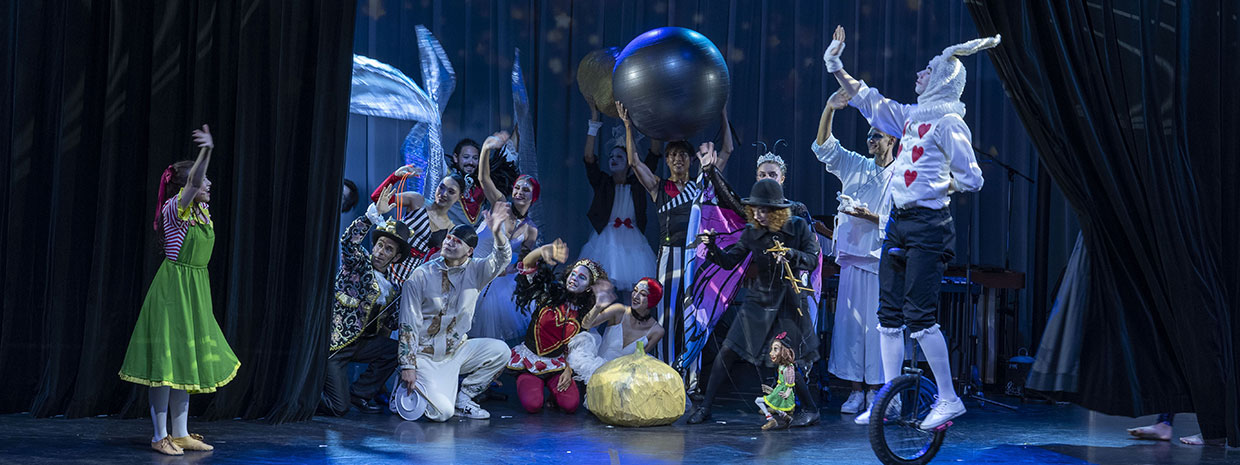
Awaji Art Circus operates as a performing arts residency that blends:
- Creation time on the island
- Community and educational outreach – school visits, workshops, collaborations
- Public performance – at events, local venues, and outdoor spots
From the program descriptions, artists are generally invited from performance-related fields such as:
- Street performance
- Bodily expression and physical theatre
- Music and instrumental performance
- Singing and vocal work
- Dance
- Circus and movement-based disciplines (with some safety-related exclusions like aerial acts, fire, tightrope, and high-risk equipment)
- Live painting and cross-disciplinary performance
The emphasis is on work that meets an audience directly. Think plazas, schools, community spaces, and festivals rather than studio-only research.
Location and daily reality
Awaji Art Circus is associated with the address around Eshimakan, 924-1 Iwaya, Awaji, Hyogo. That’s in the northern part of the island, very close to Iwaya Port and the Akashi side ferry connection.
What that means practically:
- Getting in and out is easier than if you were based in the far south of the island.
- You can realistically plan day trips to Kobe or Osaka for materials or meetings.
- You’re still in a relatively small community, so audiences often show up multiple times and word-of-mouth matters.
Presentation spaces are not conventional “white cube” galleries. You’re more likely to perform in multipurpose halls, outdoor spots, or municipal cultural facilities than in a black-box theatre built just for contemporary performance.
What the program expects from you
Awaji Art Circus leans towards artists who are comfortable being public-facing. Typical expectations include:
- Performances at multiple events or sites, not just one final show.
- Collaboration with local artists or other international artists participating in the program.
- Community interaction such as school visits or workshops.
- Engagement with local culture – taking part in Japanese cultural experiences, tours, and informal exchanges.
If you prefer to disappear into a closed studio for weeks with minimal social contact, this specific program will feel off. If you like responsive, audience-facing performance, it can be a strong match.
How to judge fit for your practice
Awaji Art Circus tends to suit you if:
- You work in performance, movement, music, or live interdisciplinary work.
- You are okay adapting to non-theatrical spaces (streets, halls, parks).
- You enjoy interaction-driven processes and don’t mind workshops or school visits.
- You’re comfortable with variable tech and infrastructure – you may not get full theatre rigging or perfect acoustics.
Less ideal if:
- Your work depends on specialised rigs or high-risk equipment that is hard to insure or set up on-site.
- You need silence or lab-style studio conditions more than live feedback from audiences.
- You are strongly focused on object-based studio work with no performance component.
When you reach out or apply, be explicit about how you’d translate your practice into a format that works on streets, stages, or school gyms. The clearer the mapping, the easier it is for the organisers to picture you there.
Reading Awaji’s art ecosystem as an artist
Awaji doesn’t have a compact gallery district or a single central art school. Instead, activity is dispersed: cultural halls, small museums, sports parks that host events, botanical gardens, and public parks all show up as potential sites.
What “art scene” means here
Most art-related activity leans into these patterns:
- Community engagement – artists are invited to visit schools, run workshops, and interact with local residents across age groups.
- Site-specific work – the island’s geography and built environment often become part of the work, whether you’re performing outdoors or adapting to non-traditional stages.
- Performance and event culture – festivals, one-off events, and seasonal celebrations are common entry points for art.
- Regional rather than hyper-local networks – many artists connected to Awaji are also in dialogue with Kobe, Osaka, Kyoto, and the broader Setouchi region.
If your practice thrives in a system of weekly openings, many commercial galleries, and quick access to fabrication labs, you may find Awaji slow or light on infrastructure. If your work opens up in response to specific landscapes and communities, the island’s scale is usually a plus.
Zones artists usually care about
Instead of “neighbourhoods” in the urban sense, it helps to think of Awaji in three practical zones:
- North (Iwaya and surroundings)
Closest to the Akashi connection and ferry port. Good if you want easier logistics to mainland Kansai, especially for short stays or if you expect regular trips for supplies. - Central (Sumoto area)
One of the bigger town centers on the island. More services, shops, and daily-life infrastructure. A reasonable base if you’re self-organising a residency or planning a longer independent stay. - South and rural coasts
Quieter, more landscape-driven. Great for writing, field research, drawing, and slower-paced projects. More dependence on cars or careful bus planning.
Residencies like Awaji Art Circus anchor you in one location but will often move you around the island for performances or outreach, so ask upfront how much travel you’ll be doing and how they support that.
Practical living and working on Awaji
Residencies on Awaji sit in a middle ground: cheaper than big cities, but not so cheap that logistics don’t matter. A bit of planning goes a long way.
Cost of living basics
Typical cost factors to think through when reading any Awaji residency info:
- Accommodation
If housing is provided, your main cost drops dramatically. If not, short-term rentals can vary by season and proximity to main towns or ports. Expect limited choice compared with major cities. - Food
Local supermarkets and convenience stores are manageable if you cook. Eating out tends to be simple and reasonably priced, but options thin out in rural pockets and late at night. - Transport
This is often the biggest surprise. Buses exist but are not high-frequency in all areas. If you’ll carry props, instruments, or equipment, budget time and money for taxis, rental cars, or careful planning. - Materials
Basic supplies may be available locally, but specialised art materials often require trips to Kobe or Osaka, or online orders. Build shipping time into your project timeline.
Studios, rehearsal, and presentation spaces
Awaji’s best-documented residency, Awaji Art Circus, is performance-oriented, so “studio” often means rehearsal space or multipurpose hall rather than a private painter’s studio. When you talk with any Awaji host, ask clearly:
- Is there a dedicated rehearsal or work space, or only borrowed venues?
- Is the floor suitable for movement or dance (e.g., not concrete with no mats)?
- Is it possible to use sound at volume, or are there neighbours and shared walls?
- Can you leave set pieces or installations in place, or do spaces reset often?
For visual artists, it’s worth asking if you can convert part of living space or a community room into a temporary studio, and what limitations exist around mess, dust, and noise.
Galleries and showing work
Awaji is not a commercial gallery hub. Instead, expect formats like:
- Open rehearsals or sharings
- Community showcases in town halls or cultural centers
- Site-specific performances outdoors or in non-art buildings
- Workshops and talks as part of a residency’s public output
If you want a commercial show, your best bet is to treat Awaji as a production and research base, and connect your outcomes to galleries in Kobe, Osaka, or beyond.
Moving around: access and transport
Transport can make or break a residency on an island, especially if your project depends on moving people or gear.
Getting to Awaji
The main routes into Awaji usually involve:
- By bridge and bus or car – crossing the Akashi Kaikyō Bridge from the Kobe/Akashi side.
- By ferry plus local travel – some routes use a ferry to Iwaya Port combined with local bus or pickup.
When accepting a residency, ask the host for the most realistic arrival route based on your point of entry into Japan, and whether they provide pickup from specific bus stops or ports.
Getting around the island
Within Awaji, you’ll likely be juggling:
- Local buses – connecting main towns and some cultural facilities, but with limited schedules in certain areas.
- Cars – either residency-arranged, rented, or through collaborators. Very useful if you’re staging work across multiple sites.
- Bicycles – feasible if your rehearsal and living spots are near each other and you don’t need to move large equipment.
If your project involves late-night rehearsals, early-morning site-specific work, or transporting instruments and props, make transportation a core part of your planning, not an afterthought.
Visas and admin basics
Residencies on Awaji are usually framed as cultural activities or exchanges, but visa status depends heavily on your passport and the residency terms.
Key points to confirm with any Awaji host:
- Duration of your stay and whether it fits within typical tourist or short-stay allowances for your nationality.
- Whether the program offers any stipend, performance fees, or teaching honoraria, and how that aligns with visa rules.
- What kind of documentation they can provide – invitation letters, official program descriptions, and proof of accommodation.
Then cross-check with the Japanese embassy or consulate in your region. Visa regulations evolve, and each artist’s situation is slightly different, so treat the residency’s guidance as a starting point, not the final word.
Seasons, rhythm, and when to go
Awaji’s environment shifts noticeably through the year, which can affect both your work and your audience.
Seasonal pros and cons
- Spring
Mild temperatures, good for outdoor rehearsals and walking research. Popular for events and audiences are usually happy to be outside. - Summer
Hot and humid, but potentially rich in festivals and public programming. Good if your work interacts with crowds and you’re okay working around heat. - Autumn
Often the sweet spot for comfortable work conditions, rich colours in the landscape, and strong attendance at cultural events. - Winter
Quieter, with fewer outdoor events. Better for writing, composing, video editing, or any practice that benefits from long, uninterrupted studio stretches.
For performance-based residencies like Awaji Art Circus, your actual dates will usually be tied to their event schedule rather than your personal ideal season. If you have specific climatic needs for health or for your work, discuss them early.
Community, events, and how to plug in
On Awaji, the “art community” often looks like overlapping circles: local residents, students, municipal staff, visiting artists, and regional organisers.
What engagement often looks like
- Workshops in schools – simple, hands-on formats that translate across language barriers.
- Open rehearsals – audiences watch you work and ask questions, sometimes more informal than a standard show.
- Community co-creation – inviting locals into movement scores, participatory drawing, or sound experiments.
- Talks or small presentations – sharing your practice and your context in a convertible space like a hall or café.
Approach your project proposal with this in mind: what can you offer that isn’t just a final “product,” but also a point of shared experience along the way?
Who Awaji is really for
Awaji tends to be a good match if you:
- Work in performance, dance, music, circus, live art, or site-responsive practices.
- Are curious about regional Japanese culture and open to interacting with non-arts audiences.
- Value a quiet, small-scale environment with access to urban centers when needed.
- Can handle logistical quirks around transport and mixed-use spaces.
It might feel less aligned if you:
- Depend heavily on commercial galleries, collectors, and art fairs for your work to make sense.
- Need specialised fabrication labs or large-format industrial equipment on-site.
- Want nightly openings and a high-density art crowd within walking distance.
Application and project-planning tips
When you prepare to apply to an Awaji residency or pitch a project to an organiser, a few details will help your proposal land.
Make the place central to your pitch
- Show clearly how Awaji’s landscape or communities matter to your work, not just that you want “a residency in Japan.”
- Reference the kinds of spaces you’d like to use – schools, ports, parks, cultural halls – so organisers can imagine placements.
Be upfront about your practical needs
- Describe your space needs – floor type, ceiling height, darkness, sound levels.
- Detail your equipment and tech – what you bring, what you need them to supply, and what can be improvised.
- Ask about transport for large items early, especially if you work with instruments, costumes, or set pieces.
Clarify output and formats
- Propose specific public formats: performances, open rehearsals, workshops, or talks, rather than just a finished work.
- Explain how your project can adapt to different venues – an outdoor plaza, a gym, or a multipurpose hall.
Ask the less glamorous questions
- Housing setup – shared or private rooms, kitchen access, internet, and noise expectations.
- Food and shops – distance to supermarkets, opening hours, and any meal support from the program.
- Insurance and safety – especially if you do movement, circus, or anything with technical risk.
Using Awaji as a base, not just a destination
Many artists treat Awaji as one node in a longer arc through Japan: a place to test ideas, produce work in conversation with a specific landscape, and then echo those projects in more formal exhibition or performance contexts elsewhere.
If you plan your residency with that in mind, you can:
- Create a site-rooted version of a work on Awaji, closely tied to its audience there.
- Document it well and carry a refined or adapted version into Kansai venues or other regions later.
- Stay in contact with local collaborators for future returns, new commissions, or touring opportunities.
Awaji rewards artists who see residencies not only as time to produce, but as a chance to build ongoing relationships with a particular island and its people.
Been to a residency in Awaji?
Share your review