Artist Residencies in Baden-Baden
1 residencyin Baden-Baden, Germany
Why Baden-Baden is interesting for residency-minded artists
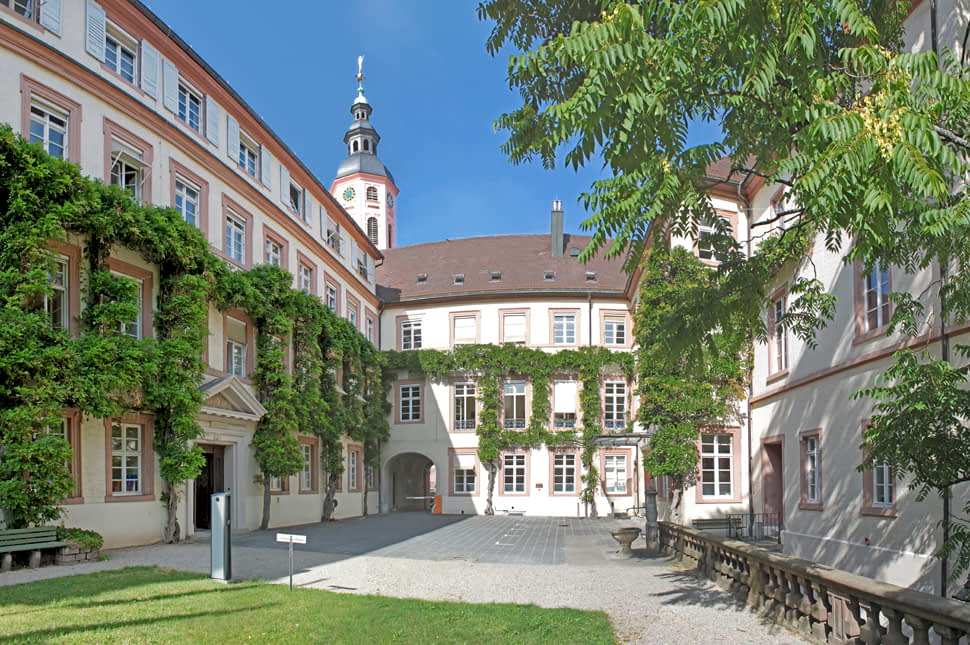
Baden-Baden is small, wealthy, and surprisingly well-equipped for artists who want focused time with decent visibility. Think spa town, classical architecture, Black Forest trails nearby, and high-calibre museums in walking distance.
If you land a residency here, you can expect:
- Quiet working time: much calmer than Berlin or Cologne. Great if you need to write, edit video, or build a body of work without constant scene pressure.
- Strong institutions for the size: Kunsthalle Baden-Baden, Museum Frieder Burda, and LA8 give you a serious cultural backdrop.
- International audience: tourists, spa visitors, and a generally affluent public who are used to cultural events.
- Easy access to nature: Black Forest trails and river landscapes are close, which helps if your practice involves field recording, walking, drawing, or site-based research.
- Regional network: you sit in the Upper Rhine triangle, with Karlsruhe, Strasbourg, Freiburg, and Basel reachable for openings and studio visits.
Baden-Baden is not a huge artist-run city with endless off-spaces and cheap studios. It is better for concentrated work, research, and public-facing presentations anchored around residency programmes and institutions.
The Baldreit-Stipendium: the key residency in town
The main residency you’ll hear about in Baden-Baden itself is the Baldreit-Stipendium. This is the anchor opportunity if you are a writer, visual artist, or composer looking for a structured stay in the city.
What the Baldreit-Stipendium actually offers
The Baldreit-Stipendium is run by the city of Baden-Baden with support from the local savings bank. It combines a central apartment with a stipend and an expectation of public presence.
Based on current descriptions, you can generally expect:
- Duration: two residencies per year, each around six months (one in the colder half of the year and one in the warmer half).
- Housing: a rent-free apartment in the city centre, usually around 50–70 m². Enough space to live and, for some disciplines, also work.
- Funding: a monthly stipend plus a small subsidy for utilities. Older listings mention around €760 stipend + €60 for utilities; local info often rounds this as roughly €1,100 total support when you count the saved rent.
- Location: the apartment is on an upper floor in the inner city, close to shops, cafés, and cultural spots. Not barrier-free.
- Disciplines: open to literature, visual arts, and composition.
Since exact numbers and dates can shift, you will want to double-check details with the city or via listings on platforms like IGBK or TransArtists when you are actually applying.
Who the Baldreit residency suits
This programme suits you if:
- You want time to focus on a book, a new series of works, a composition cycle, or a research-based project.
- You’re comfortable working relatively independently without a big institutional production team.
- You can imagine being visible in a smaller city: readings, talks, or showing work to a non-specialist audience.
- You can handle some level of German language, since communication with the city and local press may be in German.
If your practice needs a large workshop, heavy fabrication, or constant collaboration with a big, experimental peer group, this residency might feel a bit contained. If your work thrives on stillness and structured time, it can be ideal.
Expectations and public presence
The Baldreit-Stipendium is explicitly framed as an Aufenthaltsstipendium (stay-in-place residency). The city strongly prefers that you are:
- present in Baden-Baden for most of the residency period
- prepared to show or mediate your work locally
- open to engaging with local cultural life, even if it is more formal than DIY
Outputs might include:
- author readings
- small exhibitions or presentations
- concerts or listening sessions
- artist talks and workshops
Think of it as a trade: you get time, space, and some money; the city gets cultural activity and public moments that residents and visitors can attend.
Access, language, and practical constraints
There are a few practical points to consider:
- Access: the flat is not barrier-free, so if you need step-free access, this may not work logistically.
- Language: calls often specify that a good command of German is expected. That affects your ability to integrate fully and to manage admin, press, and events.
- Scale: this is a single-apartment setup, not a big residency campus. Your peer group will be limited to whoever is around in the city or region.
For some artists, this kind of quiet, concentrated situation is exactly the point.
Other residency connections and regional opportunities
Even if you are focusing on Baden-Baden, it helps to understand the wider residency ecosystem in Baden-Württemberg. Some programmes are not physically in the city, but they are relevant if you are based here or spending time in the region.
Regional residencies you can use as a Baden-Baden-based artist
A few examples of programmes tied to the state of Baden-Württemberg:
- Ministry of Science, Research and the Arts Baden-Württemberg x Cité internationale des arts (Paris)
This programme offers six-month residencies in Paris for emerging visual artists who live in Baden-Württemberg and have an art-related degree. If you build your base in Baden-Baden, you can potentially be eligible to apply for this, turning the city into a launchpad for time abroad. Details can be found at the Cité internationale des arts website: citeinternationaledesarts.fr. - Akademie Schloss Solitude exchange formats
Akademie Schloss Solitude in Stuttgart coordinates various fellowships and bilateral exchanges, some specifically for artists from Baden-Württemberg or living in the state. A Baden-Baden address can work in your favour if you want to join these longer-term networks. More details at akademie-solitude.de. - Goethe-Institut and artists’ houses network
The Goethe-Institut maintains a useful overview of artist houses and residency structures across Germany at goethe.de. This is helpful if you want to map out a longer Germany-wide residency route with Baden-Baden as one of several stops.
These programmes often care about your place of residence. So if you settle in Baden-Baden or the surrounding region, you can tap into state-level funding that would not be accessible otherwise.
Living and working in Baden-Baden during a residency
To decide if Baden-Baden fits your practice, it helps to picture the day-to-day: what your costs look like, how you move around, and where you can show work or meet people.
Cost of living: what to expect
Baden-Baden is a wealthy spa city, which means:
- Rents are high for the size of the city, especially in the inner city and around spa areas.
- Cafés and restaurants skew to a tourist and wellness crowd, which can make daily spending higher than in a typical mid-size German town.
- Short-term, furnished rentals are often priced for visitors, not artists.
Residencies like the Baldreit-Stipendium are valuable precisely because they remove rent from the equation. If you are coming independently, it can be cheaper to live in neighbouring towns and commute in.
Neighbourhoods and nearby towns that matter for artists
Here are the main areas you’ll hear about, framed in terms of how an artist might actually use them.
- Innenstadt (city centre)
This is where many cultural institutions, shops, and the spa infrastructure are. Living here means you can walk almost everywhere: galleries, museums, cafés, and any city-hosted residency apartment. It’s convenient but not cheap, and large studio spaces are rare. - Lichtental
A quieter residential area with easy access to green spaces and walking routes. Good if you want calm evenings and nature. Daily life is a bit softer than the tourist-heavy centre, but you still have reasonable access to cultural institutions. - Oos
Closer to Baden-Baden’s main train station, with easier access to regional trains. Useful if you are commuting or doing frequent trips to Karlsruhe, Strasbourg, or beyond. Expect more functional infrastructure and fewer spa-style surroundings. - Regional towns: Bühl, Rastatt, Gaggenau
These surrounding towns can offer more affordable housing and potential studio options. You can base your living or working situation there and travel into Baden-Baden for events, exhibitions, and meetings.
If you are coming for a residency that already includes accommodation in the city centre, you get the best of both worlds: central access without paying tourist prices.
Studios and workspaces
Baden-Baden does not have an obvious, sprawling studio district. The options tend to be:
- Residency-provided space: in programmes like Baldreit, the apartment itself often doubles as your workspace, especially for writers, composers, and digital or small-scale practices.
- Temporary arrangements: short-term studio rentals, borrowed rooms, or workshop access through personal contacts and local institutions.
- Regional ateliers: some artists maintain studios in towns like Karlsruhe, Rastatt, or Bühl and travel in for events. This can be cheaper if your work involves large formats or messy processes.
If you need specialised equipment (woodshops, metal workshops, printmaking facilities), your best bet is to tap into the broader region, particularly Karlsruhe or other nearby university or art-school cities.
Cultural life, venues, and how to show work
Baden-Baden’s scene is compact but high quality. As a resident artist, you are unlikely to get lost in the crowd, and you can orient yourself quickly.
Key venues you should know
- Kunsthalle Baden-Baden
A major contemporary art institution that often hosts experimental or discursive exhibitions, talks, and events. This is an important place to visit regularly, both to see current work and to understand the city’s art discourse. - Museum Frieder Burda
Focused on modern and contemporary art, with a strong collection and a striking building nestled in parkland. Exhibitions skew toward well-established positions but still create a public that is used to engaging with art. - Staatliche Kunsthalle Baden-Baden
An institutionally central venue historically, often mentioned alongside the Kunsthalle as part of the city’s cultural core. Even if you are not showing there, keeping track of its programming gives you context for your own work. - LA8 (Museum for Art and Technology of the 19th Century)
A museum and cultural centre dealing more with historical relationships between art and technology. Important for those interested in media history, apparatus, or long-term research references. - Smaller galleries and project spaces
The independent scene is limited compared with large cities, but there are local galleries, cultural associations, and sometimes pop-up projects. These are good for more agile interventions or smaller presentations during a residency.
The mix of high-profile institutions and a relatively small population means that cultural events can have a surprisingly attentive audience, even when modest in scale.
Local community, open studios, and events
Instead of a dense cluster of artist-run spaces, Baden-Baden leans on:
- museum and institution audiences
- city-supported residency events
- regional artist associations tied to Baden-Württemberg
- cross-border networks in the Upper Rhine area
Residency programmes tend to encourage or require some kind of public activity:
- open studio days or apartment visits
- talks, screenings, or listening sessions
- readings hosted by the city or partner organisations
- small exhibitions in municipal or partner spaces
If you are proactive, you can also use your stay to connect with institutions and artists in nearby cities like Karlsruhe, Strasbourg, Freiburg, or Basel and organise events there.
Transport, visas, and planning your stay
Once you have a sense of what the city offers, the next layer is logistics: getting there, moving around, and making sure you are legally covered.
How to get to Baden-Baden
- By train
Baden-Baden’s main station sits a bit outside the historic centre. From there you reach the inner city by bus, taxi, or car. Regional trains connect you quickly to Karlsruhe and other nearby hubs. - By air
The closest airport is Karlsruhe/Baden-Baden (FKB), with connections to several European cities. Larger hubs like Frankfurt, Stuttgart, and Strasbourg expand your options, usually with a train or bus leg to finish the trip. - Local mobility
The inner city is very walkable. If you stay in Oos or a neighbouring town, local buses and regional trains are part of your daily routine.
Visa basics for residency stays
If you are an artist from outside the EU, residence length and funding structure will determine your paperwork.
- Residency documentation: programmes usually provide an invitation letter, details of your stipend, and proof of accommodation. These documents are essential for visa applications.
- Short stays: for shorter residencies within the Schengen short-stay limits, some nationalities need a Schengen visa; others can enter visa-free but still need to respect time limits.
- Longer stays: six-month residencies may require a national visa or residence permit. This can involve extra insurance and proof-of-income documentation.
- Lead time: visa processing can take weeks or months depending on your consulate. Starting the process early is smart, especially if you have exhibitions or events scheduled at the beginning of your residency.
If you are accepted into a programme like the Baldreit-Stipendium, ask early for certified letters and detailed confirmations and check your country’s requirements for artists in residency situations.
Who Baden-Baden actually works for
Baden-Baden is not trying to be a big, chaotic art metropolis, and that can be an asset. It works particularly well if you:
- want a quiet, structured environment to develop a project
- appreciate being one of a small number of resident artists rather than part of a huge cohort
- are comfortable engaging with formal, institution-oriented cultural audiences
- value nature and walking as part of your process
- are able to plug into the broader Baden-Württemberg and Upper Rhine networks for extra stimulation
It is less ideal if you need:
- cheap, large-scale studio infrastructure within city limits
- a hyper-active underground scene with constant openings and parties
- a big cohort of peers on your doorstep
Used strategically, Baden-Baden can be a very effective residency choice. The combination of quiet time, strong institutions, and regional connections can give you a clear, concentrated period to build work, test it with a public, and step into broader networks across Germany and neighbouring countries.
Filter in Baden-Baden
Been to a residency in Baden-Baden?
Share your review