Artist Residencies in Bellagio
1 residencyin Bellagio, Italy
Why Bellagio works for artists
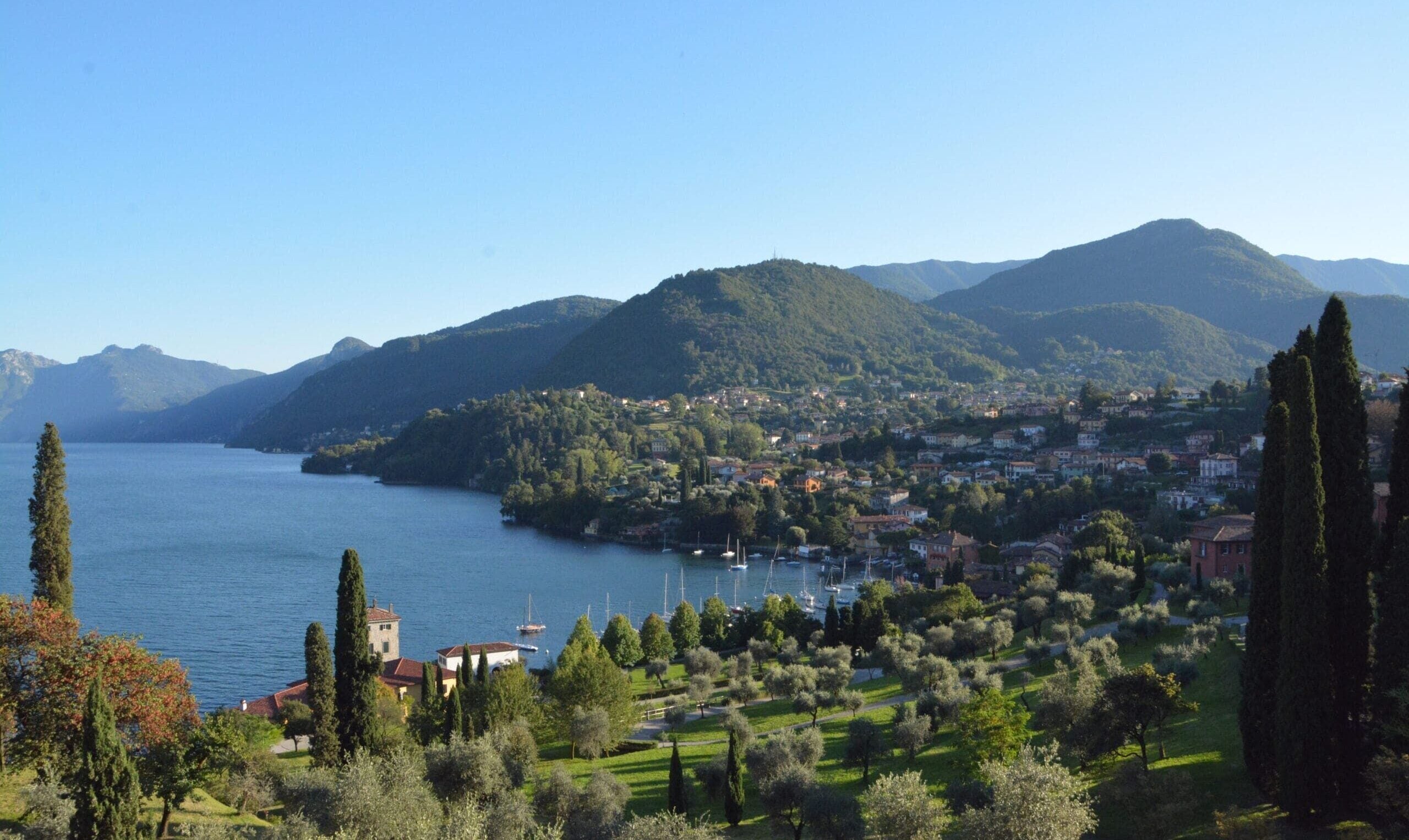
Bellagio sits right on the fork of Lake Como, wrapped in dramatic light, water, and steep stone streets. For artists, it’s less a scene you plug into and more a place you retreat to, work hard, and leave with a sharper project.
The draw is pretty specific:
- Intense visual inspiration: lake, mountains, villas, gardens, classic Italian architecture.
- Deep-focus environment: once day-trippers go home, it’s quiet enough to hear your own ideas again.
- High-prestige residency context: the Rockefeller Foundation Bellagio Center brings in serious artists, writers, scholars, and practitioners from around the globe.
- Easy connection to bigger art ecosystems: Como and Milan are close enough for exhibitions, suppliers, or onward travel.
Bellagio is not an arts district full of studios and galleries. You come here for concentrated project time, landscape-driven work, and high-level conversations, not for daily gallery openings.
The Rockefeller Foundation Bellagio Center: what it actually feels like
The Rockefeller Foundation Bellagio Center is the residency people are really talking about when they say "Bellagio residency." It’s an interdisciplinary program that folds artists into a cohort with scholars, policymakers, and other practitioners.
Basic structure of the residency
Core features of the Bellagio Center residency program:
- Length: roughly 26 days / about four weeks on site.
- Support: private room, meals, and a dedicated work space (studio or study).
- Cohort size: up to around 14 residents at a time, across disciplines.
- Costs: room and board covered; travel funding is usually provided.
- Location: a historic villa complex on the Bellagio promontory, facing the central basin of Lake Como.
- Alumni network: residents join the Bellagio Network, which keeps you connected to other alumni and Foundation activities.
The residency is designed as a mix of alone-time and shared time: quiet workdays, shared meals, and structured or informal presentations. You’re expected to work seriously on your project and engage with the cohort.
Arts & Literary Arts track: how it fits in
The Bellagio Arts & Literary Arts residency is essentially the artist-focused stream within the broader program. Official information is on the main Rockefeller Foundation pages and the dedicated Bellagio site:
- Rockefeller Foundation Bellagio Center – Residency Program
- Bellagio Center Residency Program site
- TransArtists overview
Disciplines commonly mentioned:
- Visual arts (painting, drawing, photography, installation, etc.)
- Performing arts and dance
- Music and sound (including composition)
- Literature (fiction, non-fiction, poetry, playwriting)
- Film and video
- New media and animation
- Curatorial and critical practice
- Architecture and spatial practice
Most artists stay about a month, have a private room plus a studio or work study, and are encouraged to share work informally with the group.
Who actually fits the selection criteria
The Bellagio Center is not a general “early career retreat.” It’s targeted at people with projects that have public impact or clear social relevance.
You’re a strong fit if:
- You have a solid track record or very clear upward trajectory.
- Your project engages with pressing social, environmental, or cultural issues.
- You can explain how the work will have public access or reach: a book, a film, a performance series, a public artwork, a policy-adjacent project, etc.
- You’re comfortable in a cross-disciplinary conversation with non-artists.
- Your process can function with a portable setup: writing, sketching, composing, editing, conceptual development.
It’s less ideal if you need heavy equipment, large fabrication facilities, or constant offsite filming or fieldwork. The center is structured more as a retreat and convening space than a production factory.
What daily life at the Center feels like
Daily rhythm usually sits somewhere between monastery and think tank:
- Mornings: many residents work quietly in their studios or studies.
- Afternoons: more individual work, sometimes walks, informal conversations, project meetings.
- Evenings: shared meals, occasional talks, work shares, or discussions with other residents or conference participants hosted on site.
You have enough isolation to get deep into your own practice, but you’re rarely fully alone: you are part of a temporary micro-community of artists, writers, and thinkers.
Bellagio as a working base: what to expect outside the residency
If you’re thinking beyond the Bellagio Center—scouting, self-funded working stay, or a non-hosted project—Bellagio still has qualities you can use effectively.
Art scene: strengths and limits
What Bellagio does have:
- Historic villas and gardens that are visually and conceptually rich (ornamental plantings, old-world architecture, water edges).
- Landscape-driven subject matter that supports drawing, plein-air painting, photography, and site-responsive work.
- Seasonal cultural events such as concerts or exhibitions in villas and churches.
- The Bellagio Center’s international community as a temporary but potent intellectual hub.
What it generally does not have:
- A dense contemporary gallery ecosystem.
- Large artist-run studio buildings.
- Frequent experimental art events or alternative spaces.
If your priority is to embed in a big, active art market or nightlife-heavy creative scene, Bellagio is the wrong scale. If you want a quiet, gorgeous spot to write, draw, edit, or plan your next phase, it’s very usable.
Key cultural sites that matter to artists
Within Bellagio and around the lake, you’ll find a network of villas and gardens that double as research and inspiration sites:
- Villa Melzi d’Eril (Bellagio): manicured lakeside gardens, sculptures, and neoclassical architecture right by town. Great for observational drawing, photography, and thinking about landscape design.
- Villa Carlotta (Tremezzo): a short boat ride away, with botanical gardens and a historic art collection. Often used for concerts and cultural programming.
- Other Lake Como villas used for festivals, music, and seasonal events across the lake’s central area.
These spaces are not studios, but they function as extended “field research” locations for artists working with landscape, history, memory, or architectural narratives.
Practical living details: costs, neighborhoods, and logistics
Bellagio is small, steep, and tourist-oriented. That shapes everything from rent to where you’ll actually get work done.
Cost of living and working
By Italian standards, Bellagio is on the expensive side.
- Accommodation: Short stays can be pricey, especially in high season. Long-term rentals exist but are limited and often targeted at tourism.
- Food: Restaurant and café prices skew higher than in inland Lombardy towns. Self-catering helps balance the budget.
- Studio space: outside formal residencies, dedicated studio rentals are rare. Many artists end up working from a living space or short-term rental.
- Transport: ferries are incredibly useful but not free; regular crossings to nearby towns add up over time.
For most artists, Bellagio makes the most financial sense as:
- a funded residency stay,
- a short research or scouting trip,
- a focused writing, editing, or composing period rather than a full studio year.
Areas within Bellagio and nearby hamlets
Bellagio is compact. Instead of big districts, you’re choosing between the core and a few small villages around it.
- Centro Storico (historic center): cobbled lanes, stairways, cafés, ferry access, and a constant flow of visitors. Great for quick access and people-watching, less ideal if you need absolute quiet.
- Lungolago / waterfront: highly scenic, full of hotels and restaurants. Inspiring views, but tourist-heavy and often pricier.
- Upper Bellagio / hillside lanes: more residential, quieter, but steep walks and some distance to the ferry.
- Loppia, San Giovanni, Pescallo: small hamlets within the Bellagio municipality. Quieter and more local, still reachable on foot or with short local travel.
For sustained work, many artists prefer something slightly off the main tourist drag: good light, decent internet, and a walkable route to the lake and ferries.
Studios, tools, and materials
Outside the Bellagio Center residency, you should assume you will not find a fully equipped studio waiting for you.
- Portable practices work best: sketching, writing, digital work, small-scale sculpture, sound composition, and any medium you can set up on a table.
- Heavy processes are tricky: ceramics, printmaking, metal work, or large-scale fabrication usually require heading to bigger towns or arranging special access elsewhere in Lombardy.
- Supplies: basic art materials are easier to source in Como or Milan. Many artists bring key supplies or plan a materials run early in their stay.
Getting in and out: transport and visas
Bellagio feels remote in a good way, but you’re never truly cut off. You just have to plan one extra step for almost every trip.
How you actually arrive
Typical route:
- Fly into Milan Malpensa, Milan Linate, or Bergamo Orio al Serio.
- Take a train to Como, Lecco, or Varenna-Esino.
- Connect via ferry, bus, or car to Bellagio.
Trains do not go directly to Bellagio. The final leg is always by road or water. It’s scenic, but build that into your schedule, especially if you’re arriving with gear or large luggage.
How you move around during a residency
- Ferries and boats: These are your main tools for getting to other lake towns for fieldwork, day trips, or exhibitions.
- Walking: Inside Bellagio, expect stairs and hills. Good shoes matter more than you think.
- Driving: Possible, but roads around the lake can be narrow and slow. Parking is limited near the center, especially in high season.
Visa basics for artists
Visa needs depend on your passport and how long you stay.
- EU/EEA/Swiss citizens: usually no visa for short stays in Italy, though longer stays may require local registration.
- Non-EU artists: short residencies typically fit under standard Schengen short-stay rules if you stay within the time limits. For longer or more complex arrangements, check with the host and the Italian consulate.
Before you commit to a Bellagio residency, confirm:
- what documentation the host will provide (invitation letters, proof of accommodation),
- whether you’ll be doing only non-paid creative work,
- what health or travel insurance you’re expected to carry.
Using Bellagio strategically in your practice
The artists who get the most value out of Bellagio are usually very clear about why they’re there.
Profiles that match Bellagio well
- Artists-writers and thinkers: anyone advancing a book, script, conceptual proposal, or research-heavy project.
- Socially engaged practitioners: projects that connect art with climate, health, justice, education, or other public-facing issues.
- Mid-career and senior artists: people at a stage where a focused month and a high-level network can shift a large project forward.
- Artists needing an editing phase: musicians, filmmakers, and writers polishing work rather than generating tons of new raw material on site.
When Bellagio is probably not the right base
- You need constant access to fabrication shops or technical labs.
- You want cheap long-term housing close to a big arts nightlife.
- You rely on frequent in-person meetings with galleries and collectors.
- You need a local audience for regular performances, shows, or events.
In those cases, Bellagio can still work as a short retreat between heavier production phases in cities like Milan, Berlin, or London.
Pairing Bellagio with other Italian art cities
A smart strategy is to treat Bellagio as one node in a broader Italian itinerary:
- Use Bellagio for concept, writing, planning, and editing.
- Use Milan for production, gallery visits, and industry meetings.
- Use Como or Lecco for more modest-city-scale cultural visits and supplies.
This way, the residency becomes the thinking engine for work you’ll show or build elsewhere.
How to approach an application to the Bellagio Center
If you plan to apply, you’ll want your project to feel grounded, public-facing, and collaborative in spirit.
Framing your project
When you write about your work for Bellagio:
- Anchor it in a big question: climate, migration, equity, health, technology, social memory, or another large-scale issue.
- Describe the public outcome: a book, film, exhibition, performance cycle, community project, or digital platform.
- Show your track record: exhibitions, publications, performances, or community projects that demonstrate follow-through.
- Highlight cross-disciplinary value: how your thinking connects to policy, science, education, or practice beyond the arts.
Planning what you’ll actually do during the stay
It helps to be precise:
- Define what a 26-day residency would actually accomplish: chapters drafted, score completed, edit locked, proposal designed.
- Map out a realistic work plan: hours per day, research you’ll bring, materials you’ll need.
- Clarify how you’ll share your work with the cohort: talk, reading, listening session, or small screening.
Local art communities and events around Bellagio
The on-the-ground community in Bellagio is relatively small, but you can still create meaningful exchanges.
What to expect locally
- Seasonal concerts and performances hosted in villas and churches.
- Occasional exhibitions in heritage venues and hotel spaces.
- Tourism-driven craft and design visible in shops and markets.
For a richer art-community life, expand your radius:
- Como: more galleries, institutions, and artist networks.
- Lecco: smaller but active in regional culture.
- Milan: national-level museums, galleries, fairs, and art schools.
Making Bellagio work for you
To make a Bellagio residency or stay truly productive, treat it as a focused lab in your larger practice. Come with a specific project phase, portable tools, and a clear idea of how one month of quiet and conversation can move your work forward.
Used that way, Bellagio becomes more than just a beautiful backdrop: it’s a place where you can step out of your usual context, deepen your project, and return to your home scene with work that’s sharpened and ready for its next audience.
Filter in Bellagio
Been to a residency in Bellagio?
Share your review