Artist Residencies in Bergamo
1 residencyin Bergamo, Italy
Why Bergamo is worth your residency energy
Bergamo sits about 40 km northeast of Milan and has a very clear split personality: the historic hilltop Città Alta and the more contemporary, lived-in Città Bassa. That contrast is part of what makes it appealing as a residency destination.
You get:
- A dense, historic environment and dramatic architecture
- Easy access to Milan’s larger art market and institutions
- A compact but active contemporary network (GAMeC, The Blank, independent spaces)
- Quick access to landscapes like Val Taleggio and the Orobie Alps for fieldwork and nature-based practices
This guide focuses on residencies that either sit in Bergamo or are tightly connected to it: The Blank Residency in the city, Nature, Art & Habitat in Val Taleggio, plus a few nearby programs you might want to consider in the same planning cycle.
The Blank Residency: city-based, network-oriented
Location: Bergamo, Lombardy, Italy
Website: theblank.it (also listed on TransArtists as The Blank Residency)
What kind of artist this suits
The Blank Residency is a solid fit if you want to be inside a city, connected to institutions and curators, not parked in the countryside. It suits:
- Visual artists working in contemporary languages (installation, video, painting, photography, performance, etc.)
- Curators, writers, and theorists who need time to research and plug into a network
- Artists who value public moments and feedback: informal talks, open studios, meeting local audiences
How the residency actually works
The Blank runs residencies through a mix of open calls and invitation-based projects. The idea is less “retreat” and more “embedded in an art ecosystem”. The association already collaborates with museums, academies, and other spaces, and the residency is one way to activate those connections.
Expect a structure something like this:
- At the beginning, you introduce yourself to the local community with an informal presentation of your practice
- During your stay, you are supported in meeting local institutions and practitioners
- You work on your project in the apartment-studio space
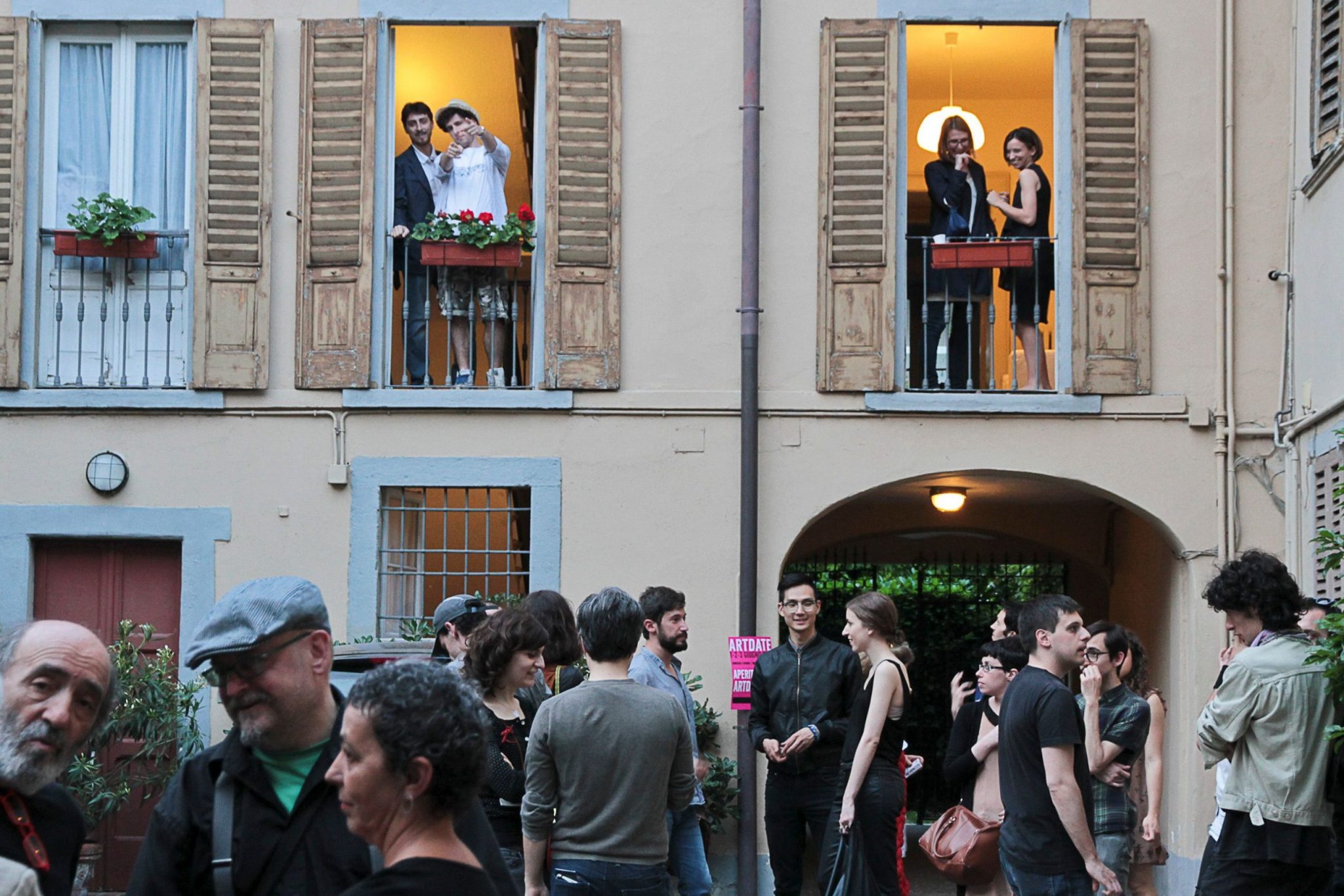
- Toward the end, there is usually an Open Studio day and a presentation of your project proposal or outcomes
This is not a production factory with giant industrial studios; it is a residency that treats conversation and networking as part of the work.
Housing and studio setup
The TransArtists listing outlines a very concrete setup, which helps with planning:
- 130 sqm apartment in an 18th-century building with a courtyard
- One bedroom, bathroom, living room, and kitchen
- Two rooms used as studio space
- Free Wi‑Fi
- Located on the first floor (so you are not hauling materials up endless flights of stairs)
You can think of it as an extended live/work flat. If you work very large-scale or need heavy fabrication, you will likely need to adapt your project or plan off-site production.
How to work with Bergamo while you are there
To actually make the most of The Blank Residency:
- Visit GAMeC early in your stay to get a sense of current regional conversations
- Plan short trips to Milan and possibly Brescia for studio visits, openings, or research days
- Use the Open Studio moment strategically: invite people you want to meet, not just whoever passes by
- Prepare a clear, concise project pitch so local partners understand how to support you
If you want this residency to matter after you leave, think of it as an entry point into a network, not just a place to make work quietly.
Nature, Art & Habitat (NAHR): eco-lab in Val Taleggio
Location: Sottochiesa, Taleggio Valley (Val Taleggio), Bergamo province
Website: nahr.it (also listed on Res Artis)
What kind of artist this suits
NAHR is for artists and researchers whose work genuinely needs an ecosystem, not just a pretty view. It suits:
- Artists working with ecology, climate, geology, environmental storytelling
- Designers, architects, and planners focused on sustainable materials and systems
- Researchers and scientists collaborating with artists on nature-related projects
- Anyone who works site-specifically and needs fieldwork, walking, and direct observation
The program calls itself an “ECO-Laboratory of Multidisciplinary Practice”, and that description is accurate. The idea is to treat the valley itself as a studio, archive, and collaborator.
Program focus and structure
NAHR is a summer residency with an international cohort. It is project-based, with selection done by a committee or jury depending on the year. The core themes orbit around:
- Nature as a source of inspiration for new forms and narratives
- Nature as a measure of available resources and limits
- Long-term coexistence between human and non-human systems
- Intimate links between living organisms and their environment
Each edition tends to have a specific curatorial framework related to these concerns, and applications are evaluated on how well your project speaks to that year’s focus.
Funding and costs
NAHR has historically offered a mix of arrangements, including partially subsidized opportunities and some tracks with fully covered accommodation. Travel, food, production, and presentation costs usually remain your responsibility, so you still need a budget.
To plan realistically:
- Assume you will pay for travel to Bergamo and then to Val Taleggio
- Budget for food and materials unless clearly stated otherwise
- Check the current call carefully for what the residency covers: housing, field trips, specific labs, etc.
Location and everyday life
The Taleggio Valley is about 45 minutes by car from Bergamo and roughly 1.5 hours from Milan. The village of Sottochiesa is rural and quiet. This is excellent if you need concentration, but you will not have a late-night gallery circuit at your door.
Typical logistics:
- Fly into Bergamo (Orio al Serio / BGY) or one of Milan’s airports
- Take a train or bus to Bergamo
- Continue by SAB bus or arranged car to Sottochiesa
Because of the location, think ahead about what you need to bring: specific equipment, field recording tools, drawing or writing materials, laptop, adapters, any medication. You will likely have access to basic supplies, but not specialized gear on demand.
Nearby Lombardy residencies to combine with Bergamo
When planning a residency period around Bergamo, it can make sense to look at regional options in the Lombardy area. You might not do them all in one trip, but they share travel routes and networks.
Palazzo Monti (Brescia)
Location: Brescia, Lombardy
Website: palazzomonti.org
Palazzo Monti is an independent residency in a 13th-century palace in Brescia, not far from Bergamo. It hosts painters, sculptors, designers, photographers, and other visual artists in an intensely decorative historic environment filled with 18th-century frescoes.
The residency includes:
- Live/work spaces within the palace
- International artists in residence, often several at a time
- A private collection and exhibition program on-site
If you are already flying into Bergamo or Milan, adding a residency in Brescia before or after a Bergamo-based program can make sense, especially if you want both urban-historic production time and mountain/nature research. The cities are connected by regional trains.
RUC / Rural Contemporary Artist Residency
Location: Rural Lombardy (not in Bergamo city)
Website: ruralcontemporary.org
RUC is an international residency focusing on contemporary art in a rural context. It welcomes visual artists and writers and emphasizes time to enhance creativity away from dense urban centers, often with links to local heritage and archaeological sites.
If you are planning a more extended stay in northern Italy, you can treat Bergamo as a kind of transit and reference point, combining:
- A city-network period at The Blank
- A nature-based period at NAHR
- A different rural context at RUC
- An historic-urban palace set-up at Palazzo Monti
This kind of chain can give you varied material, but each residency will have its own selection logic and calendar, so coordination is key.
Cost of living and neighborhoods: staying sane on a real budget
Compared with Milan, Bergamo is generally easier on the wallet, but you still need to plan for housing and production costs.
Housing and everyday expenses
If your residency covers accommodation (The Blank, NAHR, etc.), you mainly need to think about food, transport, and materials. If you self-organize time before or after your residency:
- Short-term rooms or apartments near the station or in Città Bassa are often more affordable and practical
- Groceries are manageable if you cook; eating out daily will stack up, especially in tourist-heavy parts of Città Alta
- Local buses and the funicular are reasonably priced; a monthly transit pass can be useful if you stay long enough
Production costs vary widely. Sketch-based, writing, or laptop-heavy practices can keep things light; sculpture or large installations need a clearer budget and plan for materials and transport.
Where to stay if you have a choice
If the residency lets you pick, or if you add independent time in Bergamo:
- Città Bassa (Lower City) – Good for everyday life, supermarkets, cafés, and transit. Less picturesque than Città Alta, but more practical for working artists.
- Near the train station – Great if you plan many day trips to Milan, Brescia, or elsewhere. Can be noisier, but very functional.
- Città Alta (Upper City) – Stunning historic setting, stone streets, and views. Perfect if your work feeds on atmosphere and walking, but slightly less convenient and often more tourist-focused.
- Val Taleggio and rural areas – These make sense only if your residency or project is there. Daily life is slower, and you need to accept limited services.
Studios, institutions, and how to connect while in town
Where work actually happens
In Bergamo, residency programs and institutions are the main studio infrastructures, not a huge market of open rental studios. That means:
- At The Blank, you work in the apartment-studio
- At NAHR, your studio is a mix of indoor workspaces and the outdoor environment
- At regional programs like RUC or Palazzo Monti, the residency itself hosts your studio life
If you want an independent studio in Bergamo outside a residency, you will likely need to ask local artists, look at co-working or maker spaces, or negotiate temporary use of project rooms; these options change quickly and are not centrally listed.
Key institutions and scenes to tap into
While you are based in or around Bergamo, prioritize these:
- GAMeC – Galleria d’Arte Moderna e Contemporanea di Bergamo: the city’s main contemporary art institution, with exhibitions, talks, and off-site projects. Visit early to understand how your work sits in local conversations.
- The Blank Contemporary Art: beyond the residency, The Blank operates as a network linking museums, academies, and spaces. Events, open calls, and projects often pass through here.
- Mountain and ecology programs: initiatives like projects connected to the Orobie mountains or “thinking like a mountain” frameworks often intersect with NAHR’s ecosystem and other eco-oriented work.
A compact community means you can meet people quickly, but you need to be proactive: attend openings, show up at talks, and let people know when your open studio or presentation is happening.
Getting in and out: airports, buses, and access to nature
Arriving in Bergamo
You are unlikely to struggle with access:
- Airport: Orio al Serio (BGY) is Bergamo’s airport and a major hub for low-cost carriers
- Train: Bergamo station connects easily to Milan and Brescia
- Bus and road: regional buses and highways link Bergamo with surrounding towns and valleys
Residencies in the area often provide clear directions from Bergamo station or airport; always cross-check with official transport sites, as schedules change.
Local transport and reaching rural residencies
Within Bergamo:
- Use the urban bus network for daily moves, especially between lower and upper city
- The funicular is practical and also gives you a view of the city’s split structure
- Walking works well if you do not mind hills and cobblestones
To reach NAHR or other rural contexts:
- Travel to Bergamo by plane or train
- Take a SAB bus or ride up into the valley
- Ask the residency whether they coordinate pick-ups or shared transport
If your project depends heavily on moving gear around, consider renting a car for at least part of your stay, or adapt your material choices to what you can carry on buses and on foot.
Visas, timing, and making applications count
Visa basics
If you come from outside the Schengen Area, check your country’s specific rules and do not assume anything. As a rough orientation:
- For stays under 90 days, many nationalities can enter visa-free or on a short-stay Schengen visa
- Longer residencies usually require a national visa or similar authorization
Ask the residency early on:
- Will you issue a formal invitation letter with dates, address, and conditions?
- Can you state clearly what is covered: accommodation, stipend, travel, etc.?
- Do you have experience supporting visa applications for past residents?
Start visa planning as soon as you receive an acceptance; do not wait until you have flights booked.
When to be in Bergamo, and when to apply
For working time in and around Bergamo:
- Spring and early autumn are generally ideal: comfortable temperatures, active cultural calendars, and good conditions for walking and fieldwork.
- Summer suits Val Taleggio and NAHR-style projects; mountain weather can change quickly, but daylight hours are long.
- Winter can work as quiet production time, though some rural access and outdoor research become more complex.
Residency application cycles differ. As a general strategy:
- Keep a running portfolio and CV ready so you can respond quickly to open calls
- Develop one or two modular project proposals that you can adapt to city-based (The Blank) and landscape-based (NAHR, RUC) contexts
- Read each call carefully: selection can be by curated invitation, open call, or mixed formats
Is Bergamo the right residency base for you?
Bergamo and its surrounding valleys are a good fit if you:
- Want a mid-scale city with real institutions but not an overwhelming art-industrial machine
- Are interested in ecology, landscape, and mountain environments, and how those intersect with contemporary art
- Value structured public moments like open studios and informal talks
- Like the idea of combining urban work time with intensive rural or alpine research
If your priorities are a dense commercial gallery circuit or a massive number of drop-in studios, you may feel limited. But if you are looking for a place where historic architectures, contemporary networks, and nearby ecosystems meet, Bergamo is a strong, workable hub for residency life.
Filter in Bergamo
Been to a residency in Bergamo?
Share your review