Artist Residencies in Budapest
7 residenciesin Budapest, Hungary
Why Budapest works so well for residencies
Budapest is compact, dense with culture, and still relatively affordable compared with Western Europe. That combination makes it ideal for a residency period where you can actually work, show up to events, and still pay for food and transport.
The city gives you three things that matter for a residency:
- Serious art infrastructure — museums, galleries, art centers, and universities mean your work doesn’t exist in a vacuum.
- Independent, artist-led activity — collectives, project spaces, and underground scenes offer peer communities and collaboration.
- Manageable scale — you can cross town for an opening or studio visit without losing half a day.
Architecture, history, and politics are visible basically everywhere, so if your work relates to urban change, post-socialist contexts, or memory, you’ll find material just walking around. If you’re more studio-focused, you still get access to museums like the Ludwig Museum and Műcsarnok for research and reference.
The main residency ecosystems in Budapest
Budapest doesn’t have one central residency model. Instead, you get a few strong hubs plus smaller or more niche programs. Here’s how the key ones work and what kind of artist each tends to suit.
Art Quarter Budapest (aqb)
What it is: A large art center and studio complex in a renovated industrial building, with its own international residency program. It’s one of the more visible and structured residency options in the city.
Typical setup:
- Length: usually 1–3 months.
- Housing: fully furnished room in a shared apartment on-site.
- Studios: dedicated studio space matched to your project’s needs.
- Support: staff help with day-to-day logistics, materials, equipment, and basic orientation in Budapest.
- Professional access: meetings and lectures with curators and critics, plus mediation if you’re planning exhibitions or presentations.
Disciplines: visual art, performance, sound/music, literature and translation, illustration, design, art theory, curatorial practice, art management. This broad scope makes it easier to fit in if your practice crosses fields.
Who it suits:
- Artists who want clear structure and institutional visibility.
- People looking to build professional networks in Hungary and Central Europe.
- Artists who benefit from being in a large complex with other studios and ongoing exhibitions.
What to pay attention to:
- Ask what is and isn’t covered: some cycles may include only space and housing; others may offer stipends or partial support.
- Check how often they facilitate public presentations during your stay (artist talks, screenings, group shows).
- If you’re sound, performance, or time-based, clarify what technical support they have available.
aqb is a strong base if you want your Budapest period to double as a networking phase, not just production.
BARTR
What it is: An annual interdisciplinary residency run by an independent collective. It’s intentionally urban, open-plan, and focused on underground and alternative cultural scenes in Budapest and Central Europe.
Typical setup:
- Length: around 11 weeks.
- Cohort size: roughly 10–15 artists per session.
- Studios: shared, spacious studios scattered through central districts (not one single building).
- Housing: flat-share apartments in central areas; private rooms, shared facilities, good Wi‑Fi.
- Program: workshops, weekly studio visits, and a final exhibition across more than one venue.
- Extra: some residents join a collaborative print publication.
Who it suits:
- Artists who thrive in collective, process-oriented environments.
- Interdisciplinary artists, especially those interested in urban and underground cultural contexts.
- People who like the idea of the city itself functioning as part of the studio.
What to pay attention to:
- The structure is decentralized. You move between different studios, venues, and events, so be ready for a lot of circulation.
- The program expects participation in workshops, visits, and a final show, so this isn’t a hermit-style retreat.
- Look at past editions: the kind of artists and work they host will tell you a lot about fit.
BARTR is good if you’re not just looking for a workspace, but for an extended conversation with peers and the city.
HAB AIR (HAB / MBH Foundation)
What it is: A residency hosted in a villa on Andrássy út, right in the city’s cultural axis. It’s supported by HAB (Hungarian Art & Business) and the MBH Foundation for the Support of the Arts.
Typical setup:
- Length: 6–8 weeks.
- Studio: about 50 m² of studio space; sometimes two studios of that size depending on occupancy.
- Housing: apartment with private bathroom.
- Facilities: shared kitchen and dining area.
- Production support: materials within an agreed budget.
- Cultural support: help with the local art scene, events, and city navigation.
- Public events: open studio during the residency and a finissage with public display of work.
Eligibility highlights:
- Degree in art or equivalent professional experience.
- Over 18, non-Hungarian permanent address, no criminal record.
- Not open to current students.
Who it suits:
- Artists at an early-professional to mid-career level who want focused production time plus public visibility.
- People who like a clear beginning, middle, and end to the residency, with a built-in public moment.
- Artists who benefit from materials support to actually realize a defined project.
What to pay attention to:
- How the materials budget is structured and what counts as eligible expenses.
- Expectations around the open studio and finissage (scale, documentation, audience).
- How they connect you with the broader Budapest art scene during your stay.
HAB AIR is a good option if you already have a project in mind and want a short, concentrated block of time to make it happen, with the city right outside your door.
Choosing the right residency for how you work
All three of these programs can be strong; the key is picking the one that matches how you actually work, not just what sounds glamorous.
If you prioritise production
You probably want:
- A quiet, reliable studio.
- Clear access to materials and tools.
- Minimal mandatory programming that eats into studio time.
Lean toward:
- HAB AIR if you want a defined 6–8 week build-up to a public showing, with material support.
- aqb if you need a longer arc (up to 3 months) and like having a bigger infrastructure around you.
In both cases, ask specifically about how many events or obligations are expected, and how much time residents typically get in the studio.
If you prioritise exchange and context
You probably want:
- Group critiques, conversations, and shared studios.
- Exposure to local scenes that might shift your practice.
- Built-in workshops or collaborative projects.
Lean toward:
- BARTR if you like structured collective activity and a final group exhibition.
- aqb if you want more institutional context and meetings with curators and critics.
When you talk to the residency, ask what a typical week looks like, how often they bring in local practitioners, and how they support informal peer exchange.
If you want a balance of both
Many artists want solid working time plus a network at the end. In that case, look for:
- A residency long enough to cycle through research, making, and reflection.
- Some mandatory events, but not an overload.
- Public moments (open studios, exhibitions, talks) that actually serve your practice.
For this mix, aqb and BARTR often work well, depending on how comfortable you are with a centralized institution versus a decentralized collective program.
Living in Budapest while you’re in residence
Residency life is not just the studio. How the city feels day to day will decide how sustainable the stay is for you.
Cost of living basics
Compared with many Western European cities, Budapest can still be easier on your budget, though prices can creep up in tourist-heavy or very central districts. Costs will vary by residency, but it helps to plan for:
- Food: Cooking at home is usually the cheapest option. Local markets and standard supermarkets are affordable; specialty shops can be more expensive.
- Transport: Public transport is reliable and relatively inexpensive. A pass makes sense if your studio and housing are in different districts.
- Cafés and bars: Great for informal meetings and sketching time, but central and trendy spots add up quickly.
If your residency covers housing and studio, your main expenses will be food, local transport, and materials that fall outside of any residency support.
Districts and daily routes
Budapest’s districts shape how you experience the residency. Some common areas to know:
- District V (Belváros-Lipótváros): super central, close to major institutions and the Danube, but usually pricey and more formal.
- District VI (Terézváros): runs along Andrássy út, full of cultural venues, theatres, and galleries. HAB AIR is based here.
- District VII (Erzsébetváros): very lively, lots of bars and nightlife, plus some independent spaces. Great if you like nightlife; less ideal if you need quiet.
- District VIII (Józsefváros): mixed, historically working-class, changing quickly, with a lot of studios and small initiatives.
- District IX (Ferencváros): increasingly important for contemporary art and creative spaces, with a mix of residential and cultural activity.
- Buda side: Quieter, more residential, often with calmer streets and more hills, good if you need focus and don’t mind crossing the river for events.
If your residency doesn’t house you on-site, these are the areas where many artists start looking for rentals, balancing access with noise and cost.
Getting around
You can do almost everything by public transport:
- Metro, trams, buses, trolleybuses form a dense network. Trams along the Danube are especially practical and scenic.
- Airport access is by bus plus metro or taxi/ride-hail services.
- Bikes are increasingly common, though infrastructure varies by district.
If your studio is central, you can walk to many openings and events. Not having to worry about a car simplifies your residency life.
Visas, admin, and paperwork
The boring logistics can make or break a residency, especially if you’re coming from outside the EU.
EU/EEA artists
If you hold an EU/EEA passport, you generally don’t need a visa to attend residencies in Hungary. You may still need to register locally if you stay past a certain period, so double-check with the residency if they provide guidance.
Non-EU artists
Depending on your nationality and the length of your stay, you may need:
- A short-stay Schengen visa for shorter residencies.
- A long-stay visa or residence permit if you’re staying longer or if the residency includes certain types of payment.
Before you apply, ask the residency:
- If they provide official invitation letters.
- Whether they have experience hosting artists from your region.
- What kind of documentation previous residents used successfully.
Always cross-check with the Hungarian embassy or consulate in your country and keep an eye on health insurance requirements; some visas or residence permits expect proof of coverage.
Local art communities and how to connect
Strong residencies in Budapest usually plug you into existing communities, not just one-off events.
Where the conversations happen
Useful nodes for artists:
- Residency cohorts: your immediate peers at aqb, BARTR, HAB AIR, or other programs are often your first network.
- Independent collectives and project spaces: these can be great for alternative exhibitions, experimental events, and quick collaborations.
- University-connected circles: especially around the Hungarian University of Fine Arts and other programs, where students, alumni, and faculty often overlap with residency scenes.
- Gallery openings: regular openings are key networking moments. Expect to run into the same curators, artists, and writers if you show up consistently.
Many residencies build in open studios, talks, or final exhibitions, which you can treat as starting points rather than endpoints for conversations.
Events to keep on your radar
During your stay, you’ll likely encounter:
- Open studios: both within your residency and in other studio houses.
- Finissages: closing events for exhibitions, often more relaxed than openings.
- Artist talks and screenings: at institutions like the Ludwig Museum, Műcsarnok, aqb, or project spaces.
- Publication launches and workshops: especially around collectives and university-affiliated groups.
Ask your residency coordinators for a list of recommended venues and mailing lists. That saves time and gives you a filter on what’s actually relevant to your practice.
Planning your Budapest residency season
The time of year can change the tone of your stay, even if your studio conditions are stable.
How the seasons feel for artists
- Spring: Pleasant weather, active cultural calendar, lots of openings and public events. Good for research and networking plus production.
- Summer: Can be hot, but some residency programs are seasonal and the city is full of festivals. Socially active, sometimes less formal.
- Early autumn: Strong gallery season, comfortable temperatures, and busy institutions. Often a sweet spot for residencies that want public engagement.
- Winter: Quieter socially, colder, fewer distractions. Often ideal if you want to concentrate on deep studio work and use museums as daytime research spaces.
When you plan, think about your own rhythm. If you need social energy and events, aim for spring or early autumn. If you need a reset, winter in Budapest can be a productive retreat.
Practical next steps for applying
Once you’ve decided Budapest is a fit, you can make your applications more strategic so you’re not sending the same generic proposal everywhere.
Clarify your own priorities first
Before writing anything, define:
- What kind of work phase you’re in (research, experimentation, production, presentation).
- How much structure you want (programmed activities vs free time).
- What kind of output you genuinely want at the end (finished works, performance, text, network, documentation).
Then match that to the residency profiles:
- aqb: structured support, broad disciplines, institutional context.
- BARTR: interdisciplinary, collective, city-embedded, process-heavy.
- HAB AIR: shorter, focused, production-oriented with materials support and a clear public outcome.
Tailor your proposal to the city
You don’t need to force your work into a Budapest theme, but it helps to show you’ve thought about:
- How the city’s context might shape your project (architecture, history, social issues).
- How you’ll use the residency’s specific format (shared studios, final exhibition, curator meetings).
- What you can offer the local scene (talks, workshops, collaborations, or simply engaged presence).
Residencies notice when your project clearly fits their structure and surroundings.
Using Budapest as a long-term anchor
A good residency in Budapest can be more than a temporary escape; it can anchor you in a region with a strong, distinct contemporary art conversation.
If you approach it intentionally, you leave with:
- New work or a solid body of research.
- Concrete connections to artists, curators, writers, and institutions.
- A sense of where your practice sits in a broader Central European context.
Whether you end up at aqb, BARTR, HAB AIR, or another smaller program, treating Budapest as a working city rather than a backdrop will give you much more out of the residency period.

Art Quarter Budapest (AQB)
Budapest, Hungary
AQB Artist-in-Residence Program, located in Budapest, Hungary, is designed for professionals across a broad spectrum of the creative sector, including visual and performing arts, literature, and curatorial practices. This program offers fully furnished private rooms and studios tailored to the project's requirements, fostering a vibrant collaborative environment. AQB aims to integrate residents into the local art scene, providing professional connections, opportunities for solo shows, and cultural immersion through curated tours and events. With a participation fee, the residency spans 1 to 3 months, inviting individual artists, groups, and families to apply. The selection process emphasizes project relevance to the Budapest context, encouraging applications that engage with the city's unique cultural dynamics.

Bakelit Multi Art Center
Budapest, Hungary
Bakelit Multi Art Center in Budapest offers an artist residency program open to individuals and groups from various art fields, providing creative spaces for rehearsals, workshops, performances, and an atelier with technical support. Accommodation is available in the on-site Factory Hostel, featuring rooms with private or shared bathrooms, equipped kitchens, WiFi, and laundry facilities. Located in a repurposed industrial area, it supports innovative projects in fine and performing arts since its residency program started in .

Easttopics
Budapest, Hungary
East Call Curatorial Residency, organized by Easttopics, is an intensive two-week program located in Budapest, Hungary, offering emerging curators a unique opportunity to gain comprehensive insight into the Hungarian contemporary art scene. The residency aims to examine the characteristics of this scene within a broader regional context. Participants will explore contemporary curatorial practices, institutional situations, and issues affecting contemporary art. The program emphasizes the roles and responsibilities of curators as mediators between audiences and artists. It focuses on open, horizontal, and conversation-based knowledge transfers. Designed for emerging curators and curators-to-be, the residency provides professional knowledge expansion through curatorial workshops, studio visits, and discussions. Participants will also have the chance to develop project ideas, conduct research, and network with contemporary art professionals active in Budapest.

Institute for Advanced Study at Central European University (IAS CEU)
Budapest, Hungary
The Institute for Advanced Study at Central European University (IAS CEU) in Budapest, Hungary, offers an annual Artist in Residence Fellowship, providing one fellowship each for a Writer in Residence and a Visual/New Media Artist in Residence. This prestigious program invites both established and emerging artists from around the world to apply, offering them the opportunity to conceptualize and create new works over a period of up to five months, with a minimum stay of three months. The fellowship supports creative work in fields such as poetry, prose, drama, screenwriting, playwriting, and various visual media, including film and digital arts. Artists selected for this residency will be immersed in an intellectually stimulating environment, engaging with the vibrant academic community at IAS CEU, and will have access to accommodation, a monthly stipend, and technical support.
Spatial Sound Institute
Budapest, Hungary
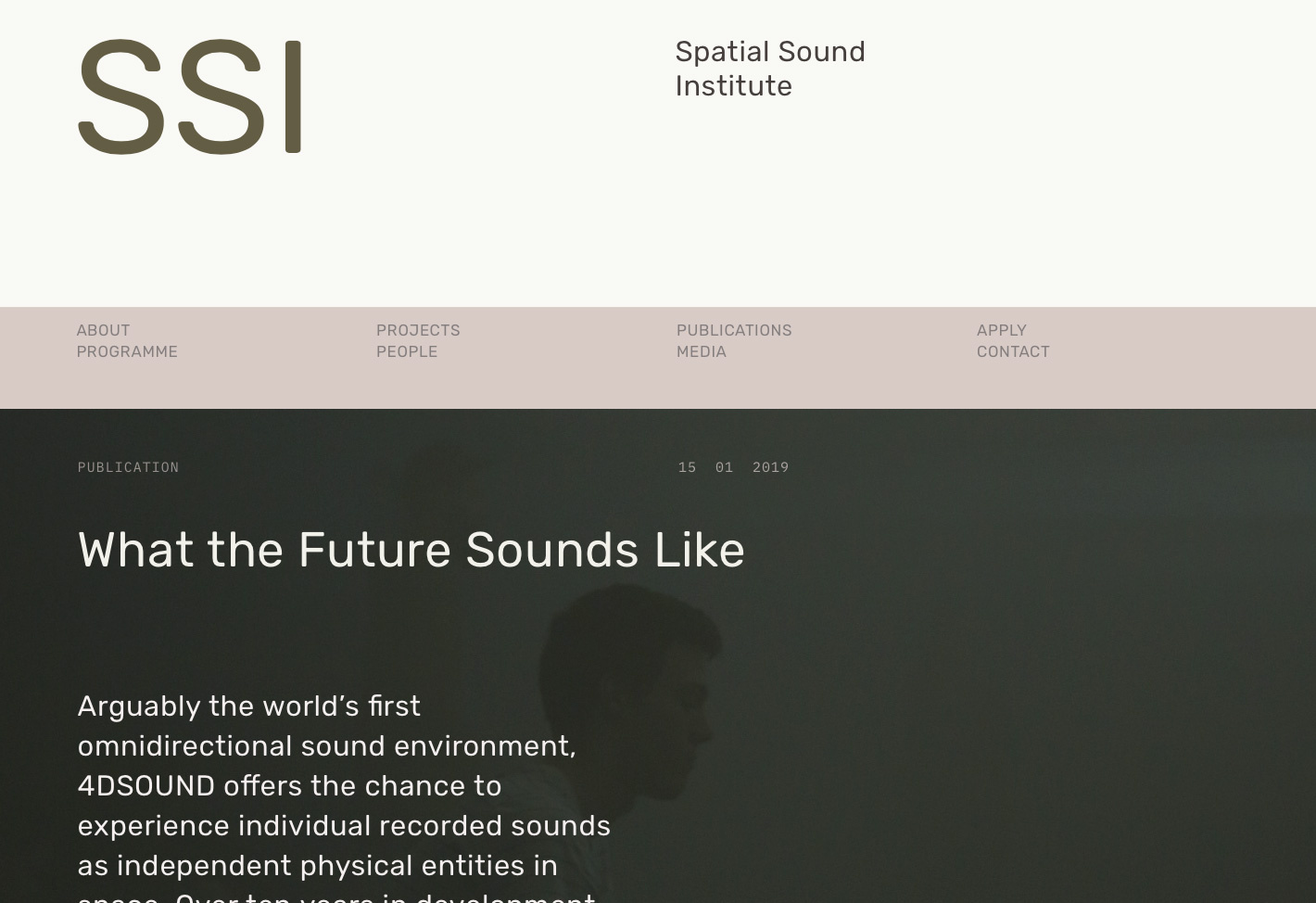
The Spatial Sound Institute in Budapest, Hungary, is a research and development center for spatial sound technologies and practices, hosting a multidisciplinary artist residency program since that invites creators from various disciplines to develop projects using the 4DSOUND system. Residents receive training, technical support, mentoring, and lodging with shared facilities and daily lunches, culminating in project presentations such as performances, installations, or publications. The program focuses on new sound content, acoustic environments, and listening research, housed in the AQB arts complex on the Danube.
Studio of Young Artists Association
Budapest, Hungary
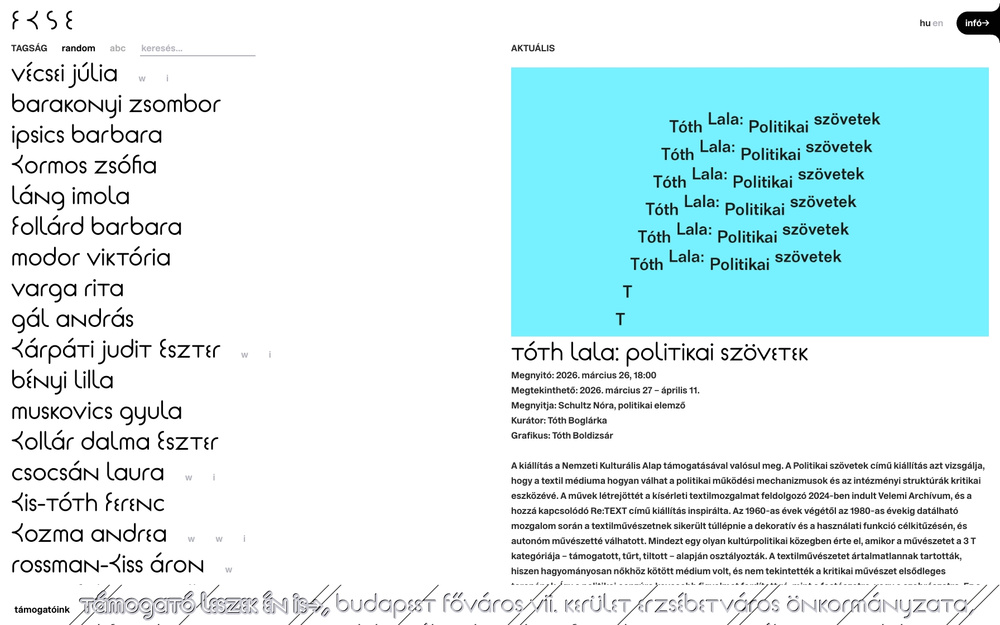
The Studio of Young Artists Association (SYAA) is a professional organization in Budapest that has supported young Hungarian visual artists for over five decades by fostering professional contacts, exhibition opportunities, and international residencies. It focuses on building connections with foreign institutions to promote dialogs and collaborations between the international contemporary art scene and Hungarian artists. Residencies are primarily by invitation, though artists may submit work and proposals; the group maintains a studio complex and gallery at Rottenbiller u. 35 in District VII.
The Symptoms Studio
Budapest, Hungary
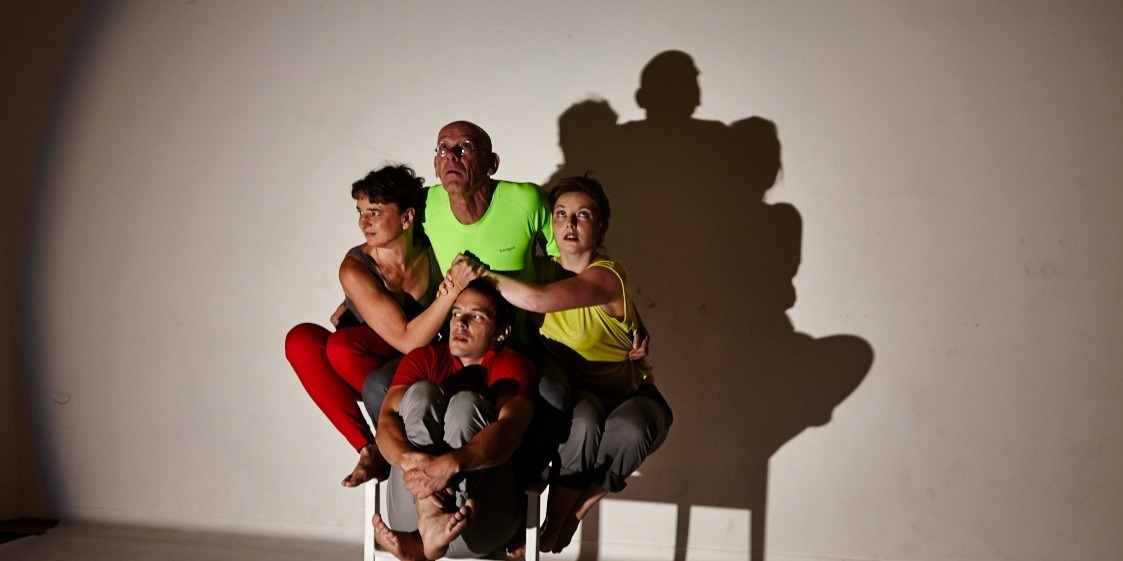
The Symptoms is an independent contemporary dance and theater company founded in , led by choreographer Réka Szabó. Known for thought-provoking, boundary-blurring performances integrating text, movement, music, visuals, and effects, with a focus on social involvement and performer collaboration.
Browse by discipline in Budapest
Filter in Budapest
Been to a residency in Budapest?
Share your review