Artist Residencies in Chora
1 residencyin Chora, Greece
Why artists look at Chora for residencies
Chora is the Greek word for “main town,” so you will see it on several islands. This guide focuses on Chora on Andros because that is where the Amalia Gardens residency and its group exhibition are based, and it also points you to La Chapelle Saint-Antoine in Chora, Naxos as a second strong option.
Chora, Andros is small but culturally dense. The town is built along a narrow peninsula with neoclassical houses, stone alleys, and a layered maritime history. The landscape around it is full of dry stone terraces, olive groves, streams, and steep paths. That combination of architecture, memory, and land makes it particularly good for site-responsive work.
Instead of a big gallery district, you get a few serious museums, heritage buildings, and a close relationship to the island’s everyday life. Residencies here tend to be about context more than just four studio walls: local history, people, and terrain become part of your process.
Amalia Gardens Artistic Residency (Chora, Andros)
Location: Andros, with the final exhibition in Chora, the island’s cultural capital.
Amalia Gardens is set up as a short, concentrated residency that pushes you to respond directly to Andros itself. The program connects artists to the island’s landscape and heritage and finishes with a group show in a historic high school in Chora.
What the Amalia Gardens residency offers
- Duration: About 10 days, so it is intense and structured.
- Theme: Contextual, participatory creation grounded in Andros’ landscape and cultural history.
- Focus areas: Ancient stone terraces, olive groves, maritime heritage, local traditions and stories.
- Disciplines: Open to multiple practices: visual arts, socially engaged art, performance, writing, sound, moving image, and hybrid practices.
- Outcome: Group exhibition in a historic high school in Chora, usually near the very end of the residency period.
The key point: this is not a quiet, open-ended retreat. You are expected to develop a project within a clear timeframe, surrounded by peers, and translate your research into something shareable with the local public.
Who Amalia Gardens suits
- Site-specific artists: You are excited by working in response to land, architecture, or local narratives, not just in a neutral studio.
- Socially engaged practices: You want to talk to people, pick up stories, or collaborate with the community.
- Fast workers: You can observe, research, prototype, and present within ten days without burning out.
- Artists interested in Mediterranean ecology and heritage: You want to work with terraces, agriculture, water, sea routes, and migration of people or ideas.
Mediums that often do well in a program like this include drawing, photography, video, sound, text-based work, modest-scale sculpture or installation, and performance that can adapt to non-institutional venues.
How the Chora context shapes your work
The group exhibition takes place in a historic high school in Chora. You are not in a white cube; you are in a lived building with its own memory. That affects scale, materials, and how you think about audience.
- Scale: Plan works that can be transported easily across ferries and installed quickly.
- Display: Expect to install in classrooms, corridors, or multipurpose spaces rather than museum-grade galleries.
- Audience: Your visitors may be a mix of local residents, summer visitors, and cultural travelers. Many will respond strongly to work that clearly relates to Andros itself.
Because Chora is compact, you can move between your accommodation, potential work sites, and the exhibition venue on foot. That keeps logistics simple and lets you spend more time actually making work.
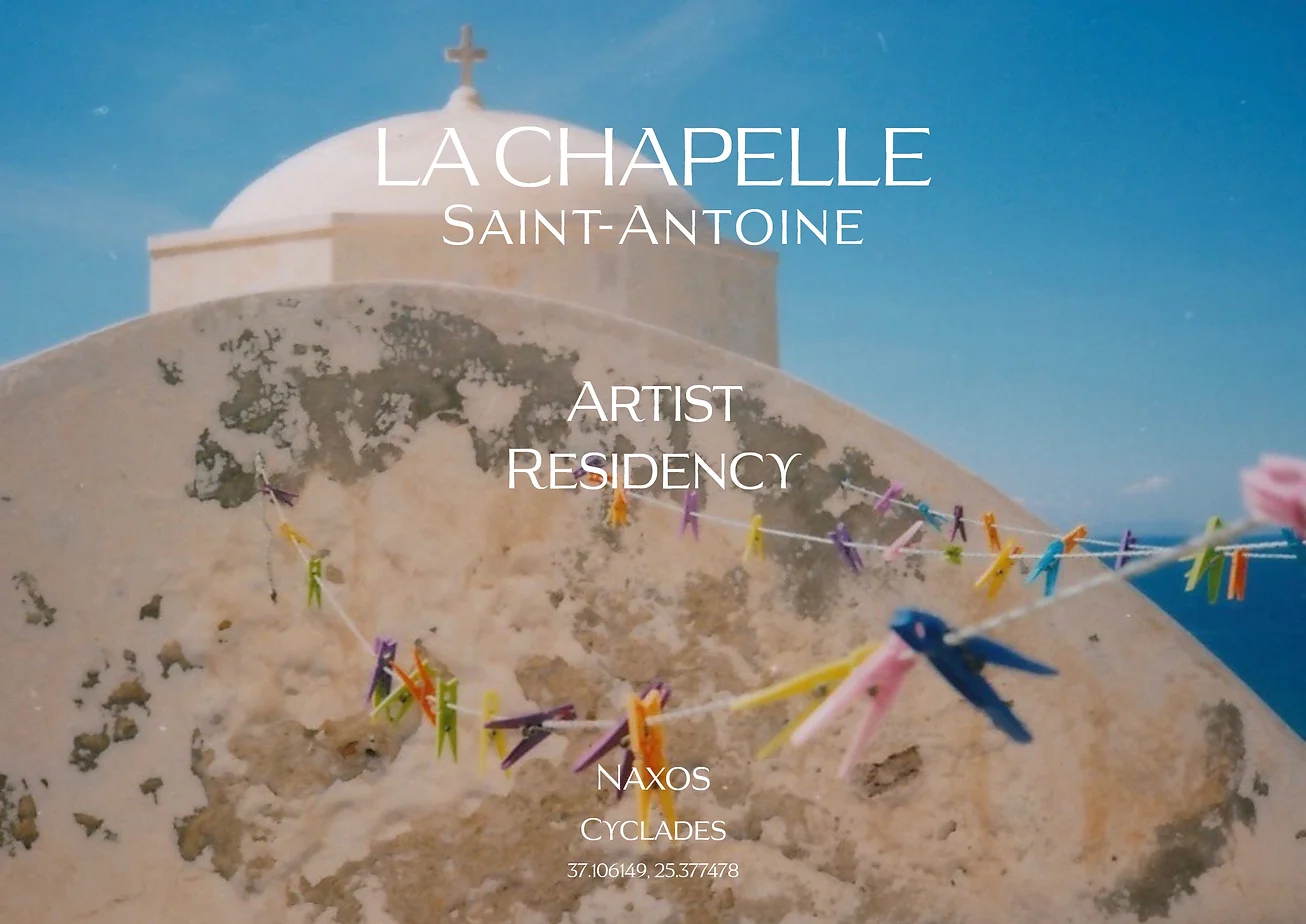
La Chapelle Saint-Antoine (Chora, Naxos)
La Chapelle Saint-Antoine is not on Andros; it is in Chora, Naxos. It still shows up in searches for “Chora residencies,” and it is a genuinely strong option if you are flexible about which island capital you work in.
What La Chapelle Saint-Antoine offers
- Location: In the Kastro area of Chora, Naxos, inside a restored old Venetian building that once functioned as a monastery.
- Season: Typically runs from spring to late autumn.
- Capacity: Around two artists each month, so a very small cohort.
- Facilities: Private rooms, individual workspaces, and shared living areas within the same complex.
- Atmosphere: Quiet, reflective, rooted in the layered history of Naxos’ main town.
This residency feels more like a slow-burn studio period than an intensive project sprint. The architecture and layout create a cloistered, focused environment, while the town and island provide material for research and wandering.
Who it suits
- Artists who want time: You prefer a month of work over a ten-day rush.
- Process-driven practices: You might be writing, developing a long-form drawing series, working on sound, or building a body of small works.
- Artists interested in historic architecture: Your work responds to buildings, ruins, or layered urban spaces.
- Artists who like small cohorts: Two artists at a time can mean deep conversations, but you should also be comfortable with quiet stretches.
Naxos is larger and more touristic than Andros, especially around the port and beach areas. Chora has more shops, cafes, and general services within walking distance. That can be helpful if you want access to materials and daily-life variety.
Daily life in Chora, Andros as a resident
Chora, Andros is not a big city, which is part of the appeal. It is walkable, close-knit, and very tied to the sea and the hills above it. For artists, that translates to a mix of practical constraints and creative advantages.
Cost of living and budgeting
Costs on Andros shift with the season, but there are some consistent patterns:
- Accommodation: Guesthouses and rooms increase in price under peak tourism pressure; residencies that include housing simplify this dramatically.
- Food: Taverns, bakeries, and small supermarkets give you options. Eating out every meal can add up, so cooking some meals is usually the easiest way to keep your budget sane.
- Studio space: Outside of residency structures, dedicated studios are limited. Many artists use multipurpose rooms or live/work setups.
- Transport: Inside Chora, you mostly walk. Getting to remote parts of the island may require a bus, taxi, rented car, or scooter.
If you want an extra self-directed week before or after a residency, the big budget variables will be ferry tickets, where you stay, and how often you eat out.
Areas of Chora that work well for artists
Chora is basically a sequence of zones rather than distinct neighborhoods:
- Historic core: Narrow lanes, small squares, and neoclassical houses. Staying or working here means you are close to everything and can observe daily rhythms just by stepping outside.
- Near the museums: Being close to the Museum of Contemporary Art and the Maritime Museum keeps you in contact with local culture and visiting audiences.
- Residential edge: A bit quieter, often with views toward the sea or hills, better if you need silence and do not mind a slightly longer walk into the center.
The town itself is small enough that most places in Chora are reachable within 10–15 minutes on foot.
Art spaces, museums, and informal networks
Even though Chora, Andros is not full of commercial galleries, there is a strong cultural backbone that residency artists can connect to.
Key institutions in Chora, Andros
- Museum of Contemporary Art / Goulandris Museum: Hosts exhibitions that bring national and international work into conversation with the island context. A valuable reference point for any artist in residence.
- Andros Maritime Museum: Anchors the island’s shipping and seafaring identity. Useful if your work deals with trade routes, migration, boats, or water-based symbolism.
- Historic high school building: Used as a cultural venue and exhibition site, including the Amalia Gardens final group show.
There are also smaller municipal and seasonal spaces that host exhibitions or cultural events, depending on the year and local programming.
How to plug into the local art ecosystem
- Follow museum programs: Check current exhibitions and events at the Museum of Contemporary Art and other spaces before you arrive. Curators and staff can be important contacts.
- Ask residency organizers for introductions: Program coordinators often know local artists, teachers, and cultural workers who are open to studio visits or conversations.
- Show up at openings and public events: Even in a small town, openings, talks, and concerts are where you meet people who care about cultural work.
- Use your final exhibition: For programs like Amalia Gardens, the group show is not just a formality; it is a chance to test how your work lands with local audiences, and to have conversations that carry into future projects.
Getting to and around Chora
Andros has no airport, which keeps it relatively calm compared with some islands, but it means planning your journey with a little care.
Reaching Andros and Chora
- Ferry: Andros is usually reached by ferry from Rafina, a port near Athens. Ferry schedules vary with the season and can be affected by weather.
- Timing: Add buffer time for transfers between flights, buses, and ferries, especially if you are traveling with large or fragile work.
- Final leg: From the arrival port on Andros, you reach Chora by bus, taxi, or pre-arranged pickup.
When traveling for a residency, it helps to arrive at least a day before the program starts so you have time to settle, adjust to the island, and recover from transit.
Moving materials as an artist
- Bring the essentials: Specialty tools, small electronics, and unique materials may not be available on the island.
- Source locally where possible: For basic materials, look at hardware stores, stationery shops, and whatever art supply options exist on Andros.
- Work modular: Think of your project in components that can be carried and installed easily, rather than one heavy, fragile object.
Visas and admin basics
Residencies in Greece usually operate within standard travel frameworks, but rules differ depending on your passport.
Key points to keep in mind
- EU/EEA/Swiss artists: Freedom of movement applies, though long stays may require local registration depending on national rules.
- Non-EU artists: Many will need a Schengen visa for short stays. An official invitation letter, proof of accommodation, and documentation of funds are often part of the application.
- Work vs. residency status: Being accepted into a residency does not automatically grant work authorization or change your visa category. If payment, sales, or long-term stays are involved, check legal details in advance.
- Insurance: Travel and health insurance that covers creative work and equipment is a smart baseline for any residency trip.
When to go and what kind of artist each Chora suits
Season affects both the atmosphere and the practical side of your stay.
Seasonal feel in Chora, Andros
- Spring: Cooler temperatures, green hills, good for walking, research, and landscape-related work.
- Early autumn: Still warm, often strong light, fewer visitors; a good compromise between activity and calm.
- High summer: Hotter, busier, more expensive, but can be great for public events and outdoor presentations if you are comfortable working in heat.
Choosing between Chora, Andros and Chora, Naxos
Both main towns offer a strong sense of place, but they suit different working rhythms.
- Pick Amalia Gardens in Chora, Andros if:
- You want a short, structured, project-driven stay.
- You are motivated by landscape, ecology, and local heritage.
- You like group energy and a definite public outcome.
- You are comfortable producing work under time pressure.
- Pick La Chapelle Saint-Antoine in Chora, Naxos if:
- You want a longer, slower residency with more solo time.
- You like working within a historic building and dense old town.
- You value a small cohort and a contemplative atmosphere.
- You need time to build a body of work or develop a long-form project.
Next steps
If you are considering a Chora-based residency, start by reading each program’s call carefully and matching it to your current project. Reach out to coordinators with specific questions about space, tools, and presentation options, and sketch a project proposal that uses the town itself as more than a backdrop.
When a residency is this place-focused, the strongest projects usually grow directly out of walking the streets, talking to people, and working with what you find on the island. If you treat Chora as a collaborator instead of just a location, the residency tends to give a lot back.
Been to a residency in Chora?
Share your review