Reviewed by Artists

Artist Residencies in Cra. Torroella de Fluvia a St Pere

1 residencyin Cra. Torroella de Fluvia a St Pere, Spain
Why artists end up in Cra. Torroella de Fluvià a St Pere

Cra. Torroella de Fluvià a St Pere sits in the Empordà region in northeastern Catalonia, not far from Girona and the Costa Brava. It’s countryside: fields, olive groves, low stone villages, wide skies, and strong Mediterranean light. You’re close to nature reserves like Aiguamolls de l’Empordà and, with a bit of a drive, Cap de Creus, plus coastal towns if you need a sea break.

Artists head here less for a big institutional scene and more for focus. Think long work days, a few key residencies, and occasional trips to Girona, Figueres, or La Bisbal d’Empordà when you need materials or stimulation.

This kind of setting tends to suit:

  • writers finishing a manuscript or screenplay
  • filmmakers in development or post-production
  • composers and sound artists who need quiet
  • painters and mixed-media artists who respond to landscape and light
  • research-based or slower practices that benefit from distance from city pressure

Can Còdol de Fluvià: rural retreat for writers, filmmakers, and composers

Location: Cra. Torroella de Fluvià a St Pere, Empordà, Catalonia, Spain
Website: cancodoldefluvia.com/residency/

Can Còdol de Fluvià is the residency actually sitting on the Cra. Torroella de Fluvià a St Pere road. It’s a boutique, self-directed program designed for professional creators who mostly want one thing: uninterrupted time.

What the residency offers

The core offer is very simple and that’s the point. The residency provides:

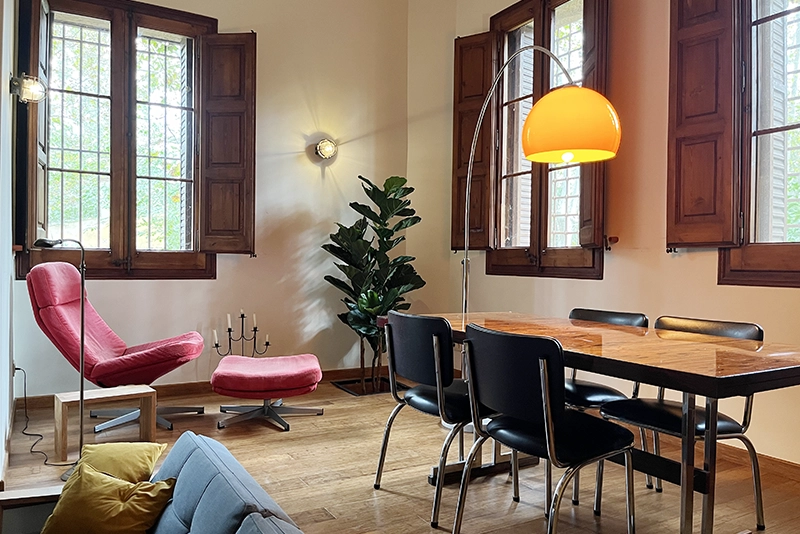
  • a private 110 m² apartment on a rural estate
  • a season that typically runs from autumn through early spring (roughly October–March)
  • a quiet environment for independent work and artistic research
  • no obligatory workshops, open studios, or group schedules

Public descriptions list it for:

  • writers and literary projects
  • filmmakers (especially in writing/editing phases)
  • composers and sound/music artists
  • new media and hybrid practices that don’t need heavy fabrication

The vibe is closer to a structured creative retreat than a residency with an agenda. You get keys, space, and time. How you use that is up to you.

Who this residency really suits

You’ll get the most out of Can Còdol de Fluvià if you:

  • thrive in solitude and can self-manage your days
  • are mid-project and need a push to finish or restructure a body of work
  • don’t require daily feedback, group critique, or built-in social life
  • work primarily on a laptop, with notebooks, small instruments, or portable gear

This kind of setup tends to be ideal for:

  • novelists, nonfiction writers, essayists, poets
  • screenwriters, showrunners in planning, or directors editing footage
  • composers scoring film or developing long-form works
  • sound designers and new media artists building software-based or research-heavy projects

Who might struggle here

You may find this residency limiting if you’re:

  • craving a social, communal residency with group meals, workshops, or collaborations
  • needing large-scale fabrication, heavy machinery, or messy industrial processes
  • expecting built-in public events, open studios, or direct institutional visibility

You can still use it to sketch, storyboard, research, or draft proposals for bigger production phases elsewhere. Many artists treat this kind of residency as the thinking and planning phase.

How to prep your practice for a quiet, self-directed stay

To make a residency like Can Còdol truly productive, it helps to arrive with structure. Before you land:

  • Set one clear project goal. For example: complete a full second-draft edit, map a feature-length film treatment, write three chapters, or draft a full sound piece timeline.
  • Break that into weekly targets. Self-directed residencies are easy to drift through; pre-commit to what “done” looks like each week.
  • Prepare any libraries and media. Download reference materials, offline libraries, sound libraries, and software updates before you arrive, so you’re not at the mercy of rural internet.
  • Bring your essentials. Headphones, small speakers, notebooks, index cards, external drives, and backup chargers will matter more here than fancy gear.

Alzueta Gallery Residency: Empordà studio time with gallery context

Location: Palau de Casavells, Empordà, near La Bisbal d’Empordà and the Costa Brava
Website: alzuetagallery.com/artists-residency/

Alzueta Gallery runs a residency program in the Empordà countryside, close enough to be considered part of the same broad region as Cra. Torroella de Fluvià a St Pere. This one sits on a different point on the spectrum: less retreat, more gallery-adjacent studio experience.

What the residency offers

According to the gallery, the residency combines rural quiet with a direct line to the commercial art circuit. Artists typically receive:

  • a studio for each artist in a generous industrial space (around 500 m² of working area overall)
  • an apartment in nearby La Bisbal d’Empordà for living
  • a countryside setting in the Empordà with Catalan farm architecture and outdoor space
  • contacts with collectors, including studio visits
  • professional support tied to the gallery’s curatorial and sales ecosystem

They’ve hosted artists such as Bruno Ollé, Richard Zinon, Scott Licznerski, Claudia Valsells, and Maru Quiñonero, which gives a sense of the aesthetic range: contemporary painting, material experimentation, color-focused work, and object-based practices.

Who this suits

This program is especially useful if you:

  • are building a cohesive body of work you’d like to show
  • want collector and gallery visibility and are ready to talk about your work in that context
  • work in painting, sculpture, installation, or mixed media that benefits from robust studio space
  • value studio visits and are comfortable having your process seen by curators and collectors

This is not a purely contemplative residency. It’s an opportunity to produce and also position your work within a gallery framework, which can be a big step if you’re ready for it.

How it compares to Can Còdol de Fluvià

Both are in the broader Empordà area, but they serve different phases of a practice:

  • Can Còdol de Fluvià: quiet, self-directed, ideal for writing, editing, composing, and research in relative isolation.
  • Alzueta Gallery Residency: studio-focused, exhibition-oriented, with collector contact and a link to gallery programming.

Many artists benefit from alternating between these modes across different residencies: retreat to plan and think, then gallery-linked time to produce and show.

Other Catalan references worth knowing about

The area around Cra. Torroella de Fluvià a St Pere connects quickly to a wider Catalan art ecosystem. If you’re planning a longer regional stay, these references help you map your options.

Art Print Residence (printmakers)

Location: Arenys de Munt, near Barcelona, Catalonia
Website: artprintresidence.com

Not local to Empordà, but a strong reference if your practice is print-based. Art Print Residence offers:

  • a fully equipped professional printmaking studio
  • specialization in intaglio etching and other traditional techniques
  • residencies that focus on editioning and technical experimentation

An artist might, for example, spend quiet time at Can Còdol designing a series and then book time at Art Print Residence to produce the final editions with technical support.

Cost of living and budgeting around Empordà

Empordà is usually less expensive than major cities like Barcelona, but it does have tourism seasons that push prices up, especially near the coast.

What to expect cost-wise

  • Housing: Rural rentals and small-village stays tend to be more affordable in the cooler months. Summer pushes prices up, especially within easy reach of the beaches.
  • Food: Supermarkets in nearby towns (Figueres, La Bisbal, smaller local chains) are reasonably priced. Restaurant meals in tourist spots will climb quickly; village bars and menus can be gentler on the budget.
  • Transport: Car hire or ownership is often the biggest expense because residencies are rural. Fuel and tolls add up if you travel frequently.
  • Residency fees: Some residencies bundle housing and studio space. That can be cheaper than cobbling together your own rental plus a separate workspace.

Budget tips for artists

  • Favor off-season stays. Autumn, winter, and early spring can be quieter, cheaper, and better for concentration.
  • Choose residencies with housing included. That saves time and money vs. piecing together your own accommodation.
  • Plan your transport in advance. Decide early if you will need a car; if you can share one with another artist or partner, factor that into your planning.
  • Bring key materials with you. Specialist art supplies may require trips to Girona, Barcelona, or online orders, so pack essentials you know you’ll use.

Where you’ll likely spend time: nearby towns and villages

If you’re based at a residency on Cra. Torroella de Fluvià a St Pere, you’re in a rural pocket. That’s the charm, but it also means your support network is spread across several nearby towns.

La Bisbal d’Empordà

La Bisbal is known regionally for ceramics and craft. For artists, it’s handy because:

  • you find materials, hardware, and basic art supplies more easily than in tiny villages
  • there’s a wider craft and maker community to tap into
  • Alzueta’s apartment base for its residency is here, so you might end up in this town if you’re on that program

Figueres

Figueres is a bigger hub with the famous Dalí Theatre-Museum, regular train services, and more services in general.

  • good for urban errands, banks, and larger supermarkets
  • train access if you need to get to Girona or Barcelona
  • cultural programming mostly geared to visitors, but still useful to recharge visually

Girona

Girona gives you a more active contemporary art and design ecosystem without the scale of Barcelona.

  • more galleries, cultural centers, and events
  • better access to specialist supplies
  • an easy day trip from Empordà by car or train

Small Empordà villages

The villages close to Cra. Torroella de Fluvià a St Pere are where you’ll feel the rural quiet most clearly. Expect:

  • limited shops and services, often closed midday or on certain days
  • a high ratio of fields, walking paths, and sky to people
  • a slower rhythm that many artists find perfect for deep work

Getting there and getting around

Arrival routes

  • By air: Fly into Barcelona-El Prat or Girona-Costa Brava. Girona is closer but smaller; Barcelona has more routes.
  • By train: High-speed trains run to Girona and Figueres. From there, you typically switch to regional transport or rent a car.
  • By car: Driving from Barcelona or Girona gives you flexibility. Many residencies send driving directions once accepted.

Do you need a car?

For a rural residency like Can Còdol de Fluvià, a car is often extremely helpful and sometimes feels essential. Think about:

  • Grocery runs: Walking to a supermarket may not be realistic.
  • Field recording or landscape research: A car lets you reach natural parks, coastlines, and villages you want to respond to.
  • Trips to towns: For breaks, meetings, or gallery visits, you’ll rely on four wheels more than public transport.

If driving isn’t an option, ask the residency directly about:

  • nearest train or bus stop and typical taxi costs
  • other residents you might share rides with
  • any regular shopping trips the hosts make that you can join

Visas and paperwork for non-EU artists

If you’re coming from outside the EU/EEA/Switzerland, check your entry conditions in advance.

Short stays (under 90 days)

Many non-EU nationals can visit Spain on a short-stay basis under the Schengen rules, depending on passport. For a typical month- or two-month residency, that’s often what artists use, but you still need to verify your own situation.

Longer stays (over 90 days)

For residencies longer than about three months, you may need a Spanish national visa or similar authorization. Requirements vary by country and consulate, and can depend on whether your residency involves a stipend, a formal work contract, or study-like conditions.

What to ask the residency for

Before you apply for any visa, ask the host:

  • if they provide a formal invitation or acceptance letter
  • whether accommodation is officially documented (useful for visa and registration forms)
  • how they typically describe the program for consular paperwork (artist residency, research stay, cultural program, etc.)

Residencies in this area generally don’t handle the visa for you; they confirm your stay and leave the consulate dance to you.

When to go and how to time your applications

Seasonal rhythm

Empordà has a strong seasonal rhythm. For focused work:

  • Autumn: often a sweet spot—still pleasant weather, fewer tourists, quieter roads.
  • Winter: the calmest and often cheapest. Good for writers and artists who like being indoors with long stretches of quiet.
  • Early spring: fields start to green up; still relatively calm, with reasonable prices.

Summer can be visually stunning but busier and hotter, and some residencies in rural Catalonia reduce programming during peak heat or prioritize different types of projects.

When to apply

Every residency has its own cycle, but a safe pattern is:

  • plan to apply at least 3–6 months ahead of when you’d like to attend
  • assume gallery-linked programs may need even more lead time
  • factor in visa processing time if you’re non-EU and aiming for a longer stay

Local art networks, events, and how much community to expect

The Empordà zone near Cra. Torroella de Fluvià a St Pere is not built around one central art institution. Instead, you get clusters:

  • independent artists in private studios across the countryside
  • gallery-linked residents at places like Alzueta
  • craft and ceramics communities around La Bisbal
  • museum and cultural programming in Girona and Figueres

Residency programming styles

  • Can Còdol de Fluvià: designed as a closed-door, self-directed environment. Don’t expect open studios or heavy public programming; you go here to work quietly.
  • Alzueta Gallery Residency: includes studio visits and collector contact, helping you build relationships and visibility for your work.

Beyond this, you might find:

  • gallery openings in Girona or Barcelona if you plan trips
  • village festivals and cultural events in nearby towns
  • craft fairs and ceramics-related events in the La Bisbal area

If you want a very socially active residency life, you’ll need to do some of the legwork yourself: reach out to nearby artists, visit galleries, or schedule studio visits in Girona or Barcelona around your residency schedule.

Choosing the right residency setup for your practice

Here’s a quick way to think about the options around Cra. Torroella de Fluvià a St Pere and greater Catalonia:

  • You want a quiet retreat to write, edit, or compose:
    Look at Can Còdol de Fluvià. Treat it as your deep-focus phase and bring a project that’s ready for serious development.
  • You want to produce a body of work and meet collectors:
    Explore the Alzueta Gallery Residency. It offers studio space plus a gallery context, making it useful if you’re ready to show or seek representation.
  • You want technical printmaking facilities:
    Check out Art Print Residence farther south in Catalonia. Pair it with quiet time in Empordà if you want a research + production combo.
  • You want more urban infrastructure around you:
    Consider basing yourself in Girona or Figueres between or after residencies, especially for networking, exhibitions, or material sourcing.
  • You want a full retreat reset:
    Rural villages around Cra. Torroella de Fluvià a St Pere give you space, time, and landscape-driven inspiration, particularly outside the summer rush.

If you sketch out your next year with these options in mind, you can shape a rhythm that alternates between quiet studio seasons in Empordà and more public-facing or technical phases elsewhere in Catalonia.

Filter in Cra. Torroella de Fluvia a St Pere

Been to a residency in Cra. Torroella de Fluvia a St Pere?

Share your review