Artist Residencies in Florence
2 residenciesin Florence, Italy
Why Florence is such a specific kind of art city
Florence hits a very particular sweet spot for residencies: dense historic references, a powerful craft scene, and a surprisingly small contemporary circuit. If your practice is hungry for archives, objects, and materials rather than a hyper-commercial gallery scene, the city makes a lot of sense.
You get:
- Historic gravity: museums, churches, and palazzi stacked with Renaissance work you can visit repeatedly, not just once as a tourist.
- Living craft: bookbinding, marbling, gilding, leather, conservation, ceramics, textiles, metalwork, all still active and often open to collaboration.
- Research energy: places like Harvard’s I Tatti and various study centers bring in scholars and curators, so the conversations can get deep quickly.
- City–countryside balance: studios and residencies on olive-covered hills one bus ride from a Caravaggio. You can work quietly and still access the city when needed.
Residencies here are usually strongest if your work leans toward research, material experimentation, or slow development rather than fast, production-only cycles.
Mapping the residency landscape: city vs countryside
When you look at Florence-based residencies, you’re really choosing between two energies:
- In or near the city: easier for museums, libraries, artisans, and social life, less space and more urban distraction.
- Rural Tuscan surroundings: more studio space, quiet and landscape, but you’ll trade spontaneity for planning and often need a car.
Before you start applying, get clear on a few things:
- Output vs research: do you need to finish a body of work or open up a new one?
- Community vs solitude: are you craving critiques and dinners, or silence and space?
- City access vs landscape: will your project suffer if a museum visit is a day trip?
- Budget & fees: some programs charge residency fees, others cover travel. This will narrow your options fast.
Villa Lena Foundation: rural community and estate life
Where it is: a countryside estate roughly an hour from Florence and Pisa, surrounded by woodland, olive groves, and vineyards.
What you get:
- 4–5 week residencies
- Accommodation in a 19th-century villa
- Studio space, including some large studios up to around 120 m²
- Half-board meals (breakfast and dinner) five days a week
- Wood and ceramic workshops, screening/projection room, Wi‑Fi
- A busy calendar of talks, workshops, and events
- Invitation to join estate activities like grape and olive harvests, or truffle hunting in season
Life here is very social by design. You’re not just tucked away in a separate building; resident artists live in the villa alongside a broader guest community. You’re encouraged to run workshops or events and to mix with visitors, staff, and fellow residents.
There is a clear expectation that you leave a trace: each artist donates a work at the end of the residency, and these pieces live around the estate. If you need a clean break from outcomes, factor that in when you apply.
Transport reality check: Villa Lena offers pickup and drop-off from Pontedera-Casciana train station, plus weekly rides to grocery and art supply stores. That helps, but they openly recommend hiring a car. If you rely on public transport, assume you will be mostly on the estate, with occasional planned trips rather than spontaneous city nights.
Who it suits:
- Artists who like a lively, communal environment with shared meals and events
- Practices that benefit from larger studio space and access to ceramic/wood facilities
- People happy to donate work and engage with a semi-public hospitality context
La Macina di San Cresci: quiet Chianti retreat with institutional links
Where it is: near Greve in Chianti, in the Florence province. Rural, hillside setting.
What you get:
- Residencies from about 7 up to 90 days
- Year-round program, not only seasonal
- Very small cohort (often 1–3 artists at a time)
- Residency built around the personal project you propose
- Possibilities for open studios, exhibitions, talks, screenings, and workshops
- Inclusion in a publication (“The Artistic Time” yearbook)
- Connections with regional institutions and universities
This is closer to a retreat-lab hybrid. You get more solitude than in a big, structured estate residency, and your project brief shapes your time. Because they operate all year, it’s also a way to experience Tuscany outside the high tourist season.
Money side: there is a residency fee, so you’ll want to budget or seek support. In exchange, you get a focused environment where the hosts are used to supporting slow, project-driven work, including mid-career artists.
Who it suits:
- Artists who want quiet, long stretches of work time
- People who prefer a small group dynamic
- Project-led practices looking for a rural setting with some institutional visibility
Numeroventi: design-forward city residency (when open)
Where it is: inside Florence, in a historic building.
What it is: a contemporary art and design residency with a strong link to local artisans. The idea is to activate your practice by connecting you with Florence’s craft heritage and pushing that into a contemporary space.
What it offers conceptually:
- Transdisciplinary environment for artists and designers
- Production-focused support and collaborations
- Synergies with Florentine craftspeople and workshops
- Residency framed as both research and hospitality
The program emphasizes process and material investigation, not just final exhibitions. You’re encouraged to test new fabrication approaches and work hands-on with local knowledge.
Status note: at the time this guide was compiled, the open call page indicated applications were closed. The project is active, though, and their roster of residents runs from visual artists to furniture designers and musicians. It’s worth checking their site or social channels periodically to see how they’re structuring current editions.
Who it suits:
- Artists and designers deeply interested in fabrication, craft, and objects
- Practices that blur art, interiors, design, or installation
- People who want to be in the city, not commuting from the countryside
I Tatti Artist in Residence: research and scholarship-heavy
Where it is: on an estate outside the center of Florence, surrounded by olive groves and gardens.
What it offers:
- Short residencies, typically between about 2 weeks and 2 months
- Housing on the property
- Studio where needed, or access to instruments and practice spaces
- Travel expenses covered
- Access to I Tatti’s scholarly community and library
- Collaborations with institutions such as Fondazione Palazzo Strozzi
The residency is explicitly framed as a meeting point between contemporary practice and research on Italian Renaissance and its later receptions. You’re surrounded by scholars, not just other artists, and the daily rhythm reflects that: study, conversation, sometimes seminars and events.
Who it suits:
- Artists, architects, composers, writers, curators, and performers whose work is research-heavy
- Practices that look at history, archives, and how Renaissance ideas echo into the present
- People who enjoy a quiet, intellectually dense environment more than a party residency
Because travel is often covered and housing provided, this can be an especially strong option if you’re juggling limited funding and need high-quality research support.
Il Palmerino: writers, researchers, and artists on the Fiesole side
Where it is: northeast of the historic center, near the Fiesole hills.
What it focuses on: hosting scholars, researchers, and artists across disciplines. The spaces are designed to handle visual art alongside writing, music, and performance research.
What you can expect:
- Mixed community: painters, photographers, contemporary artists, musicians, dancers, choreographers, and academics
- Residences that often include both creative work and study
- Interaction with local cultural organizations and neighbors
The atmosphere tends to be reflective rather than purely production-driven. You’re likely to find yourself discussing a painting with a historian over breakfast, or attending a talk in the same building you live in.
Who it suits:
- Artists whose work is deeply intertwined with writing, theory, or archival research
- People who want to be close to Florence but slightly out of the tourist churn
- Anyone who enjoys sharing space with researchers and scholars
Women Artists Residency at Museo Sant’Orsola: museum-framed experimentation
Where it is: within Florence, connected to Museo Sant’Orsola.
How it’s framed: a residency for women artists centered on research, experimentation, and developing an original project. It brings together the museum, the Calliope Arts Foundation, and the Levett Collection / FAMM.
Each cycle’s details can shift, but the core is a project-based stay in dialogue with a museum and its context. That might mean access to collections, curatorial conversations, or public-facing moments such as talks or presentations.
Who it suits:
- Women artists wanting to ground a project in a Florentine institutional setting
- Practices that benefit from curatorial support and a clear research frame
- Artists interested in gender, memory, and how contemporary work enters historical spaces
Calls are often announced through platforms like TransArtists or On the Move, so it helps to monitor those if this program speaks to your practice.
How the city itself fits into your residency
Neighborhoods you’ll actually use
If your residency is in or near Florence and you have time to explore, some areas tend to matter more to artists:
- Oltrarno: across the river, historically full of workshops and studios. Great for meeting craftspeople and getting away from the most touristy streets.
- San Frediano: residential but lively, with a creative feel and plenty of small bars and studios.
- Santa Croce / Sant’Ambrogio: central, with markets, independent spots, and easy access to major institutions.
- Le Cure / Campo di Marte: more local, often calmer for longer stays.
- Fiesole and the hills: quieter, more space, and used by several residency sites for their combination of views and calm.
If you want regular access to artisans, plant yourself in or near Oltrarno during your off-residency days. If you’re more about writing and study, the hills or residential zones might serve you better.
Institutions and spaces to plug into
Florence is not overloaded with commercial contemporary galleries, but it does have strong anchors:
- Fondazione Palazzo Strozzi: major exhibitions and a reliable public program of talks and events.
- Museo Novecento: focus on modern and contemporary art, useful to see how the city frames newer work.
- Museo Sant’Orsola: increasingly relevant as a site for residencies and contemporary interventions.
- Craft studios in Oltrarno: bookbinding, gilding, conservation, textiles, printmaking. Visiting these can change how you think about materials.
- University and institute spaces: look for exhibitions and events tied to art schools and research centers.
Many residencies here collaborate with at least one local institution. When you apply, check which partnerships they highlight; that often hints at the kind of audience and discourse you’ll be stepping into.
Getting in, around, and out of Florence
Getting there:
- Florence’s main station, Santa Maria Novella, is a hub for high-speed trains from Rome, Milan, Bologna, Venice, and beyond.
- The local airport (Amerigo Vespucci) has regular European connections. Larger intercontinental routes often go through Rome or Milan with a train to Florence.
Inside the city:
- Most central areas are walkable; you may rarely need public transport if you live in the core.
- Buses and trams cover outer neighborhoods and the airport link.
- A bike can help, but streets are narrow; not everyone enjoys cycling here.
For rural residencies: if you’re in Chianti, on an estate, or up in the hills, a car changes everything. Programs like Villa Lena provide station pickups and weekly grocery/art supply runs, but if you want independent visits to Florence or neighboring towns, factor rental costs into your budget.
Money, visas, and realistic planning
Cost of living pressure points
Florence is expensive by Italian standards, especially for short-term housing. For residency stays, housing is often included or subsidized, which is a big part of the appeal.
Budget for:
- Food: central restaurants are pricey. Cooking at home or eating away from the most touristy squares lowers costs.
- Transport: regional trains and buses are reasonable, car rentals add up.
- Materials: specialist art supplies cost more than basic materials; residencies that take you to specific shops make that easier but not cheaper.
- Residency fees: places like La Macina charge fees; others might be free or funded. Always read the fine print.
Visas and paperwork
For non-EU artists, the usual Schengen rules apply. Short residencies often fit within the 90-days-in-180 rule, but you still need to check your nationality’s requirements with the Italian consulate.
Before you commit:
- Get a clear acceptance letter with dates, conditions, and any funding.
- Check if the residency is paying you, providing a stipend, or just housing and workspace.
- Confirm what insurance (health, travel) you’re expected to carry.
- Match your stay against Schengen limits and apply for the right visa if needed.
How to pick the right Florence residency for you
To turn this into an actual decision, try lining up your priorities against what each residency clearly offers:
- If you want a social, immersive, rural environment with shared meals and a strong estate vibe: Villa Lena is a good match.
- If you want long, quiet stretches of focused work in rural Tuscany with a small cohort: La Macina di San Cresci fits that profile.
- If you’re obsessed with materials, design, and craft collaborations inside the city: keep an eye on Numeroventi.
- If your practice is research-heavy and responds to Renaissance or art history: I Tatti offers a rare combination of funding, archives, and scholarly community.
- If you want a reflective, mixed community of artists and scholars near Florence: Il Palmerino is worth exploring.
- If you are a woman artist looking for museum-framed experimentation and institutional dialogue: the Museo Sant’Orsola residency is a strong contender when open calls run.
Once you shortlist a few, read recent residents’ statements or interviews where you can find them. Pay attention to what people say about the pace, social dynamics, and expectations: that lived rhythm matters as much as facilities when you’re choosing where to spend your next concentrated block of studio time.
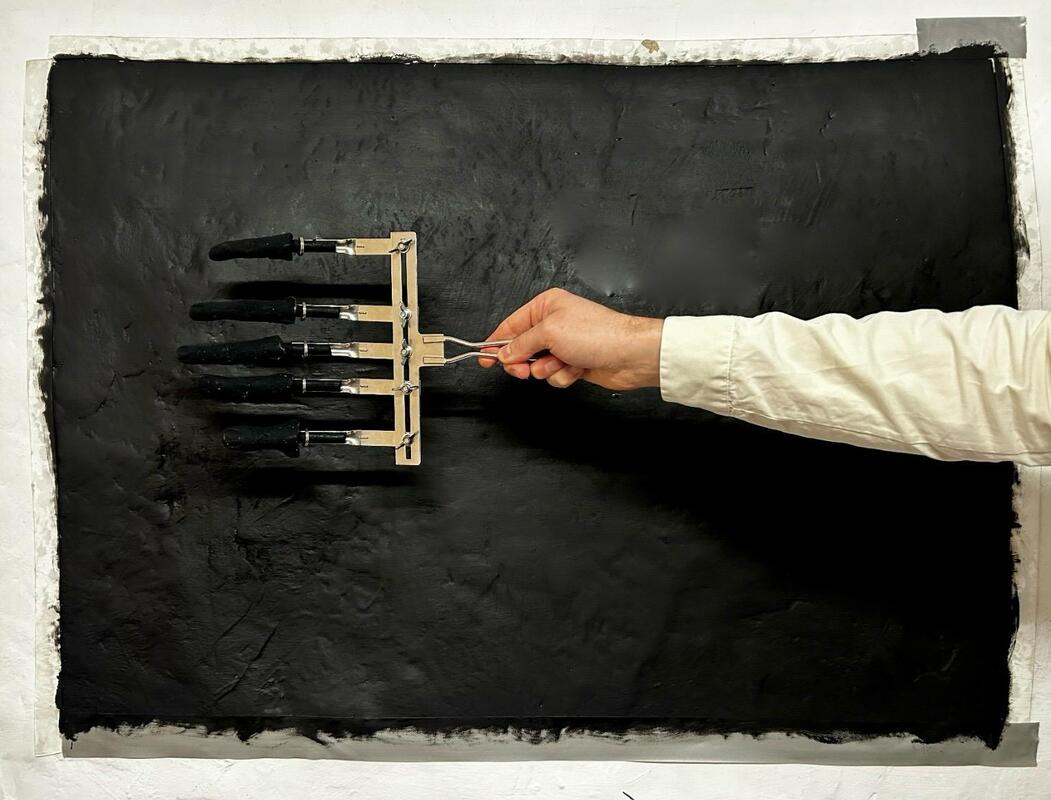
Chiasso Perduto
Florence, Italy
Chiasso Perduto is an artist residency program in Florence, Italy, offering individual residencies of 2-3 weeks (plus 3 exhibition days) in a fully equipped 100 sqm creative space available exclusively to one artist at a time, culminating in a personalized exhibition. Group residencies are also available with fees around €550-590 per artist, where participants handle their own accommodation though assistance is provided. The program supports in-situ projects with curators present, fostering immersive artistic experiences.

Zea Mays Printmaking
Florence, United States
Zea Mays Printmaking, located in Florence, Massachusetts, is a professional print studio and residency dedicated to advancing non-toxic, sustainable printmaking techniques. Since its founding in 2000, ZMP has offered an inspiring, collaborative environment for artists working in various printmaking disciplines including etching, screenprinting, monotype, and letterpress. The residency program is tailored to meet each artist’s individual goals, offering both private and community studio options, with access to state-of-the-art facilities and expert instruction. Artists benefit from a supportive printmaking community, access to a specialized print library and flat file archive, and opportunities for open studios and social engagement. The residency includes on-site accommodation in a well-equipped artist apartment, fostering both privacy and communal interaction. Zea Mays Printmaking is highly regarded for its commitment to safe, innovative print practices, attracting artists globally. The program provides residents with the space and resources to deepen their technical skills, develop new work, and experiment with sustainable materials. Artists can also enhance their residency with one-on-one mentorship and critiques from seasoned faculty members.
Browse by discipline in Florence
Filter in Florence
Been to a residency in Florence?
Share your review