Artist Residencies in Gijón
1 residencyin Gijón, Spain
Why Gijón works so well as a residency base
Gijón/Xixón sits on Spain’s north coast and punches above its weight as an art city. It’s compact, walkable, and set between sea, industrial zones, and green countryside. That mix is exactly what many artists want: solid cultural infrastructure, but you can be at the beach, on a cliff, or in farmland within minutes.
The city has a long-standing municipal commitment to culture through the Fundación Municipal de Cultura, Education and People’s University (FMCEyUP). On top of that you get LABoral Centro de Arte y Creación Industrial, museums, smaller art spaces, and rural partners just outside the city. Gijón’s residencies sit right in the middle of this structure, so you’re not just renting a room with a studio; you’re plugging into a live ecosystem.
The art ecosystem at a glance
- LABoral Centro de Arte y Creación Industrial: a major reference in Spain for new media, sound, digital art, and experimental formats. Strong if you work with tech or process-heavy research.
- Museo Evaristo Valle: museum with an active visual arts program and gardens, useful for context and local connections.
- Museo Nicanor Piñole: rooted in local art history, useful if your work engages with place, memory, or modern/contemporary Asturias.
- Municipal cultural centers & Universidad Popular: public-facing workshops, classes, community programs — relevant if your residency includes mediation or social practice.
- Independent networks: project spaces, rural hubs like PACA, and regional connections across Asturias that link city and countryside.
Artists usually choose Gijón for its mix of coastline, industrial heritage, public backing, and affordability. It’s less expensive than Madrid or Barcelona, but you still get high-level institutions and a functioning cultural network.
Key residency options in and around Gijón
El Palacio – municipal artist residencies inside the city
Organizer: FMCEyUP (Gijón/Xixón City Council’s Municipal Foundation for Culture, Education and People’s University)
Location: Palace of San Andrés de Cornellana, Gijón
El Palacio is a publicly funded residency set inside a historic palace complex from 1714. It’s designed as a full package: living space, workspace, funding, and public visibility, all under a municipal structure that takes artistic creation seriously.
What El Palacio offers
- Accommodation on-site: private room with en-suite bathroom, within the same building complex as the studios.
- Shared facilities: dining room and fully equipped shared kitchen, which turns the residency into a small living community.
- Individual workspaces: individual workplaces of around 8–11 m², plus additional shared co-working spaces.
- Special spaces: a performing arts space, a garden, and a chapel that can be integrated into your artistic project.
- Technical resources: basic furniture, power, 2 TVs, 2 video projectors, 2 screens, linoleum and rostrums; potential access to extra municipal technical resources on request.
- Financial support: production funding and artist fees attached to selected projects.
- Public component: at least an Open Studios day, with possible further presentations defined by FMCEyUP.
Residency structure
- Annual call selecting up to around ten projects.
- Stays typically range from 1 to 5 months.
- Projects can be production-oriented, research-based, or mediation-focused.
Who El Palacio is good for
- Visual and multidisciplinary artists wanting a city-based residency with solid public backing.
- Artists whose work benefits from interaction with citizens through open studios, workshops, or mediation.
- Practices that need both housing and a dedicated workspace in the same complex.
- Artists interested in site-sensitive work that can respond to a historic building, gardens, or a chapel.
Costs to keep in mind
- Accommodation at El Palacio is covered.
- You cover your own meals and daily expenses.
- You pay travel and transport to/from the residency.
- You cover your own materials and any specific insurance, including medical.
Location within Gijón
El Palacio is in Gijón proper, within walking distance of the city center (about 40 minutes) and connected by bus. That means you can easily access LABoral, museums, the seafront, and everyday city life, while still having a focused working base.
PACA – PACA_Proyectos Artísticos: rural-urban edge residency
Location: traditional farmhouse (casería) near Gijón, about 15 km from the city center
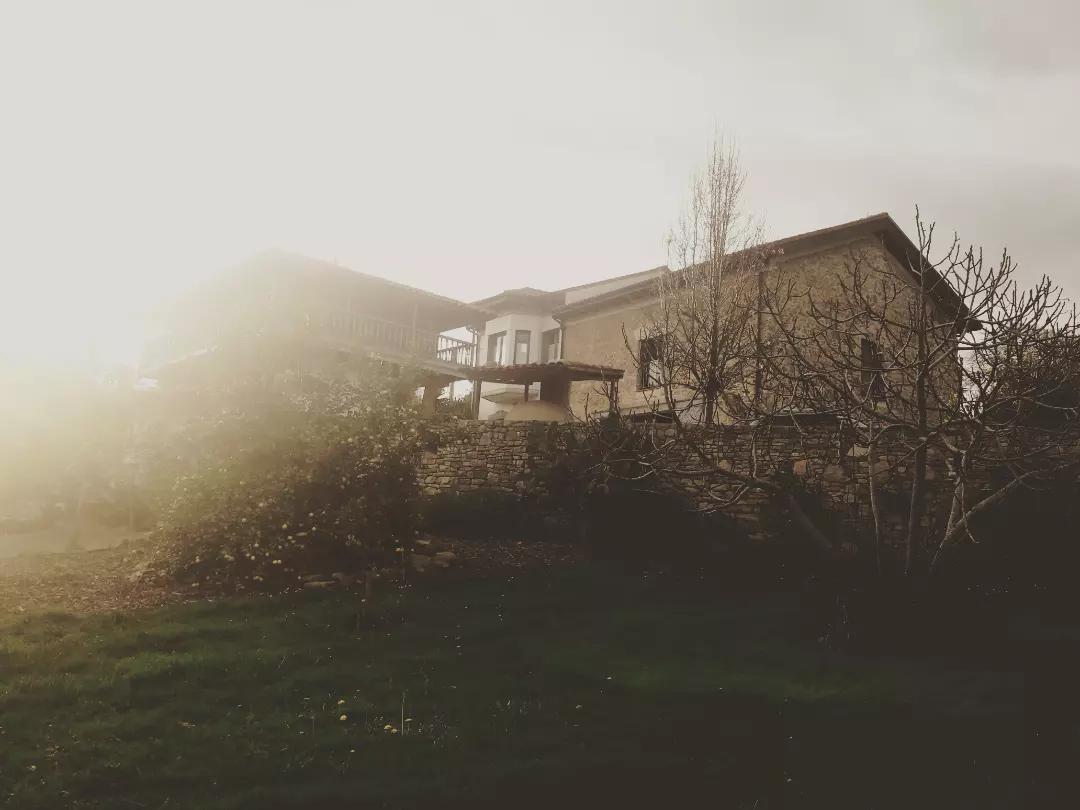
PACA is a small-scale, international residency located on a 1-hectare farm with orchard, gardens, and vegetable plots. It sits in a complex environment where agriculture, traditional architecture, and landscape coexist with heavily industrialized zones and nearby city infrastructure. That tension is central to how many residents work.
What PACA offers
- Housing: rooms in a farmhouse with bathrooms, shared kitchen, and living space.
- Workspace: a fully equipped studio next to the house, plus access to outdoor areas.
- 1 hectare of land: orchard, gardens, vegetable garden — available as working space for installations, performance, research, or documentation.
- Library: on-site library you can use for research and reference.
- Support and feedback: ongoing curatorial support, information, and feedback from the PACA team.
- Networking: active connections with artists, curators, researchers, and local cultural agents, including links to institutions like LABoral.
- Transport support: in many cases, pick-up from Asturias airport (Avilés) or train/bus stations in Gijón or Oviedo.
Residency structure & fees
- Residencies typically run from 1 to 3 weeks, sometimes up to a month.
- Very low capacity (often 2–3 artists at a time), which creates a focused environment.
- Fees cover accommodation, workspace, and curatorial/support services; taxes (IVA) may be added.
Who PACA is good for
- Artists working on ecology, landscape, territory, rural systems, or environmental research.
- Practices that combine fieldwork, site-specific installation, or performance with studio work.
- Artists who want quiet and depth but still want to be close enough to Gijón’s institutions.
- People who value close contact with curators and peers over large-cohort residency formats.
PACA is also part of the Spanish rural art-spaces network El Cubo Verde, which signals its commitment to rural-context art practices and broader conversations around territory and sustainability.
LABORatorium – digital and research residency linked to LABoral
Partners: LABoral Centro de Arte y Creación Industrial (Gijón) and iMAL (Brussels)
LABORatorium is a more specific, research-focused residency framed around digital art and technological practices. It runs as a partnership between LABoral and iMAL and usually selects a duo: one Belgian artist and one Spanish artist (or artist residing in Spain).
Basic format
- Residency for two artists working as a duo.
- One month at iMAL (Brussels) and one month at LABoral (Gijón).
- Artists receive fees plus a dedicated research budget.
- Travel and accommodation are covered during the residency phases.
- Technical, artistic, and logistical support, plus regular project reviews.
Who LABORatorium is good for
- Emerging artists with a strong digital, new media, or tech-based practice.
- Artists comfortable working collaboratively in pairs, across cultural contexts.
- Practices focused on research and experimentation rather than fast, object-based production.
This residency is less about living in Gijón for months and more about using LABoral and its ecosystem as one core node in a cross-border research project. It’s very relevant if you already work with code, interactive media, sound, or critical technology.
How to read Gijón as an artist during a residency
Neighborhoods & areas that work well during a stay
Many residencies provide accommodation, but you might still want to know where you’re moving around or where to stay before/after your program.
- Centro / Cimavilla
Central Gijón with cafés, bars, some exhibition spaces, and the seafront. Cimavilla is the old quarter on the hill, visually rich, slightly rough around the edges, and full of character. Good if you like walking and want to be in the middle of things. - El Llano
More residential and practical. Often more affordable than the absolute center, with everyday services. Solid base for longer stays where you want routine and calm. - Pumarín / La Calzada / west side
Working-class, residential, and sometimes industrial in feel. Interesting if your work engages with labor, logistics, or post-industrial subject matter. Often less expensive. - Near LABoral / La Laboral area
Close to the former Universidad Laboral complex, where LABoral is located. Useful if your project heavily depends on being at LABoral’s facilities, labs, or events. - Seafront (San Lorenzo / Poniente)
Higher chance of sea views, good light, and easy daily access to the beach. Inspiring for drawing, photography, sound recording, or simply keeping a ritual of walking by the water.
El Palacio’s location inside the city means you get many of these qualities by default, while PACA gives you a rural base with city access by bus or car.
How the city’s character feeds practice
- Sea and weather: Atlantic light, changing skies, and rougher sea conditions can be a strong visual and sonic resource. Good for photography, painting, and sound or video work.
- Industrial/post-industrial layers: Shipyards, port areas, rail infrastructure, and older industrial zones are available as visual material and social context.
- Rural hinterland: Drive or bus a short distance and you hit farms, green hills, and small villages. PACA sits in exactly this kind of landscape.
- Public space: Promenades, parks, beaches, and plazas make public interventions or subtle social practice projects easier to imagine and test.
If your work looks at ecology, labor, migration, climate, or land use, Gijón gives you a compact but layered site to work with.
Money, logistics, and how to actually make it work
Cost of living and budgeting
Gijón is generally cheaper than Spain’s big art capitals but more expensive than very small towns. For residency periods, the main costs you will actually feel are:
- Travel: plane or train to Asturias, plus local transfers.
- Food: supermarket prices are manageable; eating out is moderate.
- Materials: local art stores and hardware shops exist, but specialty tech might need to be ordered or brought with you.
- Local transport: buses and walking cover most needs; PACA sometimes picks you up on arrival.
- Insurance: especially for El Palacio, where medical and specific insurance are on you.
Residencies like El Palacio and PACA drastically reduce housing and studio costs. For many artists, that’s what makes a production period realistic.
Getting to and around Gijón
- Airport: Asturias Airport (OVD), near Avilés, is the main entry point by air. From there, bus or arranged pickup (in PACA’s case) gets you to Gijón.
- Rail & bus: Gijón has rail and bus connections to Oviedo, Avilés, and other Spanish cities. This is helpful if you extend your stay or have parallel projects elsewhere.
- In the city: Gijón is very walkable; buses fill the gaps. El Palacio is reachable both on foot from the center and by bus. LABoral is a short bus or car ride from central areas.
If you plan to carry or produce large or heavy works, check in advance:
- What technical equipment is already available at El Palacio, PACA, or LABoral.
- Whether local fabrication is possible (woodshops, metalwork, print shops).
- How shipping to and from Spain affects your budget and timeline.
Visas and admin basics
The exact visa situation depends on your nationality, but a few general points help you evaluate these residencies:
- EU/EEA/Swiss artists: usually do not need a visa for residency-length stays, but check registration rules if staying very long or receiving structured income.
- Non-EU artists: short stays may be covered by Schengen rules (visa-free or short-stay visa). Longer, funded residencies can trigger more complex requirements.
For residencies that offer fees or production budgets (like El Palacio or LABORatorium), you may be asked to provide documentation for tax or visa processes. Practical steps:
- Ask the residency for an official acceptance and invitation letter.
- Confirm what part of your funding counts as fee vs. production budget.
- Check if the residency can specify exact dates and support amount for consular paperwork.
- Arrange travel health insurance that covers your full stay.
Choosing the right Gijón residency for your practice
If you want a structured, public-facing residency
El Palacio is the most aligned option. You get:
- Clear timeline and framework.
- Production money and fees.
- Living and working spaces in one complex.
- A built-in public moment via Open Studios and possible follow-up presentations.
This suits you if your project needs both concentrated studio time and public contact or if you want to build relationships within a municipal cultural system.
If you want rural immersion with city access
PACA gives you a quiet, rural base with strong support and thoughtful curation, plus easy access to Gijón’s city facilities when needed. It’s a good match if:
- Your project is research-heavy and tied to landscape or environment.
- You like slow rhythms, shared meals, and conversation with a small group.
- You want to develop work that could later appear in larger institutions.
If you work in digital, sound, or tech-heavy formats
LABORatorium connects you to LABoral and iMAL, both strong on digital and experimental media. Consider it if:
- You already work with technology, code, or interactive systems.
- You want to build an international collaboration.
- You value research intensity and institutional lab support over long-term local immersion.
Seasonal strategy: when to be in Gijón
Gijón has an oceanic climate with mild winters and moderate summers. Artists often time residencies based on project needs:
- Spring: good for fieldwork, photography, and outdoor work; less crowded than peak summer.
- Summer: lively, with more public events and people on the streets and beaches — strong if your project needs public interaction.
- Autumn: quieter, reflective, still comfortable for working indoors and outdoors.
- Winter: more rain and moodier light; a good fit for concentrated writing, research, or introspective practice.
When you look at a specific call, match the available dates with the phase of your project: concept development, production, or public presentation.
How to use Gijón residencies long-term
Building a sequence of stays
Gijón works well as part of a longer arc of work. One possible path:
- Research and early experiments at PACA, using the land and rural setting.
- Production and public presentation through El Palacio in the city, building audience engagement.
- Digital or expanded-media iteration via LABORatorium, adding a technological or interactive layer.
You can also connect your residency to broader Asturias: trips to Oviedo or Avilés, visits to other art spaces, or collaborations with regional institutions.
Questions to ask before applying
- Does my current project need urban context, rural immersion, or a mix?
- Do I need production funding, or is the main value time and space?
- How much public contact do I want: open studios, workshops, mediation, or a quiet research retreat?
- What technical needs do I have: projectors, sound, digital tools, fabrication?
- What kind of networking is most useful: local communities, institutions, or international peers?
Once you match those answers to El Palacio, PACA, or LABORatorium, Gijón stops being a dot on the map and becomes a very workable base for your practice.
Filter in Gijón
Been to a residency in Gijón?
Share your review