Artist Residencies in Kankaanpää
1 residencyin Kankaanpää, Finland
Why Kankaanpää is on artists’ radar
Kankaanpää is a small inland town in Finland’s Satakunta region that punches above its weight because of one thing: the fine arts campus. The local art school and its ecosystem are the reason residencies exist here at all, and they shape the kind of experience you have.
If you are looking for a quiet work period with solid art infrastructure and a built-in creative community, Kankaanpää is a strong candidate. The town combines low-distraction living with access to studios, students, teachers and a culture that is used to artists coming and going.
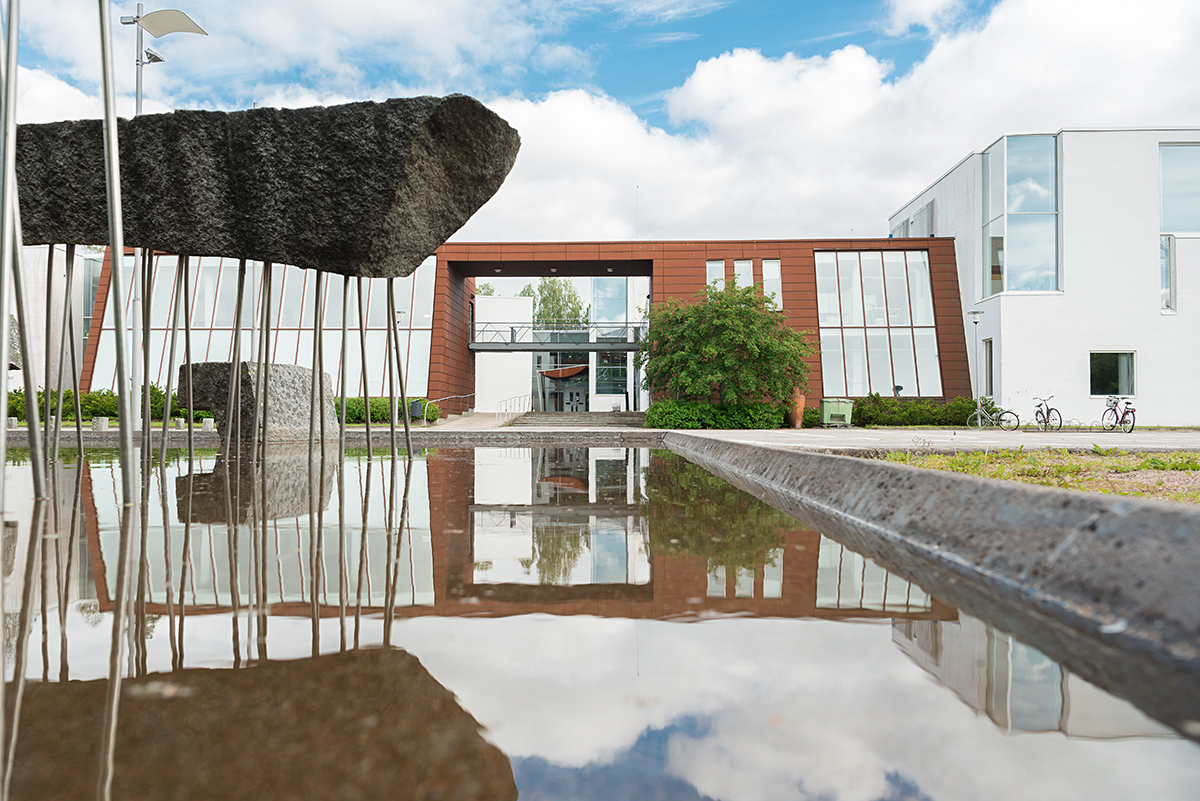
The local scene is particularly known for visual arts, sculpture and public art. There is a noticeable outdoor artwork presence and a tendency toward space-based, material-focused practice. Instead of a sprawling city full of galleries, you get a compact place where the art campus is the center of gravity.
This guide focuses on how to use that ecosystem as an artist in residence, with SAMK Art Residence as the main anchor.
The core residency: SAMK Art Residence
The main residency draw in Kankaanpää is the SAMK Art Residence, attached to the Fine Arts Campus of Satakunta University of Applied Sciences (SAMK). If you have heard of Kankaanpää in an art context, it is almost certainly through this link.
What SAMK Art Residence offers
The published information about the residency highlights a practical, communal setup:
- Approx. 140 m² of space
- Accommodation for 4–5 people in separate rooms
- Shared facilities including kitchen, living room, shower and sauna
- Two toilets and basic amenities for living and working
The residence is linked to the fine arts campus, so you are not just renting a random house in a small town — you are stepping into a place where art students, teachers and visiting artists circulate. The relationship between the residence and the campus can be very valuable if you want peer feedback, dialogues, or informal mentoring.
Who the residency suits
SAMK Art Residence is a good fit if you are:
- A visual artist working in painting, drawing, sculpture, installation, print, photography or mixed media
- An interdisciplinary artist whose practice crosses visual arts with performance, sound, or research
- Part of a small group or collective that wants to live and work together in a dedicated space
- Interested in art-education environments and want to be around art students and teachers
- Looking for quiet production time with enough social contact to avoid feeling isolated
If your practice involves large-scale sculpture, site-specific work or experiments that benefit from outdoor access, the town’s scale and surrounding landscape can be a plus. For more digital or writing-heavy practices, the calm and the structured daily rhythm also work well.
What to clarify with SAMK before you go
Some residency details vary over time and are not fully spelled out in public descriptions. Before you commit, ask SAMK directly:
- Funding and costs: Is there a residency fee? Is accommodation subsidized or free? Are there any materials or studio fees?
- Duration: What typical lengths do they offer? Are short intensive stays possible, or do they prefer longer periods?
- Studio access: Is the 140 m² space mainly living, working or both? Are there extra studios on the campus you can use?
- Equipment: What tools and facilities are available (printmaking, wood, metal, digital labs, photography, etc.) and what is off-limits?
- Campus connection: Are you expected to give a talk, workshop or open studio? Can you attend critiques or classes as a guest?
- Public outcomes: Is a final presentation expected, or can the residency stay totally process-focused?
Having these answers upfront lets you design a realistic project proposal and avoid surprises when you arrive.
The local art ecosystem: how it actually feels to work in Kankaanpää
Because Kankaanpää is small, the art ecosystem is easy to read. Most of your daily life will revolve around three axes: the campus and residency, the town center for basic needs, and the surrounding nature.
Campus and art community
The fine arts campus is the natural hub. It influences everything from the kinds of conversations you overhear to the exhibitions you encounter. You can expect:
- Students and teachers on site who are used to visiting artists and projects
- Project-based exhibitions, often linked to course work or visiting practitioners
- Informal peer feedback if you are open to sharing work in progress
- Opportunities to collaborate on small events such as talks or crits
If being inside an educational context energizes you, it can be a very good fit. If you prefer total isolation, you can still keep campus contact minimal and treat the residency as a quiet private studio with occasional interaction.
Public art and sculpture
Kankaanpää has a notable presence of sculpture and outdoor artworks. For artists who think about site, public space or landscape, this is useful in a practical way:
- You can study existing public works through walks and documentation
- There is space and precedent for temporary outdoor interventions
- New projects can often be tested at 1:1 scale in the landscape nearby
If your proposal revolves around spatial or public art, mention how you plan to respond to Kankaanpää’s existing artworks and environment. Hosts usually appreciate projects that pay attention to local context.
Galleries and showing work
You will not find a dense gallery district, but you will find structures that can support visibility:
- Campus exhibition spaces or project rooms
- Municipal or local cultural spaces where shows or events can be arranged
- Open studios or work-in-progress gatherings organized through the residency or school
Instead of aiming for commercial gallery outcomes, think in terms of small, focused presentations: a talk, a crit-style sharing, a one-night show in a project space, or a site-specific work that is documented well for your portfolio.
Practical living: cost of living, areas and daily rhythm
One of Kankaanpää’s advantages is that daily life is relatively affordable, especially compared with larger Finnish cities.
Cost of living basics
Costs vary with your habits, but you can generally expect:
- Groceries and cooking at home to be the most sensible option financially
- Occasional meals out at prices lower than in Helsinki, but still clearly Scandinavian
- Minimal local transport costs because of the town’s compact size
If the residency covers accommodation, your main expenses will be food, materials and any trips you choose to take. Confirm in advance whether utilities, internet and basic household supplies are included.
Where you will actually be based
Kankaanpää does not divide into big, distinct neighborhoods in the way larger cities do. For residency life, what matters most is proximity:
- Near the fine arts campus: best if you want quick access to studios, classes and fellow artists
- Near the town center: convenient for groceries, pharmacy, post office and other daily needs
- Quiet residential streets: good for extra privacy if you rent separate accommodation beyond what the residency provides
SAMK Art Residence is associated with the campus, so you are likely within walking or short biking distance of everything you need.
Materials and making
Because Kankaanpää is small, specialized materials might not always be available locally. Plan accordingly:
- Bring small, specific tools or materials that are hard to replace
- Ask the residency what they already have on site (easels, basic tools, printers, etc.)
- Consider ordering some supplies online to the residency address if you work with niche materials
If your project relies on heavy or unusual materials, describe in your proposal how you will source them and how you will handle storage and disposal.
Getting to Kankaanpää and moving around
Kankaanpää is inland and not on a major train line, so reaching it is usually a combination of long-distance travel and a final regional leg.
Reaching Kankaanpää from abroad
A typical route might look like this:
- Fly into an international airport in Finland, commonly Helsinki
- Travel by train or long-distance bus toward West Finland (for example via Pori or another nearby hub, depending on timetables)
- Take a regional bus or car to Kankaanpää
Public transport in Finland is usually reliable, but services in smaller towns can be less frequent. If your arrival is late at night or very early, coordinate with the residency about keys and access.
Traveling with materials
If you work with large or heavy materials, long-distance buses can be limiting. Helpful options:
- Ship some materials ahead to the residency address
- Rent a car from a larger city and drive the final leg
- Design the residency project around locally available materials such as wood, found objects or digital media
The more you minimize bulky transport, the smoother your travel days will be.
Getting around town
Once in Kankaanpää, movement is simple:
- Walking covers most daily needs, especially if you are near the campus or town center
- Cycling is common and efficient; some residencies provide bikes
- Taxis or occasional rides are useful for hardware store runs, openings in nearby towns or late-night arrivals
Ask the residency if they offer pickup on arrival, loaner bikes or help with occasional grocery trips when you arrive with heavy luggage.
Visas and paperwork
Visa and entry requirements depend on your nationality and the length and nature of your stay, but there are a few common threads for artists heading to Finland.
Artists from the EU/EEA or Switzerland
If you are a citizen of an EU or EEA country or Switzerland, you can generally enter and stay in Finland without a visa. For longer stays, you may need to register your right of residence, but this is different from a visa process and is usually straightforward.
Artists from outside the EU/EEA
If you are from outside the EU/EEA, you may need:
- A Schengen visa for short stays
- A residence permit for longer stays, depending on the duration and if the residency involves grants, teaching or other paid activities
Residency programs are usually familiar with supporting international visitors, so ask SAMK:
- If they provide a formal invitation letter describing the residency period, support and purpose
- If the program is grant-funded, fee-based or self-funded, which can affect which permit category fits
- If they can share examples of documentation previous artists have used successfully
Always cross-check the residency’s information with official Finnish immigration resources so your application matches current rules.
Seasons, rhythm and planning your stay
Finland’s seasons shape residency life strongly, especially in a small town. Kankaanpää is no exception.
Light, seasons and your working style
Think about how you work and what kind of environment supports that:
- Late spring to early autumn: longer days, easier movement, good for outdoor work, photography and research in the landscape
- Summer: often busier socially, more campus and community activity, and the possibility of events or open studios
- Winter: short days, quiet atmosphere, strong focus energy, and a very different relationship to light and time
If your project depends on daylight, outdoor filming, plein air work or public engagement, aim for the brighter months. If you want a concentrated writing or studio block with minimal distractions, winter can be powerful, as long as you are ready for cold and darkness.
Aligning with the academic year
Because the residency is connected to a fine arts campus, timing your stay with the academic year can change the social density of your residency.
- During teaching periods, you can expect more students around, more internal events and more opportunities for talks and workshops
- During breaks or holidays, campus life quiets down and your residency will feel more like a retreat
In your application, you can mention if you are aiming for a more interactive period (to engage with students) or a quieter one (for deep solo work). Hosts appreciate when artists have thought about this.
Community, open studios and how to connect
Residencies in smaller towns often live or die on how well you connect with the immediate community. In Kankaanpää, that community is heavily shaped by SAMK’s fine arts campus.
Building relationships on site
Easy ways to build meaningful connections include:
- Sharing work in progress informally with other residents and students
- Offering a short artist talk or studio visit for students or staff
- Joining local exhibitions or crits if invited
- Attending any open campus events that happen during your stay
This sort of engagement often leads to invitations, collaborations or friendships that outlast the residency itself.
Open studios and small public moments
Finnish residencies often use open studios and talks as their main public formats. When planning your residency, consider how you would like to share your work:
- Classic open studio: visitors come through your space, see works in progress and chat
- Small presentation: a concise talk with images followed by discussion
- Process-focused event: reading, listening session, walk or participatory action rather than a finished exhibition
These formats do not require a fully resolved body of work. They are often more useful if you treat them as experiments or checkpoints rather than final verdicts.
Is Kankaanpää the right fit for you?
Kankaanpää works especially well if you:
- Want focused studio time in a calm, small-town setting
- Like the idea of being close to an art education environment with students and teachers around
- Are working on sculptural, site-specific or spatial projects that benefit from outdoor space and a slower pace
- Prefer process and research over immediate commercial outcomes
- Are comfortable with a setting that has limited nightlife and gallery infrastructure
It may be less ideal if you need constant big-city energy, a dense commercial gallery scene or very frequent international connections. In that case, you might treat Kankaanpää as one focused working chapter within a longer Finland or Nordic trip that also includes larger cities.
Next steps: using this guide when you apply
To turn all this into a concrete plan, you can:
- Study the SAMK Art Residence information via platforms such as TransArtists or Reviewed by Artists and then contact the residency directly
- Shape your project proposal around what Kankaanpää offers: calm, space, campus context, sculpture and public art
- Plan your timing with season and academic rhythm in mind so the energy level matches your needs
- Clarify logistics early: accommodation details, studio access, visa support and expected outcomes
If you treat Kankaanpää not just as a dot on the map but as a specific ecosystem — small town, fine arts campus, sculpture-friendly environment — you can design a residency that fits it well and actually supports the work you want to make.
Filter in Kankaanpää
Been to a residency in Kankaanpää?
Share your review