Artist Residencies in Karlsruhe
2 residenciesin Karlsruhe, Germany
Karlsruhe is not the city people usually name first when talking about German art scenes, and that is part of its appeal. It is smaller, more focused, and built around institutions that actually support production. If your work moves between art and technology, or you need time with archives, labs, and collaborators, Karlsruhe can give you a lot of room to work.
Why Karlsruhe makes sense for artists
Karlsruhe’s artistic identity is anchored by ZKM | Center for Art and Media, one of Europe’s most important institutions for media art. Around it sits the University of Arts and Design Karlsruhe (HfG), plus museums, project spaces, and a steady flow of exhibitions, screenings, talks, and research-driven programs.
That means the city is especially useful if you are working in areas like:
- media art and digital practice
- performance and live experimentation
- sound and electronic music
- video, installation, and intermedia work
- ecological or science-linked research
- archive-based or curatorial research
Karlsruhe is not mainly about the commercial gallery circuit. It is about access, focus, and the kind of institutional support that helps you actually make the work.
The residency landscape: where to look
Most artists start with ZKM, and for good reason. It is the city’s central residency engine, and its programs tend to combine funding, housing, and serious technical support. HfG adds a different angle, especially for design-led and ecological projects. A few smaller or university-connected opportunities round out the picture.
ZKM Rauschenberg Residencies
This is one of the strongest options in Karlsruhe if you work at the intersection of performance and creative technology. The program is run through ZKM’s Hertzlab and is built for artistic research, experimentation, and public presentation.
What makes it stand out is the package: a scholarship, travel support, material funding, accommodation in a ZKM share apartment, and access to facilities and mentoring. You are not just given a room and left alone. You get institutional backing that can genuinely shape a project.
The residency also connects to ZKM’s archive and research environment, which matters if your work benefits from historical context or technical experimentation. Artists working with live systems, responsive environments, hybrid performance, or speculative technology will find a lot to use here.
ZKM open calls and recurring research formats
ZKM regularly posts calls that are close cousins of residency programs: short-term production opportunities, research residencies, and project-based collaborations. These are worth watching even when they are not labeled in a simple way.
If your practice sits in media art, video, installation, VR, sound, computation, or performance, ZKM is the first place to check. The institution often offers some mix of studio access, mentorship, housing, or presentation opportunities.
Poetic Frequencies: videopoetry residency at ZKM
Karlsruhe’s residency scene is not limited to visual and media artists. This program links ZKM with Heidelberg’s UNESCO City of Literature status and supports poets and language-based artists working in videopoetry and intermedia forms.
If your practice moves between text, image, sound, and moving image, this is a useful model to know about. It shows how Karlsruhe supports artists whose work crosses categories, not just those working in traditional visual media.
Hydromedia: Seeing With Water
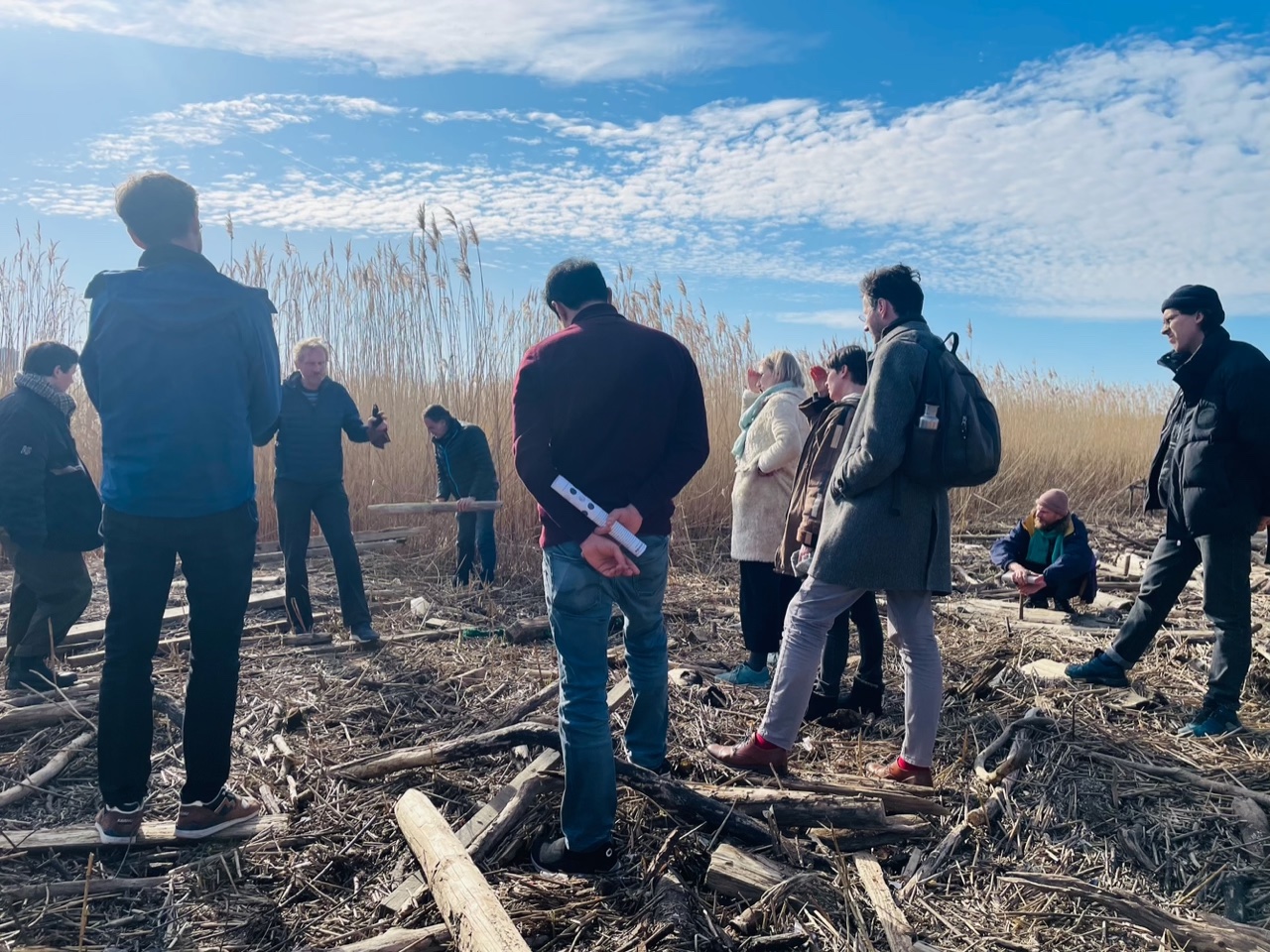
Hosted by HfG Karlsruhe, this residency is a strong example of the city’s research-oriented approach. It focuses on water, climate, and ecological relationships, with partnerships that include ZKM, KIT, and environmental collaborators.
For artists and designers working on environmental systems, site-specific practice, or science-adjacent research, this kind of residency is especially relevant. Karlsruhe gives you access not just to an art school, but to a broader network of institutions that can support cross-disciplinary work.
GESCHWISTERRAUM
This smaller Karlsruhe-based residency is less visible than ZKM, but it adds a useful local layer. It offers longer stays in Germany and gives you another possibility if you are looking for a quieter, more self-directed period in the city.
Smaller programs like this can be valuable if you want time and space without the heavier public-facing structure of a major institution.
What the city is good for day to day
Karlsruhe is manageable. That matters more than people sometimes admit. You can get around easily, the city is not overwhelming, and the practical parts of residency life are relatively straightforward compared with larger German art hubs.
Cost of living is generally more moderate than in Berlin, Munich, or Hamburg. Rent is still the biggest factor, and studio space is not abundant, which is exactly why institutional residency housing can make such a difference. If your residency includes accommodation, Karlsruhe becomes much easier to work in.
Good areas for short stays often include:
- Innenstadt-West, especially if you want to be close to ZKM and transit
- Südweststadt, which is central and residential
- Weststadt, a practical and well-connected base
- Oststadt, useful if you want easy access to the city and university-linked areas
- Durlach, if you prefer a quieter, more historic setting
If you are there for a ZKM residency, staying near the institution usually makes the most sense. The city is compact enough that you do not need to overthink it, but proximity helps when your days revolve around labs, meetings, and production schedules.
Studios, labs, and technical access
Karlsruhe is strongest when you need institutional production resources. ZKM’s Hertzlab is the obvious anchor here, with access to studio space, archive material, and a setup that can support sound, video, VR, performance, and experimental formats.
HfG Karlsruhe adds workshops and design-oriented facilities, which can be useful if your project needs fabrication, prototyping, or hybrid research methods. KIT also matters in the background, especially when a project involves science, engineering, or technical collaboration.
This is not a city with a huge informal studio market. The upside is that the access you do get is often excellent. The trade-off is that you will usually need to enter through a program, school, or institutional partnership.
Transport and getting around
Karlsruhe is easy to move through. The city’s public transit network is solid, and the regional connections are one of its quiet strengths. Trams and buses are reliable, and Karlsruhe Hauptbahnhof gives you easy rail access to nearby cultural centers like Heidelberg, Mannheim, Stuttgart, and Strasbourg.
For artists on residency, this matters because it makes Karlsruhe feel connected without needing a car. You can work locally, then still move outward for meetings, exhibitions, or weekend visits to the region.
Who should seriously consider Karlsruhe
Karlsruhe is a good fit if you want:
- time to research and make work without a lot of commercial pressure
- access to serious technical infrastructure
- a city with a strong media-art identity
- support for interdisciplinary or hybrid practices
- institutional backing with housing and funding
- a calmer environment than a large art capital
It may be less useful if you need a dense gallery market, a large independent nightlife scene, or constant social churn. Karlsruhe is more focused than flashy. For many artists, that is exactly the point.
How to approach an application
When you look at Karlsruhe residencies, think less about spectacle and more about fit. ZKM and HfG programs usually reward proposals that are specific, research-aware, and realistic about how you will use the institution’s resources.
A strong application for Karlsruhe usually shows:
- clear interest in media, technology, performance, or interdisciplinary work
- a project that can benefit from archives, labs, or specialized equipment
- an ability to work independently while also collaborating
- a reason this city matters to the work, not just to the travel budget
If you need visa support, housing documentation, or health insurance paperwork, build in extra time. German institutions are usually helpful, but the administrative side still needs care. ZKM notes that it can assist with visa-related questions in some cases, which is useful if you are coming from outside the EU.
Karlsruhe in one sentence
If your practice thrives on research, technology, and institutional support, Karlsruhe gives you a rare mix of seriousness and space. It is not noisy about itself. It just gives you tools, context, and time.
For artists who want that kind of residency, Karlsruhe is well worth your attention.
Hydromedia Seeing With Water
Karlsruhe, Germany
Hydromedia: Seeing With Water is an artist residency program hosted by the University of Arts and Design (HfG) Karlsruhe, inviting established artists and designers to develop innovative tools rethinking human-nature relationships, particularly around water management and global warming, through site-specific work in the Upper Rhine area. The one-month residency in April provided access to HfG workshops, partnerships with NABU, ZKM, and KIT, followed by local exhibitions in Karlsruhe and Dresden. It is part of a larger EU Creative Europe project (-) with residencies at three institutes, each hosting four artists to create experimental methods for ecological water engagement, culminating in a group show.

ZKM Center for Art and Media
Karlsruhe, Germany
The ZKM | Center for Art and Media in Karlsruhe, Germany, hosts various artist residencies focused on media art, digital technologies, performative art, and interdisciplinary practices, often in collaboration with international partners. Programs like the Rauschenberg Residencies, Web Residencies, and specialized calls for machine learning or videopoetry artists provide opportunities for research, production, and experimentation at their Hertz-Lab facilities. Residencies typically last from four weeks to three months and offer stipends, housing, and access to advanced technological resources.
Browse by discipline in Karlsruhe
Filter in Karlsruhe
Been to a residency in Karlsruhe?
Share your review