Artist Residencies in Marchin
1 residencyin Marchin, Belgium
Why Marchin shows up on artists’ radar
Marchin is a small municipality in Wallonia, in the province of Liège. You’re not going there for a gallery crawl or art-fair frenzy. You go because it’s quiet, green, and a bit out of the way – in a good way.
Residencies in and around Marchin lean into that context. Think concentrated working time, house-style accommodation, and access to regional culture rather than a full-blown city art market. For many artists, that distance from the capital is exactly what makes the work possible: fewer distractions, more hours with your project, and a slower local rhythm.
Marchin also sits within reach of Huy, Namur, Liège, and even Brussels by train and car. So you can work in a rural setting and still plug into openings and performances when needed.
Key residency ecosystem: circus, performance, and focused retreats
When artists talk about residencies in Marchin, they’re usually talking about a cluster of opportunities shaped by the area’s strong circus and street arts presence and a general culture of small-scale, project-based retreats.
Latitude 50 and the circus/street art axis
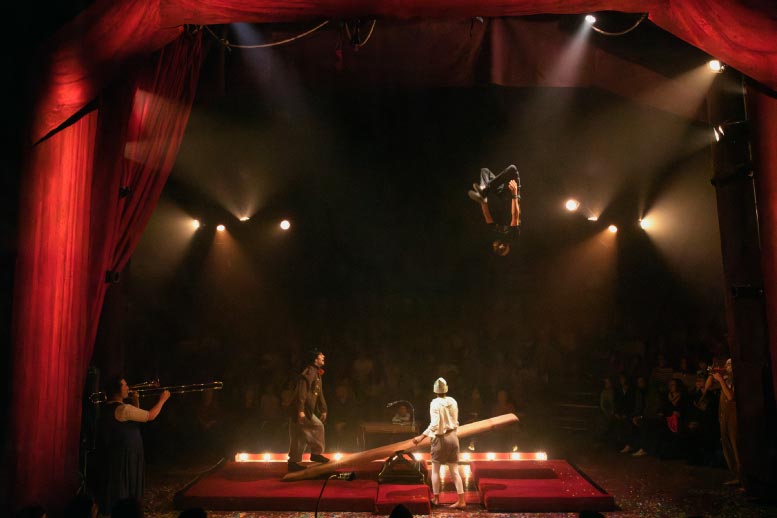
Marchin is home to Latitude 50, a circus and street art centre that has developed into a regional anchor. While programme details evolve, the core idea is steady: it’s a place where contemporary circus and street artists come to work, rehearse, and sometimes present.
For you as an artist, this means:
- Circus and performance infrastructure nearby – rehearsal spaces, technical support, and a team used to hosting touring artists.
- Residency-friendly culture – Marchin already welcomes companies and individual artists to develop new programmes and research.
- Audience potential – co-organised events and festivals can offer ways to test work or share your practice.
Even if a specific call does not name Latitude 50, the presence of this centre shapes how the town deals with artists: people are used to circus rigs, rehearsals, technical deliveries, and unusual working hours.
Short, concentrated residencies: 5 days to 2 weeks
Many Marchin-area residencies tend to be on the short side: roughly 1–2 weeks, and sometimes even 5–7 days for writing or research-focused stays. The usual model:
- Duration: one to two weeks; shorter for writing sprints or project kick-offs.
- Housing included: usually a shared house or individual room, often in a semi-rural setting.
- Self-directed work: no heavy production demands, and often no obligation for a finished piece at the end.
- Sharing optional: informal showing, open studio, or small presentation if you want, but often not required.
This format works best if you land in Marchin with a clear task: a chapter to write, a new circus act to structure, a performance score to test, or sketches to resolve into something concrete.
Who Marchin residencies are ideal for
Based on how programmes describe themselves and the local set-up, Marchin suits you if:
- You’re a circus artist, performer, or movement-based creator who needs rehearsal space and time.
- You’re a writer or researcher looking for a quiet, low-distraction setting for a script, text, or conceptual phase.
- You’re a visual or cross-disciplinary artist whose project benefits from nature, slowness, or a rural backdrop.
- You’re comfortable with short, intensive residencies and can use 1–2 weeks efficiently.
If you need heavy fabrication, large-scale production facilities, or a dense gallery network, Marchin alone will probably feel too small. It functions more as a focused lab or retreat than a one-stop production-and-presentation machine.
What the local art ecosystem feels like
Marchin’s art life is intertwined with its region. You’ll likely experience it as a mesh of local venues, cultural centres, and nearby cities rather than a concentrated cluster of galleries.
Small town, regional radius
Expect a low-key rhythm:
- Local cultural associations and centres organising events, workshops, and performances.
- Occasional festivals, especially around circus and street arts when Latitude 50 and partners activate the town.
- Day trips to nearby cities – Huy for local programming, Liège and Namur for contemporary art, and Brussels for a wider scene.
This is helpful if your project relies on place as much as on people: landscape, quiet streets, village architecture, and the pace of a smaller community can all feed the work.
Production base vs. presentation city
Think of Marchin primarily as a production base:
- Good for making, rehearsing, writing, and experimenting.
- Not designed around constant openings and studio visits by curators or collectors.
- Well suited to preparing work you then show in Liège, Namur, Brussels, or beyond.
If you want to build relationships while you’re there, aim for:
- Meetings with local programmers who work with circus, street arts, or community-engaged projects.
- Small-scale sharings for local audiences and neighbouring cultural workers.
- Regional networking trips during your stay to see exhibitions and shows in nearby cities.
Living and working in Marchin: practical details
Since Marchin is small, the basics of daily life can make or break your residency experience. A bit of planning goes a long way.
Cost of living and everyday expenses
Compared with Brussels or Antwerp, Marchin and similar Walloon towns tend to be more affordable, especially for food and casual dining. Typical cost patterns:
- Groceries: supermarket prices are moderate. Cooking for yourself is usually the most budget-friendly option.
- Eating out: cafés and small restaurants are generally cheaper than big-city equivalents, but choice may be limited.
- Transport: local buses are affordable but less frequent. Occasional taxis or ride-shares add up, so budget for those if you don’t drive.
- Housing: residency housing will probably matter more than market rent, since the rental market in small towns can be thin and short-term stays are not always easy to arrange.
If your residency includes accommodation, your main costs will likely be:
- Food and household basics.
- Local and regional transport.
- Materials and equipment for your project.
- Insurance and any visa-related fees.
Where you’re likely to stay
Marchin doesn’t have “artist neighbourhoods” in the urban sense. Instead, you might find yourself in:
- The village centre, near small shops, services, and local venues.
- Residential edges, with a mix of houses, gardens, and small roads.
- Rural surroundings, possibly in a converted farmhouse or house with fields and walking paths nearby.
When you’re in touch with a residency, ask specifically:
- Is the housing walkable to basic shops or do you need a car?
- Is there public transport nearby, and how late does it run?
- Do you have private or shared rooms, and what’s the bathroom situation?
- Is there a workspace in the house (large table, common rooms), or do you work elsewhere?
Studios, rehearsal rooms, and workspaces
In Marchin, studio infrastructure can look different from a typical city residency:
- Multi-use rooms in a house or community building doubling as workspace.
- Rehearsal halls or gym-like spaces if you’re linked to circus or performance facilities.
- Outdoor areas and surrounding landscape, useful for site-specific work, research, or movement scores.
Before committing, clarify:
- What type of space you get (studio, rehearsal room, desk space only).
- Which hours you can use it, and whether there are noise or rigging restrictions.
- Whether you must bring all your own tools and materials.
- How the internet connection is, especially if you need to upload video, run remote rehearsals, or do research.
Getting to Marchin and moving around
Getting there
Marchin is not directly on a major rail line, so your trip will probably involve:
- A train to a nearby city, most often Huy or another regional hub.
- Then a local bus, taxi, or car for the last stretch to Marchin.
Belgium’s national rail system is reliable, but small-town bus schedules can be sparse, especially late at night or on weekends. When planning your travel:
- Check the train schedule to Huy and then look up connecting buses.
- Ask your residency host if they offer pick-up from the nearest station.
- Consider arriving early in the day so you’re not dealing with last buses in the dark after a long journey.
Transport strategies for artists
Your transport choices will shape what’s realistic during the residency:
- With a car: you can get to Huy, Liège, or Namur for openings, buy materials in larger stores, and scout locations easily.
- Without a car: you’ll rely on buses, walking, or cycling. This is fine if your project is mostly indoors or close to your housing.
- With heavy equipment: arrange with the host about deliveries or a lift from the station if you’re bringing circus gear, sculptures, or large canvases.
Ask if the residency provides:
- Bikes for local transport.
- Shared car use or occasional group trips.
- Secure storage for cases, tools, or technical gear you don’t want in your bedroom.
Visas, admin, and paperwork
EU/EEA and Swiss artists
If you’re from the EU, EEA, or Switzerland and staying short-term, you typically don’t need a visa. For longer stays, you might have to register locally, depending on the length and structure of the residency.
Non-EU artists
If you’re coming from outside the Schengen Area, your needs will depend on the length and status of your stay:
- Under 90 days in 180: some nationalities can enter visa-free as tourists, others use a short-stay Schengen visa. Check your specific case.
- Over 90 days: you may need a long-stay visa or residence permit, often with documentation from the host organisation.
When talking to a residency in Marchin, ask clearly:
- Will they provide an invitation letter with dates and description of your activities?
- Is the residency structured as unpaid research, a stipend, or paid work?
- Can they advise on the visa type previous guests have used?
This is especially important if there is financial support or public presentations that might be interpreted as work.
Timing your stay
Seasonal atmosphere
Marchin changes character with the seasons:
- Late spring to early autumn: milder weather, easier transport, more outdoor possibilities. Good for site-specific projects and movement work.
- Summer: often an active period for events, and the landscape is fully alive. This can be social and inspiring if you like energy and community presence.
- Autumn and winter: quieter, shorter days, potentially more introspective. Perfect if you want to shut out noise and focus on writing, editing, or studio-based experimentation.
Your choice should follow your project: outdoor circus research might love late spring, while a writing or score-editing residency can work beautifully in a cold, quiet winter month.
Building community and using the region
Local network
In Marchin, creative community tends to form around cultural centres, residencies, and recurring events rather than permanent big-city infrastructures. You can often find:
- Work-in-progress showings at residency venues or cultural centres.
- Workshops and talks when visiting artists share methods.
- Informal meetups in cafés, bars, or after events.
If you want to connect, tell your host early:
- Offer an open rehearsal, studio visit, or artist talk.
- Ask to meet local programmers and organisers interested in your practice.
- Join any community-facing events scheduled during your stay.
Regional extensions: Huy, Liège, Namur, Brussels
Marchin becomes more powerful as a residency hub once you treat nearby cities as part of your field:
- Huy: closest urban neighbour, with cultural centres and local events.
- Liège: larger contemporary art scene, performance venues, and festivals.
- Namur: institutional spaces, theatres, and regional programmes.
- Brussels: a full art ecosystem of galleries, museums, artist-run spaces, and networks.
During your residency, consider:
- Scheduling at least one research day in Liège or Namur.
- Using Brussels as a place for studio visits, networking, or archival research before or after your stay.
- Mapping potential future partners for presentations once the work developed in Marchin is ready.
Who Marchin really works for
Marchin is a good match if you recognise yourself in some of these:
- You want time and quiet more than constant events.
- Your practice thrives with landscape, walking, and slower days.
- You’re in circus, performance, or movement research and need rehearsal time without pressure.
- You’re at a writing or editing stage of a project and just need space and housing.
- You are comfortable with short, focused residencies and arriving with a clear plan.
It is less ideal if you are looking to:
- Sell work directly to a dense collector base during the residency.
- Run heavy fabrication that requires industrial workshops on site.
- Have daily access to a wide range of galleries and high-end cultural institutions without leaving town.
How to frame a strong application for Marchin
When you apply to a Marchin-based residency, your proposal lands well if it speaks to the specifics of the place. Curators and coordinators want to see why you chose this context, not just any residency anywhere.
Anchor your project in place and duration
Make sure your application explains:
- Why a rural, quiet setting matters to your project – for instance, you need silence for sound research, landscape for movement scores, or isolation for writing.
- What you will concretely do in 1–2 weeks – outline tasks, milestones, or a working schedule.
- What kind of space you need – floor work, desk work, or small-scale studio making, and how their facilities fit.
Show how you’ll use the time well
Residency organisers in smaller places often want to know that you can hit the ground running. This helps:
- Describe where your project is right now (research, draft, rehearsal phase).
- Clarify what you’ll leave with – a script draft, a performance skeleton, a series of sketches, or test footage.
- Explain how the residency fits into your longer trajectory: is this the research stage for a work that will tour, or a writing period for a future publication?
Offer something back that feels realistic
Many small-town residencies appreciate some form of exchange, but it does not have to be a polished premiere. You can propose:
- A work-in-progress showing or open rehearsal.
- A short talk or workshop on a specific method or tool you use.
- An informal sharing session with other residents or staff.
Keep this proportional to the length and structure of the residency. For a one-week research stay, a 30–60 minute informal sharing is often more realistic than a full show.
Using Marchin as part of a bigger map
Finally, think of Marchin as one node in a wider Belgian residency and arts network. You can use it to:
- Prototype a circus, performance, or cross-disciplinary project that later tours to other venues.
- Write or edit work that then connects with publishers, theatres, or galleries in larger cities.
- Test methods and research approaches in a low-pressure environment before bringing them into more public programmes.
If you structure your project so that the concentrated time in Marchin feeds into later stages, the residency becomes not just a pause, but a solid engine for your next phase of work.
Filter in Marchin
Been to a residency in Marchin?
Share your review