Artist Residencies in Milbridge
1 residencyin Milbridge, United States
Why Milbridge works so well as a retreat town
Milbridge sits on the Downeast Maine coast in Washington County, where working harbors, fog, and tidal flats shape daily life. The town is small, practical, and not particularly polished, which is exactly what many artists want: quiet, time, and space to stay with an idea.
You’re not going to Milbridge for a big gallery circuit or nonstop events. You’re going for:
- Coastal and island landscapes: working lobster boats, harbor infrastructure, mudflats, salt marshes, spruce islands, shorebirds.
- Weather and light: fog, quick shifts in atmosphere, long summer evenings, stark winter contrasts.
- A slower pace: fewer distractions, fewer obligations, more room for studio or sketchbook time.
- Access to bigger landmarks: roughly an hour from Acadia National Park and Bar Harbor, and within reach of the Canadian border and Campobello Island.
The regional art energy is spread out. You’re part of a bigger Downeast ecosystem that includes towns like Ellsworth, Blue Hill, Rockland, Eastport, and Bar Harbor, but Milbridge itself stays quiet and work-oriented. Think of it as a concentrated residency zone rather than a destination for constant cultural programming.
The Foggy Bee Art Retreat/Residency: Milbridge’s anchor program
The Foggy Bee Art Retreat/Residency is the most direct, named residency tied to Milbridge itself. It’s designed as a short, intensive retreat with an emphasis on comfort and small-group connection.
Core structure
Foggy Bee runs as a one-week art residency retreat, hosting up to four creatives at any one time. That small size shifts the dynamic away from anonymous cohort and toward a shared-studio retreat with actual conversations and overlap.
The key pieces:
- Length: one week per stay, so it’s realistic to fit around jobs, caregiving, or teaching.
- Cohort size: up to four residents at a time, which keeps things intimate.
- Housing + dinners: accommodations and family-style dinners are included.
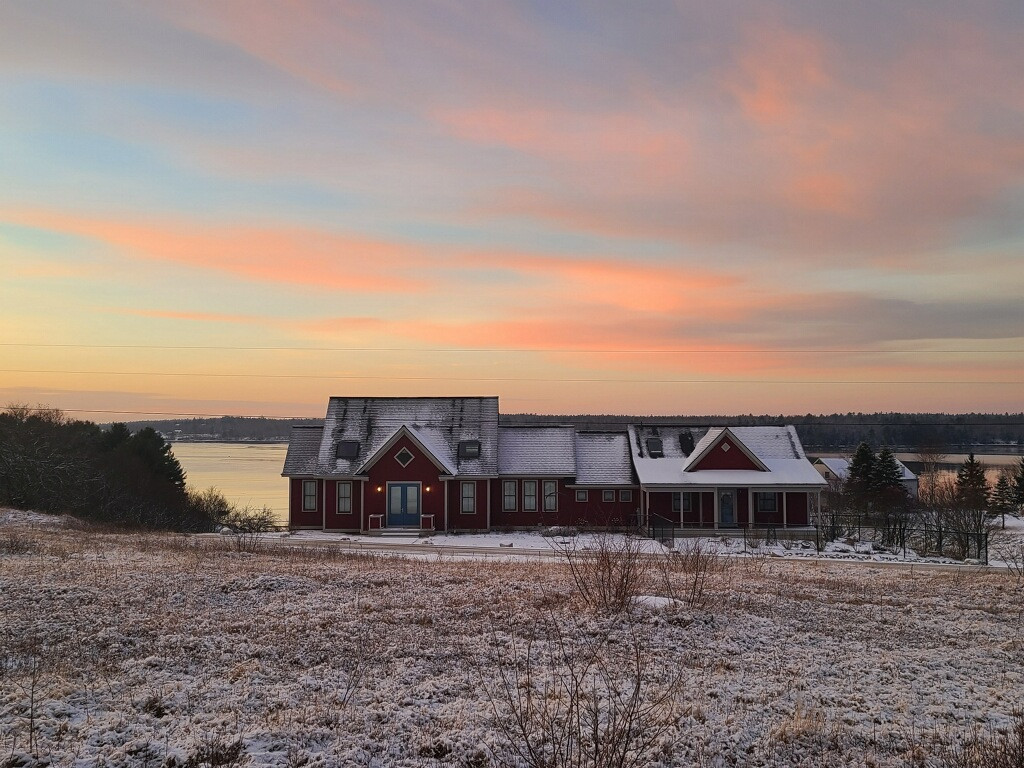
- Location: on the water near Milbridge, with views and direct access to coastal environment.
Because housing and dinners are handled, your brain space is freed from daily logistics. You can work, walk, talk, and then sit down to a communal meal without planning, cooking, or cleaning dominating the day.
Who Foggy Bee suits
This residency is a good fit if you want:
- A short, focused reset to spark a project, not necessarily a long production residency.
- Hybrid time: a mix of solitude in the studio and social interaction in the evenings.
- Cross-disciplinary contact: visual artists, writers, and other creatives can share space and ideas.
- Low-pressure expectations: more about creative process than a big deliverable or public program.
The collaborative studio angle can support artists who draw energy from others in the room while still needing serious work time. If you’re stuck or in-between bodies of work, a week there can act as a reset button rather than a production sprint.
Working conditions and what to ask
Before you go, it’s smart to clarify:
- Medium compatibility: ask about ventilation, mess tolerance, and noise levels if you work with solvents, large-scale materials, or sound.
- Internet: if you need to teach online or meet deadlines, confirm bandwidth and reliability.
- Accessibility: ask about stairs, bathroom access, and any mobility considerations.
- Season: coastal weather shifts a lot. Ask about heating in colder months and any seasonal closures.
Foggy Bee’s listing on the Artist Communities Alliance directory is a useful starting point, but the most current details come directly from the organizers.
Spring Bird Artist Residency: a nearby completion retreat
Spring Bird is another small, focused retreat option in the broader Milbridge area context. It’s designed less for open-ended experimentation and more for artists who are close to finishing something and need a stretch of uninterrupted time.
Format and focus
Spring Bird functions as:
- One week / six nights of residency time.
- Space for an artist, writer, or maker and a friend.
- A setting designed to help you finish a project you already have in motion.
- A cottage stay offered at no cost for the residency period.
The structure is unusual because it explicitly invites you to bring someone along. That could be a collaborator, a friend providing emotional support, or a partner who understands they’re there to give you space while also being nearby.
Who Spring Bird serves well
Consider Spring Bird if you:
- Have a nearly finished manuscript, series, portfolio, or proposal that needs concentrated polishing.
- Do better when someone you trust is nearby, even if they’re not working on the same project.
- Don’t need formal studio infrastructure and can work within a cottage setup.
- Want a low-cost, short retreat with a clear, narrow goal.
Because it is very project-oriented, it helps to arrive with a specific intention: a number of pages, a set of paintings, or a particular archive or dataset to process.
Applying and planning
Spring Bird typically runs on a clear application cycle, often with an annual deadline, and residency dates that can be scheduled over the following year. Visit the residency page at Spring Bird for current details.
When planning, confirm:
- Eligibility and any geographic focus.
- What is and is not covered financially.
- Expectations around public outcomes, if any.
- How isolated the location is and what you need to bring.
How Milbridge compares to other Maine residencies
Artists often look at Milbridge in the context of other Maine residencies. The Milbridge programs lean toward short, retreat-style setups. You can use them alongside longer or more structured residencies elsewhere in the state.
Short, retreat-style peers
Several Maine residencies offer similar lengths and retreat energy, even if they’re not near Milbridge:
- Monhegan Artists’ Residency: 10–14 days on Monhegan Island, with room, studio, and a stipend. Strong for visual artists drawn to a historic artist community.
- Hewnoaks Artist Residency: 1–2 weeks in Lovell, Maine, in rustic cabins on a lake. Fully subsidized, with no output requirements and a lot of freedom.
Foggy Bee and Spring Bird sit in the same general category: focused, short, retreat-heavy experiences, but with their own flavor. Milbridge’s working-coast context gives you more interaction with everyday local life and less of the classical-artist-colony feel you might find at some long-established sites.
More structured, longer programs
Other Maine residencies are longer and more formal, which you can pair with a Milbridge stay:
- Monson Arts: 2-week and 4-week programs in Monson, with dedicated studios and a clear cohort structure for artists and writers.
- Ecology or research-based residencies (such as those focused on coastal ecosystems or winter research): often more thematic and structured around fieldwork, public programs, or specific topics.
If you want a longer, theory-heavy research period, combining something like Monson Arts with a later Milbridge retreat can work well. Use the structured program to expand your work, then use Milbridge to edit down, synthesize, or produce final pieces.
Cost of living, practicalities, and where you’ll actually work
Downeast coastal towns share a few practical realities, and Milbridge is no exception. Planning for these ahead of time can make your residency feel expansive instead of stressed.
Cost of living and budgeting
Compared with more tourist-heavy towns like Bar Harbor or Camden, Milbridge is generally more affordable. Still, you’re on the coast, and that comes with certain costs.
Expect:
- Limited housing inventory, especially in summer and early fall.
- Seasonal price spikes for rentals and short-term lodging.
- Groceries, fuel, and basic goods that may cost more than in inland rural areas, due to distance and distribution.
- Car dependence: factor gas and, if needed, car rental into your budget.
Residencies that include housing (and sometimes meals) are valuable partly because they buffer you from the hardest cost-of-living swings.
Neighborhoods and micro-areas
Milbridge is compact, so you’re choosing more between types of settings than between distinct neighborhoods:
- Near the harbor / waterfront: closer to fishing activity, marine infrastructure, and direct water views; more noise in working hours, but also more visual material.
- Out-of-town rural roads: quieter, mixed forest and coastal scenery, more privacy, often better for walking and thinking.
- Near the town center: best for access to groceries, post office, coffee, and any local services.
For an independent stay, prioritize a rental that explicitly allows studio or art-making use. Confirm what’s acceptable in terms of paint, solvents, noise, and materials before you book.
Studios and space
Milbridge doesn’t have a big cluster of commercial artist studios. Most people work in:
- On-site residency studios at places like Foggy Bee.
- Adapted living spaces in cottages or houses.
- Portable setups for writing, drawing, photography, or digital work.
If your practice needs specific infrastructure, check ahead:
- Printmaking: ask about press access or plan for small-scale work.
- Ceramics: kilns are not common; you may have to treat Milbridge as a design and research period, not a firing period.
- Sound and performance: ask about neighbors and noise boundaries.
- Messy or large-scale work: clarify floor protection, ventilation, and cleanup options.
Galleries, community, and how to connect beyond your residency
Milbridge itself is more retreat base than exhibition hub. If you want to show work or plug into a wider scene, you’ll likely be traveling to nearby towns.
Where artists often look for exhibitions
- Eastport: a strong arts community with seasonal galleries and artist-run projects.
- Machias and the University of Maine at Machias area: campus-connected shows and community arts initiatives.
- Ellsworth: more galleries and retail infrastructure, plus nonprofits that occasionally feature regional artists.
- Bar Harbor / Mount Desert Island: gallery and tourist traffic in high season, plus nonprofit arts organizations.
- Blue Hill and Deer Isle: vibrant small-town arts communities with long-standing support for artists.
For most Milbridge residencies, the primary “audience” is you and your peers on site, not a public exhibition calendar. If you want to connect your residency work to a show, consider arranging something later with a regional gallery or small space once the work is more developed.
Local connections and informal community
Connections around Milbridge tend to grow through:
- Residency cohorts: other artists in your session may become future collaborators or co-exhibitors.
- Open studio nights: some residencies host informal sharings; ask if that’s part of the program.
- Regional arts calendars: look up events in nearby towns during your stay.
- Libraries, historical societies, and town offices: surprisingly useful for learning about local culture and finding small-scale events.
You can treat your Milbridge time as a research residency on the local environment and culture, even if the program itself is framed as a simple retreat. Sketching the harbor, attending local events, or talking with residents can feed the work long after you leave.
Getting to Milbridge and moving around
Logistics matter a lot in a rural coastal town. Planning them well frees up more energy for art.
Airports and arrival
The usual route is to fly into a regional airport and then drive. The two most practical options for Milbridge are:
- Bangor International Airport (BGR): typically has more flight options.
- Hancock County–Bar Harbor Airport (BHB): closer but with limited service.
From either airport, expect a drive on rural highways and secondary roads. Rental cars are common; if you’re relying on a ride from the residency, coordinate times carefully.
Local transportation
Once you’re in Milbridge:
- Public transit is sparse, so plan to walk or drive.
- Rideshare coverage can be inconsistent or non-existent.
- Winter conditions can affect travel; build in buffer time if you’re traveling in colder months.
- Supply runs: know grocery and hardware store hours before you arrive, especially if you work late.
If you’re trying to do a car-free residency, make sure the program offers either rides for essentials or a fully self-contained setup with food included.
Visa and legal basics for non-U.S. artists
If you’re coming from outside the U.S., your residency plan and visa status need to match. Each program may handle this differently, and rules can change, so think of this as a starting checklist to discuss with the organizers and an immigration professional.
- Residency vs. work: short, unpaid residencies may fall under visitor categories, but this depends on your country of origin and the exact activities you’ll be doing.
- Stipends and teaching: if a residency pays you, asks you to teach, or involves ticketed performances, that can change the visa category you need.
- Consult early: talk to the residency and, if needed, an immigration attorney before you book travel.
- Eligibility: some residencies limit participation to U.S.-based artists; always check this early in your research.
Plan enough lead time to secure the right paperwork so your Milbridge stay stays focused on your work, not bureaucratic surprises.
When to go, and how to match season to your practice
Milbridge shifts dramatically with the seasons, and each one can work differently for your practice.
- Late spring to early fall: excellent for plein air work, outdoor photography, and any practice that relies on being outside. Also peak season for visitors, so lodging costs and traffic rise.
- Fall: strong colors, crisp light, and slightly less activity. Good for painters, photographers, and writers who want drama in the landscape but fewer crowds.
- Winter: quiet, stark, and more isolated. Powerful if you’re working on introspective work, writing, or research, but you’ll deal with snow, ice, and shorter days.
Residencies often tie their application cycles to these rhythms. Programs may open applications many months ahead of their operating season, so keep an eye on their websites and newsletters well before the time of year you want to be on site.
Who Milbridge is really for
Milbridge is a strong fit if you want:
- Quiet coastal isolation with real working waterfront life, not a polished tourist enclave.
- Short, retreat-format residencies that fit into a complex schedule.
- Landscape and environment as subject, collaborator, or backdrop.
- Time to reset your practice, experiment, or bring a nearly finished project across the line.
It’s less ideal if your current priorities are:
- Dense gallery scenes and frequent openings.
- Nightlife and constant events.
- Heavy fabrication or equipment-heavy work that needs specialized facilities.
- Reliable, frequent public transportation.
If you recognize yourself in that first group, Milbridge can work as a powerful pressure-free base. Use Foggy Bee or Spring Bird as your anchor, and treat the wider Maine network—Monson Arts, Hewnoaks, Monhegan, and others—as partners in a longer, evolving relationship with this coast.
Filter in Milbridge
Been to a residency in Milbridge?
Share your review