Artist Residencies in Montauk
1 residencyin Montauk, United States
Why Montauk keeps drawing artists
Montauk sits at the far eastern edge of Long Island’s South Fork, and that distance matters. You feel it in the pace, the quiet, and the way the town opens into ocean, bay, dunes, and marsh instead of blocks of studios and galleries. For artists, that remoteness can be a gift. It gives you fewer distractions, more unbroken time, and a landscape that changes the way you look and work.
The art scene here is not built around a dense commercial district. Montauk’s creative identity comes more from residency culture, landscape-driven work, and the wider East End network around it. If you want a place where you can make work seriously and keep your social life intentionally small, Montauk makes sense.
The town also has a clear artistic lineage. The strongest anchor is the Edward F. Albee Foundation, whose residency has shaped Montauk’s reputation for decades. Around that, the broader East End adds institutions, summer programming, and occasional public-facing events that can expand your stay beyond the studio without pulling you too far from it.
The Edward F. Albee Foundation: the center of Montauk residency life
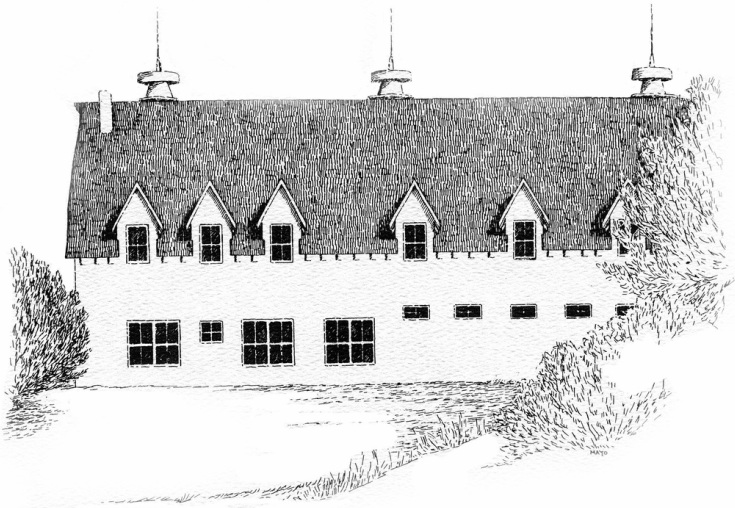
The Edward F. Albee Foundation runs the William Flanagan Memorial Creative Persons Center, better known as The Barn. Founded in 1967 by playwright Edward Albee, it remains one of the most recognizable artist residencies on Long Island. The program is for writers and visual artists, and it is built around a simple idea: give artists time, space, and privacy to work.
The setting is deliberately modest and calm. The Barn sits on a secluded knoll about two miles from the center of Montauk and the Atlantic Ocean. It accommodates four creative people at a time, so the cohort is small enough that you really notice the shared atmosphere. Residents get individual en-suite bedrooms and separate working studios. You bring your own food, cover your travel, and handle the rest of your expenses.
What makes the residency distinctive is not luxury or polish. It is the seriousness of the environment. The Foundation expects residents to work hard and treat the shared space with care. That makes it a strong fit if you want a clean break from your routine and you function well in a low-support, communal setting.
The Barn was renovated and completed in 2024, so the physical space is newer than many older references suggest. The residency still keeps its plainspoken character, but you should expect a more current building condition than the word “barn” might imply.
You can find the official guidelines here: Edward F. Albee Foundation application guidelines.
Who it suits best
- Writers who need uninterrupted time
- Visual artists working independently
- Artists comfortable with a quiet, shared environment
- People who want a month-long retreat rather than a highly programmed residency
What to keep in mind
- Residencies are calendar-month periods
- The structure is simple, not hotel-like
- You should plan for groceries, transport, and basic logistics on your own
- The small cohort means your habits matter as much as your portfolio
How Montauk feels as a working base
Montauk is not the kind of place where art infrastructure surrounds you at every turn. That is part of the appeal. The town encourages a stripped-down mode of work: studio, landscape, walks, meals, repeat. If your practice benefits from quiet observation, isolation, or a slower rhythm, you can settle into that here quickly.
The landscape is a major part of the experience. The ocean light, the harbor edges, the dunes, the rocky shoreline, and the seasonal shifts all offer material whether you work in painting, writing, photography, sound, performance, or drawing. Even if you are not making directly from the landscape, it changes your tempo.
Montauk also feels seasonal in a way that matters to artists. In summer, the town is busier, pricier, and more social. In the cooler months, it becomes much quieter and more affordable, with a stronger sense of retreat. That seasonal swing can shape the kind of residency or project you choose.
Nearby East End residencies and institutions to know
Montauk itself is the most remote point in this guide, but it sits inside a larger East End arts ecosystem. If you are building a stay, applying broadly, or planning a working trip, these nearby programs and institutions are useful to understand.
Watermill Center Artist Residency Program
Water Mill is not Montauk proper, but The Watermill Center is one of the most important East End residency spaces. Its artist residency program is process-based and open to both individuals and collectives. The center supports artists who are testing ideas, building work, or pushing against familiar formats.
Residencies are generally short, with a minimum of two weeks and a maximum of four weeks. Residents are also expected to take part in public or community-facing programming such as open rehearsals, workshops, studio visits, lectures, or artist talks. That makes it especially strong for performance, theater, choreography, and interdisciplinary work.
If you want a residency that includes exchange rather than solitude alone, this is one to look at: The Watermill Center residencies.
EFA North Fork Residency
The EFA North Fork Residency is not in Montauk, but it belongs in any East End residency map. Located in Jamesport, it offers a one-month retreat with private living space, a studio, and access to the surrounding North Fork landscape. It is quieter and more solitary than many East End options, with a practical setup that can work well for focused studio time.
The setting includes a kitchenette, full bath, internet, and a separate studio. Beach access, farms, vineyards, and public transportation are nearby, though a car helps if you want to explore more widely. It is a useful option if you are connected to the EFA network or looking for a self-directed stay beyond Montauk itself.
Learn more here: EFA North Fork Residency.
Other East End places artists often connect with
- Guild Hall in East Hampton
- Parrish Art Museum in Water Mill
- Seasonal galleries in East Hampton, Sag Harbor, and Southampton
- Open studios and small summer arts events across the South Fork
Montauk may be quiet, but it sits close enough to the rest of the East End that you can build a fuller arts itinerary if you want it.
Getting there, getting around, and budgeting your stay
Montauk is remote enough that logistics matter. If you are accepted to a residency with housing, a lot becomes easier. If you are arranging your own stay, costs can rise quickly, especially in summer.
Transportation
A car is highly useful here. You can get to Montauk by car, and the Long Island Rail Road also runs to Montauk, though service is limited compared with city transit. Without a car, you can still manage in some cases, but errands, beach access, and any visits to nearby towns become more complicated.
If you plan to move between galleries, beaches, grocery stores, and residency sites, a car usually makes the difference between possible and comfortable. That said, some artists prefer the constraint of not driving everywhere, especially if the goal is deep studio concentration.
Cost of living
Montauk is expensive, especially in the summer season. Housing is the biggest pressure point, followed by food, transportation, and general convenience costs. Residencies can be a major help because they remove the biggest expense: lodging.
If you are paying for your own stay, think carefully about seasonality. Off-season months are usually quieter and more manageable financially. Summer gives you more social energy and more arts activity, but it also brings crowds and higher prices.
Practical budgeting notes
- Bring enough for groceries and basic supplies
- Assume restaurant meals will add up quickly
- Plan transportation ahead if you are not driving
- Check whether your residency includes housing, studio space, or shared facilities
Who should choose Montauk, and who should look elsewhere
Montauk works best if you want a residency environment that respects quiet, discipline, and the landscape. It is especially strong for artists who do well with isolation and do not need constant programming to stay motivated.
Montauk is a good fit if you want:
- Time to work without interruption
- A small residency cohort
- A strong relationship to ocean and coastal landscape
- A place that feels removed from your usual art routine
- A simple, serious setting rather than a high-touch one
You may want a different kind of residency if you need:
- A dense gallery and studio network right outside your door
- Frequent critiques or formal mentoring
- A highly social environment
- Daily access to transit and city-scale infrastructure
That distinction matters. Montauk is not trying to be a creative hub in the urban sense. It is a place for concentration, not constant stimulation.
What to remember when choosing a Montauk residency
If you are narrowing down your options, start with the kind of work you want to do. The Edward F. Albee Foundation is strongest for independent writing and visual art in a very focused setting. The Watermill Center is better if your practice is process-based, collaborative, or performance-oriented. The EFA North Fork Residency is a good east-end alternative if you want solitude with a slightly more flexible, self-directed feel.
Montauk rewards artists who are clear about their needs. If you want silence, landscape, and a residency culture that takes work seriously, it can be an excellent place to land. If you want a city-style arts ecosystem, you may feel underfed. The key is matching the environment to your practice, not forcing the place to be something else.
Filter in Montauk
Been to a residency in Montauk?
Share your review