Artist Residencies in Mértola
1 residencyin Mértola, Portugal
Why Mértola pulls artists in
Mértola sits high over the Guadiana River in Portugal’s Alentejo region, close to the Spanish border. Think stone streets, a castle, layers of Roman and Islamic history, and a dry, expansive landscape instead of a big-city arts district.
Artists tend to go there for three main reasons:
- Silence and slow time – You can actually hear yourself think. This is a place to write, draw, research, and reset.
- Landscape and ecology – The land is wild, dry, and textured: river gorges, scrub, birds, and long views. Ideal if your work hinges on environment, walking, collecting, or observation.
- Heritage and craft – Mértola’s Roman, Moorish, and Christian layers are visible everywhere, and the town has a strong weaving tradition that’s still alive.
Instead of a packed calendar of openings, you get a concentrated, retreat-like environment where your main job is to work.
Convento de Mértola: the core artist residency
Name: Convento São Francisco de Mértola / Convento de Mértola
Website: conventomertola.com
Type: Artist residency, research retreat, art–ecology hub
Setting and atmosphere
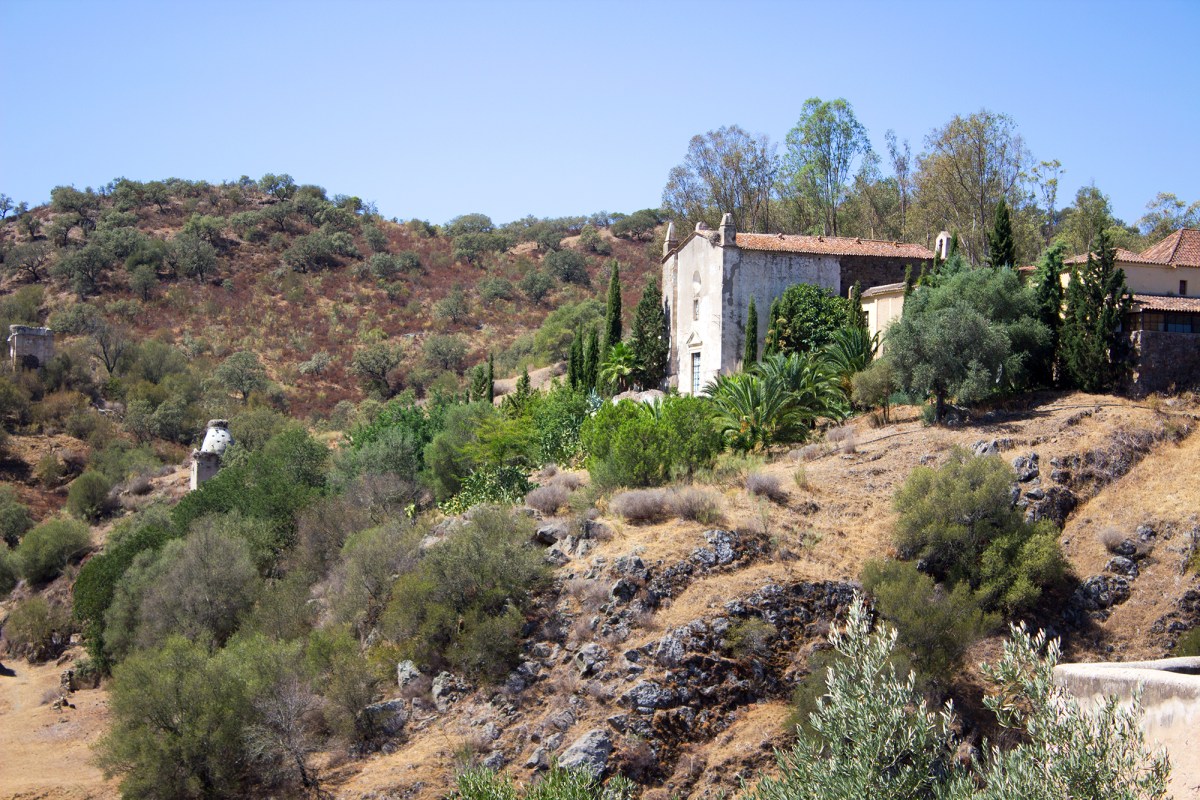
The Convento is a former Franciscan monastery, roughly 400 years old, sitting on a cliff where the Oeiras and Guadiana rivers meet. You see the fortress town on the opposite bank, with the castle and church rising above the river. Archaeological traces from Roman and Moorish occupants run through the site, and parts of the grounds function as a kind of nature preserve.
The current stewards, the Zwanikken family, began restoring the decayed convent and land in the 1980s. Over time they’ve turned it into:
- a home and working landscape
- an artist and researcher residency
- a biodiverse garden with animal life and bird shelters
- a semi-public culture site, open by appointment
The atmosphere is retreat-like and slightly eccentric: kinetic sculpture, old wells, chapel-turned-exhibition space, and a sense that the site is as much a living artwork as a building.
What the residency actually offers
The Convento focuses on self-directed work rather than structured programs. Based on the residency’s own materials and accounts from past residents, you can expect:
- Accommodation – Simple rooms rather than luxury suites, in keeping with the monastery’s character.
- Working space – Flexible studio areas and tables, plus a lot of spillover into outdoor zones if your practice allows.
- Landscape access – Around 40 hectares of surrounding land, paths, and river views; good for walking, collecting, field recording, and drawing.
- Quiet and independence – You set your own schedule; there’s minimal programming and a light-touch hosting style.
- Context for ecology and biodiversity – The site foregrounds environmental thinking, animal life, and a Franciscan nature philosophy, which can feed into research-based or eco-focused work.
- Exhibition possibilities – Parts of the Convento, including the deconsecrated chapel, function as spaces where work can be shared, sometimes by appointment with visitors.
If you need constant workshops, visiting curators, or a cohort-heavy experience, this may feel too quiet. If what you want is time, space, and a strong sense of place, it fits well.
Who tends to thrive at the Convento
The residency tends to suit artists and practitioners who are comfortable steering their own process. In practice that often means:
- Visual artists – Painting, drawing, photography, video, mixed media, and installation that can work with modest infrastructure.
- Writers and researchers – Time-based work like books, scripts, or thesis research, especially around ecology, history, or site-specific topics.
- Textile and fiber artists – Especially those who can work with portable equipment or want to connect with local craft knowledge.
- Sound and movement artists – If you work with landscape, field recording, or site-responsive performance.
Artist feedback often highlights that the accommodation and studios are simple, but the environment is deeply supportive of concentration. You trade polished amenities for silence, views, and a sense of being “lightly held” by the hosts. That balance works well if you’re comfortable taking initiative and improvising.
Practical working conditions
Before you commit, ask targeted questions about facilities so they match your practice. Expect something like:
- Studios – Basic furniture, natural light, and room for small-to-medium-scale work.
- Mess and materials – Good for dry processes, drawing, writing, and lightweight wet media, but you should confirm how much mess or toxicity is acceptable.
- Digital needs – Internet may exist but might not match city speeds; clarify if you rely on heavy uploads or streaming.
- Tools – There is not a full fabrication lab; bring what you need or plan to work with what the site provides (landscapes, archives, found materials).
If your work needs kilns, large print presses, darkrooms, or heavy machinery, treat this as a research or early development residency and plan to do production elsewhere later.
Weaving, textiles, and craft: the Mértola cooperative
Name: Cooperativa Oficina de Tecelagem de Mértola
Focus: Traditional wool blanket weaving and regional textile heritage
Mértola’s weaving cooperative is not always framed as a residency in itself, but it’s a central creative node that artists often connect with while based at the Convento or elsewhere in the region.
Why the weaving cooperative matters
The cooperative acts as a living archive for one of the region’s core traditions: wool blanket weaving. In the atelier, weavers like Helena and colleagues keep historic patterns and techniques in active circulation.
These patterns carry traces of ancient Berber and Mediterranean design languages, brought through Moorish influence. For contemporary artists, that means a direct link between current practice and deep cultural lineages.
How artists actually use it
Depending on the project and partnerships in place at any given time, you might use the cooperative as:
- A research site – Observing weaving techniques, sketching patterns, talking with weavers about motifs, colors, and symbolism.
- A collaboration space – Co-designing new pieces with local weavers, or developing work that translates traditional patterns into new media.
- A documentation subject – Photographing, filming, or writing about the cooperative in the context of heritage, design, or socially engaged practice.
If your practice is in textiles or design, it’s worth reaching out in advance to see what sort of visit, workshop, or collaboration is possible during your stay.
Regional residencies: Mina de São Domingos and beyond
Just outside Mértola, the former mining settlement of Mina de São Domingos periodically hosts residency projects with a focus on landscape, ecology, and site-specific work. One such program referenced in recent years is the “Wide Space” residency, aimed at artists from specific countries, offering a month-long stay and a large working space.
Who these regional programs suit
These kinds of residencies are worth considering if you:
- want an even more remote, stripped-back environment
- work at large scale and need generous floor area
- are interested in post-industrial landscapes, extraction histories, and environmental change
Because these calls come and go, treat Mina de São Domingos and the broader municipality as a single ecosystem: residencies at the Convento, projects with the cooperative, and temporary programs around the mines often speak to each other through themes of ecology, heritage, and transformation.
Living and working in Mértola: what to expect
Cost of living and basic logistics
Mértola is generally more affordable than big Portuguese cities, but it is small and relatively remote. Think simple, not cheap-and-easy.
- Accommodation – Outside formal residencies, there are guesthouses and rentals, but availability is limited. Booking early helps.
- Food – Groceries and café meals are in line with rural Portugal: not expensive by international standards, but less variety than in cities.
- Materials – Basic art supplies may be hard to source locally. Either ship materials in advance, bring what you need, or plan to make work from local and found materials.
- Transport costs – Buses exist, but service can be infrequent. Renting or sharing a car is often the biggest extra cost and gives you real freedom.
Residency fees, if any, usually cover a significant portion of your main costs by bundling housing and workspace. The unpredictable part of your budget is travel and materials.
Town layout and “neighborhoods”
Mértola is compact, so thinking in terms of neighborhoods is more about atmosphere than distance:
- Historic hilltop center – Narrow streets, castle, mosque-turned-church, archaeological layers everywhere. Great for walking and visual research.
- Riverside areas – Quieter and more landscape-focused; depending on where you stay, you might have direct access to river paths and views.
- Mina de São Domingos – A separate settlement within the municipality; lakes, old mining structures, and a very different post-industrial feel.
The Convento sits across the river from the town, on the cliff. You get privacy and openness, with the town as a visible but separate presence.
Studio needs and limitations
Most Mértola residency spaces, including the Convento, are set up for flexible, low-tech work. They are ideal if you:
- work on paper, canvas, or laptop
- develop research, writing, or drawing-based projects
- do fieldwork outdoors and refine it indoors
If your practice depends on heavy fabrication, large-scale wet processes, or industrial tools, treat Mértola as a research site where you develop concepts, not necessarily the place where you fabricate final pieces. Plan a second phase in a more equipped studio later.
Galleries, showing work, and public contact
Mértola is not a gallery district, and that’s part of its appeal. Public sharing tends to happen through:
- exhibition or event spaces at the Convento (such as the chapel)
- occasional shows in local cultural or museum venues
- informal open studios and visits by appointment
- community-focused presentations around craft or ecology projects
If your priority is gallery networking, this is not the strongest location. If you want to test ideas in a focused setting and maybe share them in a modest, site-attuned way, it works well.
Getting there and staying longer
Transport: actually reaching Mértola
Most artists arrive by flying into Lisbon or Faro, then continuing overland.
- By car – Driving is the most flexible. It lets you carry materials, reach countryside locations, and move between Mértola, Mina de São Domingos, and larger supply towns.
- By bus – Regional buses link Mértola with bigger cities, but schedules can be limited and may not align with your working rhythm.
- On foot in town – Once you’re there, the town is walkable, though steep in places. Expect hills and cobblestones.
If your practice involves heavy gear or you need frequent trips for supplies, factor a rental car into your budget from the beginning.
Season and climate: picking your residency window
Mértola has a classic Alentejo climate: hot, dry summers and milder shoulder seasons.
- Spring – Often the sweet spot: more vegetation, manageable temperatures, good light for outdoor work.
- Autumn – Also comfortable; the land feels parched but atmospheric, and days are still long enough to work outside.
- Summer – Can be very hot, especially mid-day. Fine if you can work early and late, or mostly indoors.
- Winter – Quieter, cooler, sometimes damp, but great for introspective writing and studio projects.
Match your project to the season: outdoor, ecology-heavy work tends to thrive in spring or autumn, while writing and drawing can happen any time if you’re prepared for the heat or cold.
Visa basics
Visa requirements depend on your nationality and length of stay.
- EU/EEA/Swiss artists – Typically do not need a visa for Portugal. Longer stays may require local registration.
- Non-EU artists – Short residencies often fit under the Schengen short-stay rules, depending on your passport. Longer stays may need a temporary stay or national visa.
To avoid surprises, ask the residency early for:
- an official invitation letter
- confirmation of dates and accommodation
- any available documentation about funding or support
Because Mértola is remote, it helps to settle visa issues well before booking non-refundable travel.
Local art life and how to plug in
Key anchors and potential collaborators
Mértola’s art ecosystem is small but distinct. There are a few key anchors that many visiting artists bounce between:
- Convento de Mértola – Residency, nature preserve, exhibition and research space.
- Weaving cooperative – Traditional wool weaving, pattern archives, and insight into continuity and change in local craft.
- Mina de São Domingos – A setting for occasional residencies and projects around landscape, extraction, and environmental history.
The scale of Mértola means it’s realistic to build close relationships with local collaborators if you approach them with respect and clear intentions.
Events, festivals, and informal sharing
While you’re there, you may encounter or time your stay around cultural events such as the Festival Islâmico de Mértola, which celebrates the area’s Islamic heritage through music, craft, and public programming. Even outside festival moments, the town’s archaeological sites and museum circuits offer rich research material.
Residencies and local partners may host:
- open studios or studio visits by appointment
- small talks or presentations
- workshops focused on weaving, ecology, or self-awareness practices
The rhythm is low-key; think deep conversations and focused encounters rather than a packed art fair schedule.
Is Mértola actually right for your practice?
Mértola tends to be a strong match if you:
- crave quiet and can self-direct your time
- are drawn to landscape, ecology, archaeology, or craft
- want to research and experiment without pressure to produce a market-ready body of work instantly
- are comfortable with simple living and limited nightlife
It might be less ideal if you need:
- a dense network of galleries and curators
- large-scale industrial equipment on site
- fast and frequent public transport
- constant social events or a big cohort
If what you want is a retreat-like residency with a strong sense of place, a living relationship to ecology and heritage, and enough space to think through your work, Mértola is a solid candidate. Use the Convento as your anchor, connect with the weaving cooperative if textiles or pattern matter to you, and treat the wider municipality as a layered site for research, fieldwork, and slow, grounded making.
Filter in Mértola
Been to a residency in Mértola?
Share your review