Artist Residencies in Narva
1 residencyin Narva, Estonia
Why Narva works so well as a residency city
Narva sits on the very edge of the European Union, directly across the river from Russia, inside a former textile empire that’s now partly abandoned and partly reimagined. As a residency city, it’s not about a dense gallery scene or endless openings. It’s about border realities, industrial ruins, multilingual daily life, and a community that’s used to artists coming in with unusual ideas.
You feel the city’s layers quickly: Soviet-era housing blocks, the monumental Kreenholm Textile Manufacture complex, a largely Russian-speaking population, and a steady flow of visiting artists and students through Narva Art Residency (NART). This mix creates an unusually concentrated context for work on themes like identity, migration, memory, labour, and public space.
If you’re happiest when your projects respond to a place, its people and its infrastructure, Narva is a strong residency choice. If you’re mainly looking for a commercial market or a big nightlife-driven art ecosystem, this city is more of a focused laboratory than a scene.
The main residency ecosystems in Narva
Most artist residency activity in Narva is connected to Narva Art Residency (NART) and its satellite programs. Think of NART less as one program and more as a hub with different formats: classic residencies, public-space commissions, thematic calls, and side projects like Narva Venice.
Narva Art Residency (NART): the core hub
Where it is: NART is housed in a historic villa at Joala tn 18 in the Kreenholm area, right next to the iconic factory complex that once held one of Europe’s biggest textile plants.
What it offers:
- Free accommodation for residents
- Shared working spaces (more project spaces than pristine white studios)
- Shared kitchen and washing facilities
- Access to the Kreenholm factory area for artistic work and research
- Help connecting with local communities and institutions
- Public program slots: talks, workshops, open studios, exhibitions
Who it’s for: NART is open to visual artists, performers, sound and music artists, architects, designers, filmmakers, writers, and curators. It’s particularly aligned with artists who like to work with people, not just near them.
They tend to select projects that are:
- Interactive or socially engaged
- Community-based or collaborative
- Site-specific or research-driven
- Clearly connected to Narva’s context and communities
You’re encouraged to think of local residents as collaborators, not an audience to observe from a distance. Strong applications usually name a specific group or community you want to connect with and why that relationship matters artistically.
What projects look like in practice: Examples from past NART activity include working with people with dementia in a local care home, building a floating Viking ship installation with a youth sailing club, collaborating with local choirs, or sketching and recording migration stories from residents. The common thread is that the work has a clear footprint in Narva’s social fabric.
Good fit if you:
- Work with oral histories, interviews, and archives
- Make installations or performances in unconventional spaces
- Do community theatre, choir-based work, or participatory performance
- Build sound pieces linked to architecture or the river border
- Write or draw using local narratives and multilingual realities
Less ideal if you:
- Need a very large, private, closed studio
- Want to work completely in isolation from local people
- Depend on a big commercial gallery scene to make the residency worthwhile
You can explore their current and past programs on NART’s website at nart.ee and on the Reviewed by Artists page at Reviewed by Artists.
Narva Venice Embassy: intimate waterside residency
Along the Narva Reservoir there is a quirky area nicknamed “Narva Venice”, with boat garages, water, and a lot of everyday life happening along the shore. NART runs a self-funded residency there called the Narva Venice Embassy.
Key features:
- Short, focused stays (around three weeks)
- Self-funded: you cover your own costs, so it pairs well with external grants
- Very close to the lived environment around the reservoir and garages
- Previously linked with documentary film and observational projects
Who it suits:
- Photographers and filmmakers interested in slow observation
- Artists curious about informal architecture, DIY structures, and everyday ritual
- Writers and illustrators who work directly from environment and conversation
- Community-based artists who like to embed in small neighbourhoods
Think of Narva Venice as the more low-key, hyper-local sibling to the main NART villa. It’s great if your project is about landscape, routine, or micro-communities rather than institutional space.
Public-space installation and sculptural residencies
NART, together with Narva’s architecture and urban planning department, also runs calls for artists to design large-scale installations or sculptural works in city space. One call mentioned a significant production budget and a creative fee, with projects placed near Narva Town Hall and Stockholm Square.
Good for artists who:
- Work in sculpture, architecture, or spatial design
- Can handle fabrication, structural safety, and durability outdoors
- Want to test public art ideas in a city where interventions are still rare enough to be noticed
These projects often function as outdoor exhibition platforms or gathering points, so think beyond a stand-alone object and consider how people move, sit, meet, or perform around your work.
Finno-Ugric and thematic residencies
NART also hosts more focused thematic residencies, such as a Finno-Ugric creative residency that has invited artists working with language, heritage, minority cultures, and identity. These kinds of programs suit artists who combine artistic practice with research, oral history, ethnography, or cross-border cultural themes.
The easiest way to catch these is to monitor NART’s channels and mobility platforms like TransArtists and On the Move for open calls mentioning Narva.
The city as material: neighbourhoods and sites that shape your work
There isn’t a large, dispersed art district in Narva. Instead, you get a tight set of sites that carry a lot of weight. Knowing how they differ helps you decide where your project should land.
Kreenholm: industrial monument and residency zone
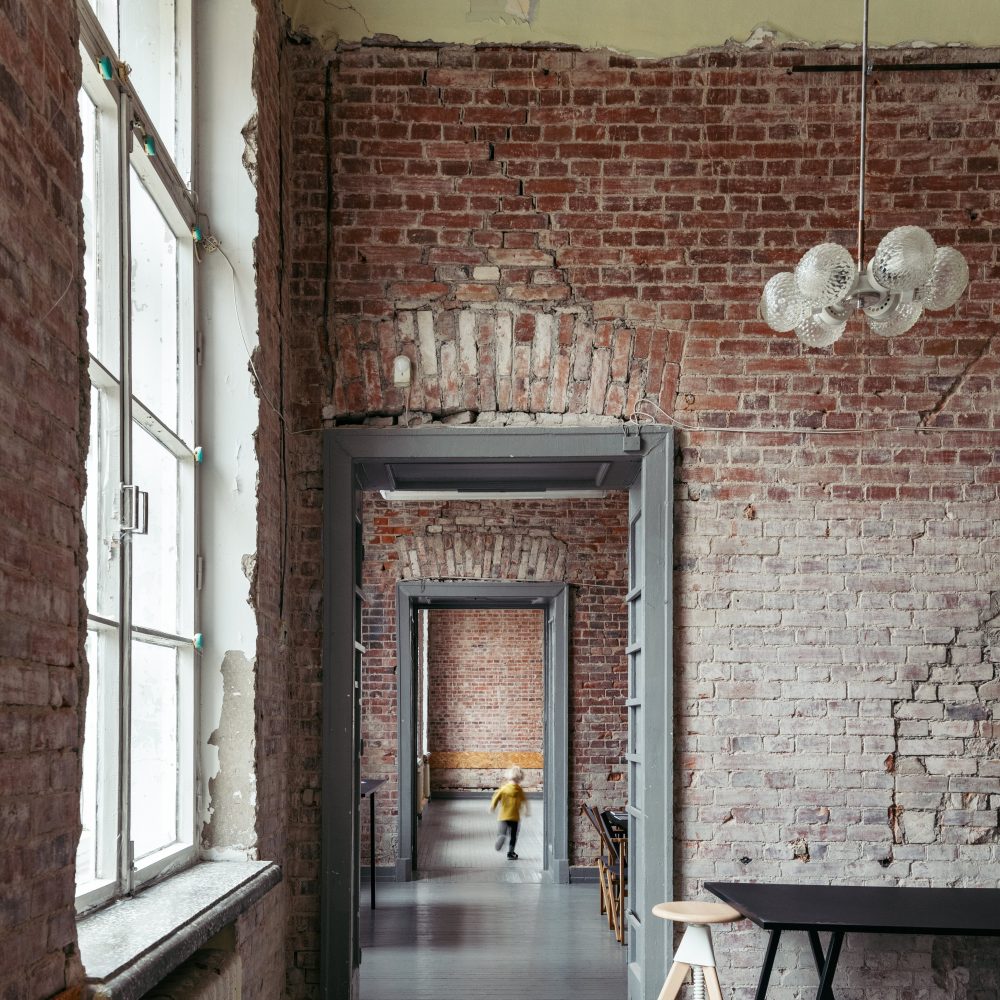
Why it matters: The Kreenholm area is where NART is located and where the huge textile factory complex stands. The scale is dramatic: vast brick halls, abandoned or repurposed spaces, traces of a past workforce that once counted in the thousands.
For many artists, this area becomes the main studio — even if the actual “studio” is just a section of hallway, a corner of the villa, or a piece of fence along the factory. The buildings, machinery remnants, and the river nearby are all potential collaborators.
Project approaches that work well in Kreenholm:
- Sound and video pieces using the acoustics and visual rhythm of industrial spaces
- Installations that contrast soft materials with heavy infrastructure
- Archival research into the factory’s labour history, turned into visual or performative work
- Speculative projects about future uses of large industrial sites
Guided tours and events often bring local visitors and tourists into NART and Kreenholm, which gives you built-in audiences for open studios and in-progress presentations.
City centre and Stockholm Square
The city centre around Stockholm Square and Town Hall is where Narva’s public-space initiatives tend to surface. If you’re working on a public commission or site-specific city intervention, this is likely where your piece will live.
What to keep in mind here:
- People are passing through to run errands, not necessarily seeking art, so clarity and accessibility help
- The context is civic and everyday: bus stops, municipal buildings, and shops
- Collaborations with the municipality can give you access to permits, technical support, and local communication channels
This area emphasizes visibility and encounter more than deep immersion. It suits artists who think about how work sits in the city’s daily rhythm.
Narva Reservoir and Narva Venice
The Narva Reservoir and so-called Narva Venice area bring a different scale: water, garages, improvised structures, and leisure practices. This is where the Narva Venice Embassy residency operates.
What this area gives you:
- Close contact with local fishing, boating, and weekend cultures
- Strong visual and acoustic motifs: ice, water levels, metal garages, seasonal change
- A chance to watch how the border feels when it’s literally a body of water in front of you
Artists who like to work slowly with photography, drawing, sound recording, and conversation often gravitate here. The scale is intimate; the stories are very local.
Practical living: costs, logistics, and visas
Residencies in Narva are easier to enjoy when you have a sense of the everyday logistics. The city is relatively small, but you still need to plan for how you’ll live and move while you’re there.
Cost of living and money realities
Narva is generally cheaper than Tallinn and other bigger European cities. That said, costs fluctuate, and you’ll want up-to-date numbers, especially if you’re self-funding.
Rough expectations:
- Housing: When you’re in a NART program with free accommodation, your big cost is removed. Outside a residency, rents are moderate compared to capital cities but still need checking in advance.
- Food: Supermarket prices are around the mid-range for the region; cooking at home is the most budget-friendly option.
- Studios: Independent studio options in Narva are limited. Residency workspaces are a key part of why artists choose NART.
If you’re applying to outside funding, frame Narva as a cost-efficient place where residency support (housing, workspace, sometimes production support) stretches your grant further than it might in a major capital.
Transport: getting to Narva and moving around
Arriving: Narva is linked to Tallinn and other Estonian cities by train and long-distance bus. The ride from Tallinn is a few hours, and tickets are usually affordable. Many artists fly into Tallinn and then take the train or bus onward.
Inside Narva:
- Walking covers a lot, especially between the centre and Kreenholm
- Local buses exist but you may not need them daily
- Taxis or ride services are handy for late events or carrying materials
Because Narva is a border city, always check current information on border zones and any restrictions, especially if your project involves filming or recording close to the river or border infrastructure.
Visa basics
Narva is in Estonia, a Schengen Area country. Your visa situation depends entirely on your passport and length of stay.
- EU/EEA and Swiss citizens: Usually no visa required for residency-length stays; check registration rules if staying long term.
- Non-EU artists: May need a Schengen visa for short stays. For longer residencies, you may need additional permits or documentation.
Residencies like NART typically provide invitation letters, confirmation of accommodation, and program descriptions that support visa applications. Always verify with an official Estonian embassy or consulate for your nationality and keep Schengen stay limits in mind if you move between countries before or after Narva.
Art life on the ground: community, events, and expectations
Narva’s art community concentrates around NART and its public programs, plus visiting students and local collaborators. It’s not a place where you casually gallery-hop; it’s where you get to know a few institutions and people closely.
NART as a community hub
During your stay you can expect:
- Exhibitions in the villa’s gallery and sometimes in Kreenholm-related spaces
- Artist talks and presentations by residents and guests
- Workshops and educational programs linked to the Estonian Academy of Arts
- Events that draw in local residents, students, and visitors from elsewhere in Estonia
- Guided tours of both the house and surrounding industrial area
Residency projects often end with an open studio, talk, or public event. This is part of the social contract: the institution supports your work, and you share it back with the city in some way.
Community engagement: what “socially engaged” actually means here
Many calls connected with Narva use phrases like “socially engaged” or “community-based”. In this context it usually means:
- Regular contact with a local group or community over the residency
- Work that is legible and meaningful to non-art-specialist participants
- Activities that happen in accessible spaces (schools, community centres, care homes, outdoor public space)
- Documentation or outcomes that NART and the community can keep or show later
When you design a project, think about what you can realistically build in a one to two month stay. Continuous, small-scale interactions often work better than one giant, high-pressure event at the end.
Language and communication
Narva is heavily Russian-speaking, with Estonian as the state language and English widely used in art contexts. Inside NART and academic circles you will usually manage well in English. With broader communities, a mix of Russian, Estonian, and English appears.
You don’t need to be fluent in Russian or Estonian, but some basics or collaborators who can translate can deepen your project. If your work relies on interviews, plan for translation time and costs in your project budget or ask NART early about potential local partners.
Who Narva really serves well as a residency city
To decide if Narva is your city for a residency, match it against your practice.
Narva is especially good for you if you:
- Work with border politics, migration, or multilingual communities
- Enjoy post-industrial landscapes and urban transformation as raw material
- Build projects around collaboration with specific local groups
- Are comfortable presenting work-in-progress and talking about your process
- Prefer focused environments where the residency is the main thing happening
Narva may be less useful if you:
- Need immediate access to collectors and commercial galleries
- Want a huge nightlife-driven scene with many parallel events
- Prefer a closed studio and minimal interaction with residents or institutions
If you’re considering applying, spend time with past NART projects online, map out how your work could plug into Kreenholm, Narva Venice, or the city centre, and be honest in your proposal about how you’ll work with people on the ground. Narva rewards artists who treat the city as a collaborator rather than a backdrop.
Filter in Narva
Been to a residency in Narva?
Share your review