Artist Residencies in Norsborg
1 residencyin Norsborg, Sweden
Why Norsborg works for residencies
Norsborg sits at the very end of Stockholm’s red metro line, inside Botkyrka Municipality. It’s not a postcard arts district, and that’s exactly the draw: you get access to Stockholm’s institutions while working in a lived-in, diverse suburb with space to actually make work.
Botkyrka has put serious energy into art and culture, especially context-based and socially engaged practices. For you as an artist, Norsborg offers:
- Proximity to Stockholm for museums, galleries, and meetings
- More space and lower costs than central Stockholm
- Strong public infrastructure like Botkyrka Konsthall and Cirkus Cirkör
- A real everyday context if your work revolves around urban life, migration, or community
This guide walks through key residencies, the local environment, and how to use Norsborg as a functional base for a short or mid-length stay.
Key residency programs in and around Norsborg
Norsborg itself is part of a wider Botkyrka network. When you look at residencies, think in terms of the whole municipality rather than just one neighborhood name.
Residence Botkyrka (via Botkyrka Konsthall)
Type: Context-based residency for artists, curators, and architects
Where: Apartment in Fittja, close to Norsborg within Botkyrka Municipality
Good for: Site-specific work, research-driven practice, community-based projects
Residence Botkyrka is the main residency program attached to Botkyrka Konsthall. Instead of dropping you in an isolated studio in the countryside, it places you in a regular apartment block and invites you to work in relation to the area.
You typically get:
- A two-bedroom apartment with kitchen and living room, used as short-term home and work base
- Support from the Konsthall team to connect with local actors and contexts
- Structured focus on research, public space, and social questions
- At certain times, a stipend, travel budget, and production support (always check the current call)
The program has run different formats over the years, including editions focused on artists from Nordic and Baltic countries. Calls can shift in theme and eligibility, so you need to read the current guidelines carefully instead of relying on old info.
Who this suits
- Artists who work with places and people, not just in a closed studio
- Curators and architects doing contextual research or public space investigations
- Practices around migration, housing, suburban life, identity, and participation
If you want a quiet, solitary countryside retreat, this is not that. If you want to observe, listen, and build a project around a real urban periphery, Residence Botkyrka is one to pay serious attention to.
Cirkus Cirkör – residencies and LAB at Cirkör House
Type: Circus and performance-oriented residencies, labs, and creation periods
Where: Cirkör House, Norsborg
Good for: Circus, physical theatre, dance, performance needing specialized technical facilities
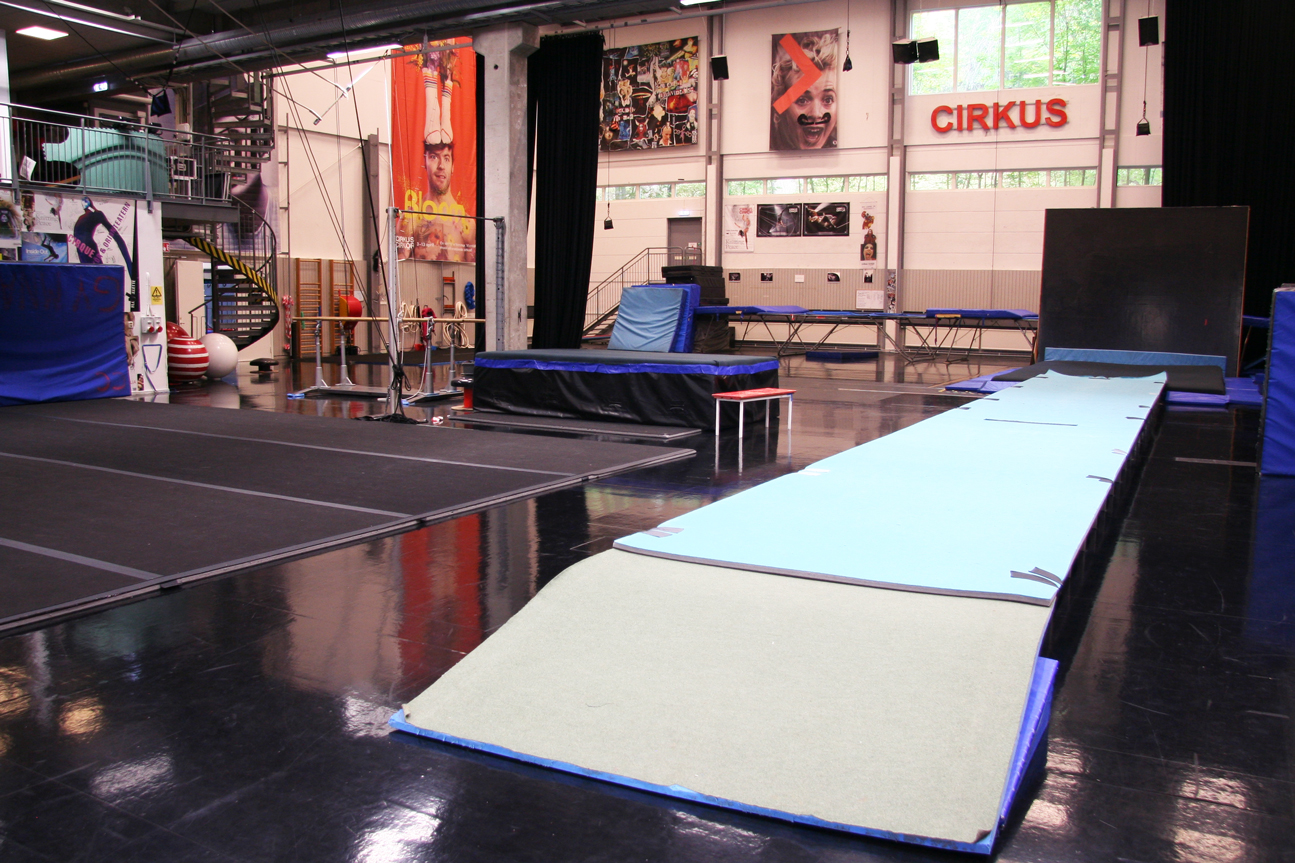
Cirkus Cirkör is one of Sweden’s leading contemporary circus organizations, and its main base, Cirkör House, sits in Norsborg. It’s often described as one of Northern Europe’s largest circus halls.
For artists working with the body, gravity, and rigs instead of just screens and sketchbooks, this can be a rare chance to work at scale.
You typically find:
- Large rehearsal halls with rigging for aerial work and circus apparatus
- Floor space for acrobatic and movement research
- A professional environment where circus is the norm, not a side activity
- Different formats: short labs, longer creation residencies, technical periods
Cirkör’s residencies are not generic art residencies. They are focused on circus and related performance disciplines, sometimes in collaboration with festivals, co-producers, or funding bodies. The exact offer (space only, mentoring, financial support) can change with each call.
Who this suits
- Circus artists needing height, rigging, mats, and tech
- Physical theatre and dance artists experimenting with hybrid or circus-informed work
- Collaborative teams where technical development is part of the residency
If your practice is mainly visual, Cirkör House is inspiring to visit but likely not your main residency target.
Relevant Stockholm programs you can combine with Norsborg
Norsborg is well placed to tap into Stockholm-wide opportunities. Some artists base themselves in Botkyrka while holding a residency or grant in central Stockholm.
IASPIS Residency in Stockholm
IASPIS is Sweden’s national platform for visual and applied arts residencies. It offers studios in Stockholm, often with accommodation and a grant for subsistence and working costs. Artists are selected for 3–6 month periods, with access to studio visits, talks, and networking.
This is not in Norsborg, but it matters because:
- You can stay or sublet in Botkyrka or Norsborg and commute
- The professional network and profile of IASPIS can complement the more context-based work you might do through Botkyrka Konsthall or on your own
What it’s like to be an artist in Norsborg
Norsborg is part of a wider band of suburbs including Fittja, Hallunda, and Alby. These neighborhoods are connected by the metro and bus lines and share some characteristics: high-rise housing, visible diversity, and a lot of everyday life in public spaces.
Artistic context and local networks
Botkyrka’s cultural scene leans towards process and participation rather than blue-chip sales. That has real implications for how you structure your residency.
You’re likely to encounter:
- A strong focus on multicultural life and different languages in public space
- Municipal and cultural workers used to hosting visiting artists
- Project formats that foreground research, workshops, and public programs over polished exhibitions
- Potential partners such as schools, youth groups, local associations, and community centers
If your practice is studio-based but conceptually linked to politics, migration, or urban life, you can use Norsborg as your research ground while exhibiting or meeting curators in central Stockholm.
Studios, galleries, and spaces you’ll probably interact with
Botkyrka Konsthall
The local hub for contemporary art and the home base for Residence Botkyrka. Expect exhibitions, talks, and a team used to thinking about art in relation to local context.
Cirkör House
If you’re in performance, this is a major anchor. Even if you’re not a circus artist, it’s worth connecting if your work crosses into movement, stagecraft, or community workshops.
Stockholm institutions within reach
- Moderna Museet – national museum of modern and contemporary art
- Färgfabriken – experimental art and architecture space housed in an old industrial building
- Art schools and networks linked to Konstfack and artist-run spaces around the city
Botkyrka itself doesn’t offer a dense cluster of commercial galleries. Think of it as a production and research zone, with central Stockholm acting as the showcase and networking area.
Living, working, and moving around Norsborg
If a residency doesn’t spell out the practical side, it can catch you by surprise. Stockholm is not cheap, but Norsborg gives you some breathing room.
Cost of living and budgeting
Housing
Botkyrka rents are generally lower than in central Stockholm, but you are still in the capital region. If your residency includes accommodation (like Residence Botkyrka or some Cirkör formats), that is a big advantage.
Short-term sublets can be:
- Competitive – lots of people searching, especially in semester seasons
- Pricey by international standards – be prepared for that if you’re self-funded
Food
Cooking at home keeps costs sane. Supermarkets around Norsborg, Fittja, Hallunda, and Alby often have a good mix of Swedish basics and international foods. Eating out regularly in central Stockholm adds up quickly.
Transport
A public transport pass is usually non-negotiable. It gives access to metro, buses, and some local trains. Build it into your residency budget and treat it as part of your “studio cost”.
Where to stay as an artist
Good options if you’re not in a hosted residency apartment:
- Norsborg or Fittja – closest to Cirkör House and Botkyrka Konsthall
- Hallunda and Alby – adjacent areas on the same metro line
- Southwest Stockholm suburbs along the red line – manageable commute and sometimes reasonable sublet rates
When searching, prioritise walking distance or a short bus ride to a red line metro station. That will save you time and energy during production-heavy weeks.
Getting around
Metro (Tunnelbana)
Norsborg is literally the end station of the red line. That makes directions simple: you either go towards the city or you go home.
Central Stockholm is reachable within a reasonable time frame for:
- Opening nights and events
- Studio visits and meetings
- Supply runs for materials
From airports
- Arlanda – main international hub. Usually one airport train or bus plus metro.
- Skavsta and Bromma – smaller airports, often used by budget airlines. Add more time for buses.
When planning a residency, schedule buffer time for winter weather and public transport delays, especially if you are arriving with tools, cameras, or awkward luggage.
Visas, timing, and how to approach applications
Most residencies in Botkyrka and Stockholm will expect you to handle your own documents but can usually provide invitation letters when needed.
Visa basics
EU/EEA citizens
You generally do not need a visa to stay and work in Sweden, but you still need to respect residency duration rules and be aware of tax regulations if you receive stipends.
Non-EU/EEA citizens
You may need a Schengen visa for short residencies. Longer stays or situations where you receive income can trigger extra requirements, such as a residence permit for artists or researchers.
When considering Norsborg-based residencies, check:
- How long the residency is
- Whether you receive a stipend, fee, or salary
- Which documents the host will provide (contracts, invitation letters, proof of housing)
If you travel with much equipment or works, read up on customs rules and ask your host if they have experience with shipping or carnet procedures.
When to come: seasons and work rhythms
Spring and summer
Longer days make it easier to document outdoor work, explore neighborhoods, and hold public events. Street life is more visible, which is helpful for research on everyday urban scenes.
Autumn
A stable period for focused work with moderate weather. Many cultural institutions pick up pace after summer, so it’s a strong time for networking and attending events in Stockholm.
Winter
Short days, cold, and snow. Challenging for outdoor shoots or interventions but powerful if your practice thrives on intensity and isolation. Great for concentrated studio or rehearsal phases, especially in well-equipped indoor spaces like Cirkör House.
Approaching applications strategically
Because programs like Residence Botkyrka and Cirkör House are context-specific, treat the application as a proposal for a relationship with the place, not just a request for free rent.
Helpful angles:
- Explain concretely how Norsborg/Botkyrka supports your research and practice
- Show that you understand the residency’s focus (context, community, circus, etc.)
- Describe what kind of public interaction or sharing you envision, even if the residency doesn’t demand a final exhibition
- Outline what you can realistically achieve in the time frame, given the seasonal conditions
Community, events, and how to plug in
Norsborg is not about gallery-hopping; it’s about connections, classes, rehearsals, community projects, and slow research.
Local cultural life
You’ll often find:
- Programs at Botkyrka Konsthall that involve local residents
- Public presentations and talks linked to Residence Botkyrka
- Circus training, rehearsals, and community workshops at Cirkör House
- Events organized in collaboration with schools, libraries, and municipal cultural centers
Participation is usually welcomed if you’re respectful and clear about your intentions. It can be a good context to test works-in-progress or gather feedback.
Connecting to the wider Stockholm scene
While stationed in Norsborg, you can still be active in central Stockholm’s art life:
- Attend openings during Stockholm Art Week and exhibitions at major museums
- Visit artist-run spaces and independent curators
- Set up studio visits either at your residency space or at other artists’ studios
Because travel into town is straightforward via the metro, it’s realistic to balance a research-heavy suburban residency with a professional presence in central Stockholm.
Is Norsborg right for your practice?
Norsborg and Botkyrka make sense if you:
- Want context, not just scenery
- Are interested in community, migration, and suburban life
- Need circus or movement facilities on a professional level
- Like having Stockholm’s institutions within reach but don’t need to live above a gallery
- Value research and process as much as finished outcomes
They are less ideal if your goal is a luxury retreat, a compact gallery district right outside your door, or a tourist-oriented residency experience.
Used thoughtfully, Norsborg can become a strong base: a place where you can quietly focus, explore complex social realities, and still hop on the metro to show work, meet curators, and stay connected to a larger art ecosystem.
Been to a residency in Norsborg?
Share your review