Artist Residencies in O Saviñao
2 residenciesin O Saviñao, Spain
Why O Saviñao is on artists’ radar
O Saviñao sits in Galicia’s Ribeira Sacra, surrounded by vineyards, oak forest, and the Miño River valley. It’s not a gallery city; it’s a place to disappear into your work.
Artists tend to come here for a few clear reasons:
- Landscape and solitude: Steep river canyons, terraces of vines, and quiet villages give you space to think and experiment.
- Site-responsive work: Forest, river, agricultural land, and old stone architecture lend themselves to research, writing, film, sound, land art, and long-form projects.
- Lower-cost immersion: Compared with big Spanish cities, a rural stay here can be relatively affordable, especially for longer projects.
- Rural retreat vibe: Residencies mix studio time with nature, sustainability, sometimes yoga or regenerative practices.
- Privacy for deep work: Instead of large dorm-style campuses, you’ll find domes, small houses, or studio-living setups designed for focus.
If you’re craving a reset from fast-paced city culture and want to give a project your full attention, O Saviñao is built for that.
O Castro Art Village: the core residency in O Saviñao
The main structured residency in O Saviñao is O Castro Art Village, in the parish of Mourelos (San Xulián). It doubles as a creative centre and a rural retreat, so you get both infrastructure and quiet.
What O Castro offers
O Castro Art Village describes itself as a rural creative residency space in Ribeira Sacra. The focus is on giving artists time, studio access, and a lived experience in the landscape.
- Disciplines: Visual arts, film, sound, writing, literature, research, and multidisciplinary projects.
- Housing: Geodesic domes in the oak forest, designed for year-round use, with beds, bathroom, electricity, heating/cooling, Wi‑Fi, and views over the Miño valley or forest canopy.
- Studio: Shared studio loft with desks, a big work table, lounge areas, and projection facilities.
- Common life: Communal kitchen and shared meals, plus outdoor spaces for working or just being in the landscape.
- Mentorship: Optional support from filmmaker Davoud Gerami for film, visual, sound, and regenerative arts.
- Ethos: Sustainability, low-impact living, and deep engagement with place.
The residency operates as a mix of solitude and exchange. You get privacy in your dome, but there are structured ways to meet other residents and share work.
Who O Castro suits
This setup works particularly well if you:
- Want quiet, immersive time away from city distractions.
- Have a writing, research, or script development project that needs hours of uninterrupted focus.
- Work in film or sound and can use projection space and optional mentorship.
- Develop site-responsive visual work, from photography and drawing to more experimental practices.
- Care about sustainability and low-impact living and want that reflected in where you stay.
If your priority is a dense program of critiques, industry networking, or a lot of public events, this is not that. It’s more like a highly functional retreat with good tools for getting work done.
Costs, stays, and practicalities
O Castro functions as a paid residency with clear day rates, which can actually simplify planning your budget.
- Long-stay pricing (30+ days, as listed):
- Private dome: about €45 per person per day
- Couple in private dome: about €30 per person per day
- Shared dome: about €20 per person per day
- Domes are equipped for year-round comfort (heating, cooling, Wi‑Fi, bathroom).
- Cooking is usually self-catered in a communal kitchen; you budget separately for food.
They also host families in some domes, which is rare for residencies. If you’re coming with a partner or kids, O Castro is unusually accommodating.
Accessibility and terrain
The residency is in a forested, mountainous area with uneven ground and steep paths.
- One dome and the communal kitchen are designed to be accessible for guests with mobility needs.
- The path from parking to the domes is steep and may require assistance.
If accessibility is a concern, contact them directly for up-to-date details and to check if the terrain matches your needs.
How O Castro frames “creative centre” vs “residency”
O Castro also presents itself as a broader creative centre, combining arts, critical thinking, yoga, nature, and sustainable gastronomy. That means:
- The vibe is not a rigid white-cube institution; it’s more holistic.
- You may cross paths with people there for retreats, workshops, or events, not just residency work.
- The programming may include movement sessions, shared meals, and other non-studio experiences.
For many artists, that mix is a plus: you get studio time and a parallel focus on how you’re living while you work.
The local art ecosystem: what to expect in O Saviñao
O Saviñao is rural. There is no cluster of galleries or arts institutions. Think of it as a base for making, not selling.
Art scene structure
- Place-based and rural: Landscape, wine culture, and heritage shape most cultural activity.
- Residency-centred: Temporary exhibitions, screenings, and open studios are more common than permanent art spaces.
- Regional focus: For more structured cultural offerings, you’d look to nearby towns like Monforte de Lemos or the city of Lugo.
For you, that translates to:
- Less commercial pressure, more room for experimentation.
- A good environment for research, early-stage projects, and risky ideas.
- Opportunities to work with local communities, vineyards, and heritage initiatives if your practice leans that way.
Spaces and neighborhoods to know
Instead of neighborhoods, you’re dealing with villages and parishes.
- Mourelos / San Xulián: Where O Castro Art Village is located, surrounded by oak forest and views over the Miño River valley.
- Miño River valley: Great for field recording, drawing, photography, or just thinking walks.
- Vineyards and terraces of Ribeira Sacra: Strong visual and conceptual material if your work involves agriculture, labour, climate, or land use.
If you need coffee shops, nightlife, or daily gallery-hopping, this area won’t satisfy that. If you want to wake up, walk into trees and fog, and then work in silence for hours, it will.
Working conditions: studios, supplies, and daily life
Planning a residency here goes more smoothly if you understand what you’ll have on hand and what you need to bring or source.
Studios and workspaces
O Castro Art Village provides the clearest infrastructure for artists:
- Shared studio loft: Desks, large work table, lounge zones, flexible layout.
- Projection facilities: Useful for editing, test screenings, or presenting work-in-progress to others.
- Outdoor work areas: Fields, forest edges, and views where you can sketch, photograph, do field recordings, or test small interventions.
That setup is especially suitable for:
- Film and video: Editing, planning, small-scale shoots, screenings.
- Writing and research: Essays, books, scripts, academic work.
- Visual development: Drawing, photography, planning installations or performance scores.
- Sound work: Field recording, composing with headphones, tests on small speakers.
If you need heavy fabrication (metal, large-scale wood, industrial printing), treat this as a conceptual or pre-production phase rather than a full fabrication residency.
Materials and supplies
Because O Saviñao is rural, you will not have a big art-supply district. Plan like this:
- Bring specialty materials you absolutely rely on and can pack.
- Use local shops and regional towns for basics (paper, modest tools, tape, simple paints, printing services).
- If your project depends on very specific gear, contact the residency to ask what is reasonably accessible.
- Build some flexibility into your project to use local materials (wood, stone, soil, found objects, soundscapes, text from the area).
Cost of living and budgeting
O Saviñao is generally more affordable than Spain’s big cities, but distances add up.
- Accommodation: Residency fees at O Castro cover housing and basic utilities. For long stays, the day rates are competitive compared with urban rentals.
- Food: Self-catering is the norm. Expect to drive or get rides to larger towns for full supermarket runs.
- Transport: Factor in car rental, fuel, or shared taxi costs if you do not have a vehicle.
- Studio: Included in residency fees when staying at O Castro; independent studio rentals are not a local norm.
If you are writing a grant budget, group your costs as: residency fees, travel, local transport, food, and production costs (materials, documentation, translations).
Getting there and getting around
Reaching O Saviñao usually means combining public transport with local travel.
Arriving in the region
- You typically fly or take long-distance trains to a larger Spanish city, then travel by regional train or bus to towns in Lugo province.
- From there, you connect by car or taxi to O Saviñao.
- Always ask your residency if they offer pickups from specific stations or if they can recommend local drivers.
Local mobility
O Saviñao is spread out; public transport is limited.
- Car use is highly helpful: for groceries, hardware, visiting nearby towns, or exploring the river valleys.
- Ask in advance about the nearest grocery store, how often you can realistically get there, and what residents usually do.
- If you do not drive, clarify whether ride-sharing or taxi options exist and how expensive they tend to be.
- Consider seasonal conditions: in wetter seasons, road and path conditions can change; good footwear is essential.
Visa and paperwork
Because O Saviñao is in Spain, general Schengen rules apply.
- EU/EEA/Swiss artists: Usually no visa for short stays; you can travel and stay relatively freely.
- Non-EU artists:
- Short residencies may fall under a Schengen short-stay visa, depending on your nationality.
- Longer stays or arrangements that look like employment may require different permits.
- Residencies rarely process visas for you; what they typically provide is an invitation letter confirming your stay dates and housing.
- Check your country’s specific rules early, especially if you are planning a long project or multiple residencies in Schengen within a short period.
Seasons, rhythm, and what kind of practice fits
Ribeira Sacra has a clear seasonal rhythm, and that shapes your residency experience.
Seasonal character
- Spring: Green, mild, active rivers and forests; good for outdoor research, walking, photography, and sound recording.
- Early autumn: Vineyard activity, atmospheric light; ideal for visual work, writing, and site-responsive projects about land and labour.
- Winter: Colder and wetter, but very quiet; useful if you want isolation, long writing days, or editing work.
- Summer: Warmer, with more visitors in the broader region, but still calmer than cities; good if you want a bit more social energy while remaining rural.
Residency availability can vary by season, so it helps to be clear about your ideal weather and landscape conditions when you apply or book.
Local community, events, and how to plug in
You are not dropping into a big institutional scene, but there are still meaningful ways to connect.
Who you are likely to meet
- Other visiting artists, writers, and researchers on residency.
- Local residents engaged in agriculture, wine, and rural life.
- Regional cultural workers and craftspeople.
- Occasional visitors for retreats, workshops, or creative events at O Castro.
Ways to engage
- Ask the residency if they host open studios, screenings, or readings.
- Check how they involve artists with local schools, cultural associations, or town initiatives.
- If your work is collaborative or site-based, propose a talk, walk, or small public action that fits the context.
- Keep an eye on events in nearby towns in Ribeira Sacra; regional festivals and heritage programs can be interesting platforms or research sites.
Is O Saviñao the right choice for your project?
O Saviñao is a strong match if you want:
- Rural quiet and time to think.
- Landscape immersion as part of your process.
- Low-distraction studio time for writing, editing, planning, or developing new work.
- A residency structured around reflection, research, and experimentation rather than public output.
- A context where nature, sustainability, and place are built into daily life.
It’s less ideal if you need:
- A large gallery market and regular openings.
- Constant public transit and walkable city infrastructure.
- Daily institutional networking or frequent studio visits by curators.
- A heavy exhibition schedule during your stay.
If you want to step out of the noise, commit to a project, and let a specific landscape shape your thinking, O Saviñao’s residencies, especially O Castro Art Village, can give you a focused, grounded base to work from.
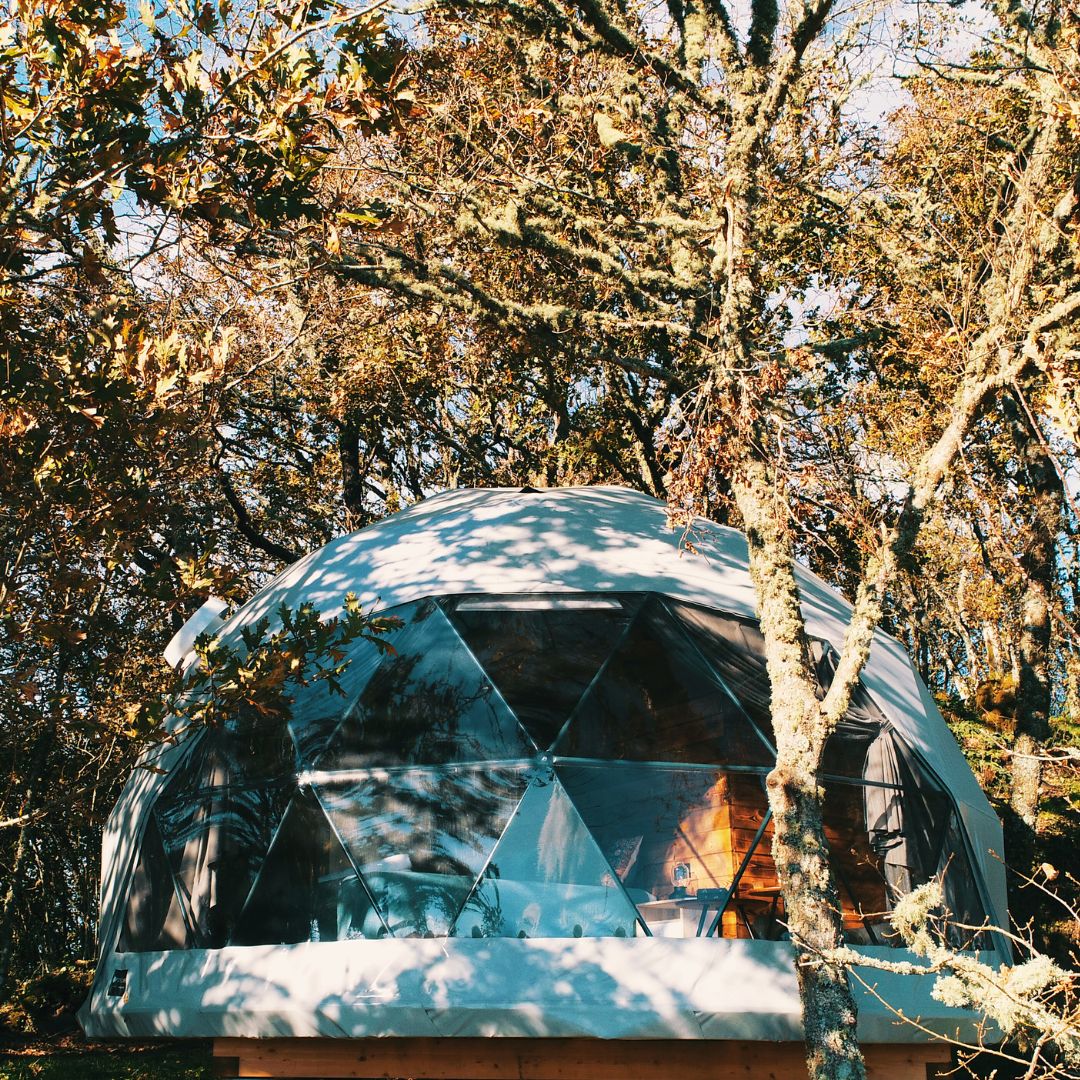
Creative Residency at O Castro Art Village
O Saviñao, Spain
Rural creative residency in Galicia's Ribeira Sacra for artists, filmmakers, writers, researchers. Geodesic domes, shared studio, kitchen. Emphasizes sustainability, site-responsive work, optional film mentorship. 2 weeks-2 months.
Culture Moves Europe Residency
O Savinao, Spain
Culture Moves Europe residency support in Spain for legal entities hosting artists and cultural professionals; projects can include accommodation, workspaces, mentoring, and cross-border collaboration.
Browse by discipline in O Saviñao
Filter in O Saviñao
Been to a residency in O Saviñao?
Share your review