Artist Residencies in Ponte Caldeas
1 residencyin Ponte Caldeas, Spain
Why Ponte Caldelas works as an artist base
Ponte Caldelas sits in the province of Pontevedra in southwestern Galicia. It is small, green, and closer to forest and river than to white-cube galleries. That’s exactly the draw for many artists: space, quiet, and access to nature, with cities like Pontevedra, Vigo, and Santiago de Compostela within reach.
If you’re used to big city residencies, this area feels different. Think:
- More time and space for production, writing, or research
- Landscape-led work: rivers, oak forests, rural paths, and Atlantic light
- Lower costs than Madrid or Barcelona, especially for longer stays
- Regional networks in Pontevedra and Vigo instead of a dense local gallery scene
The trade-off is clear: you gain quiet, but you give up some immediate cultural intensity. If you like community-driven work, slow production, and walking out of the studio straight into the woods, Ponte Caldelas is a strong candidate.
Key residency: Anceu Coliving & Rural Hackers (Ponte Caldelas)
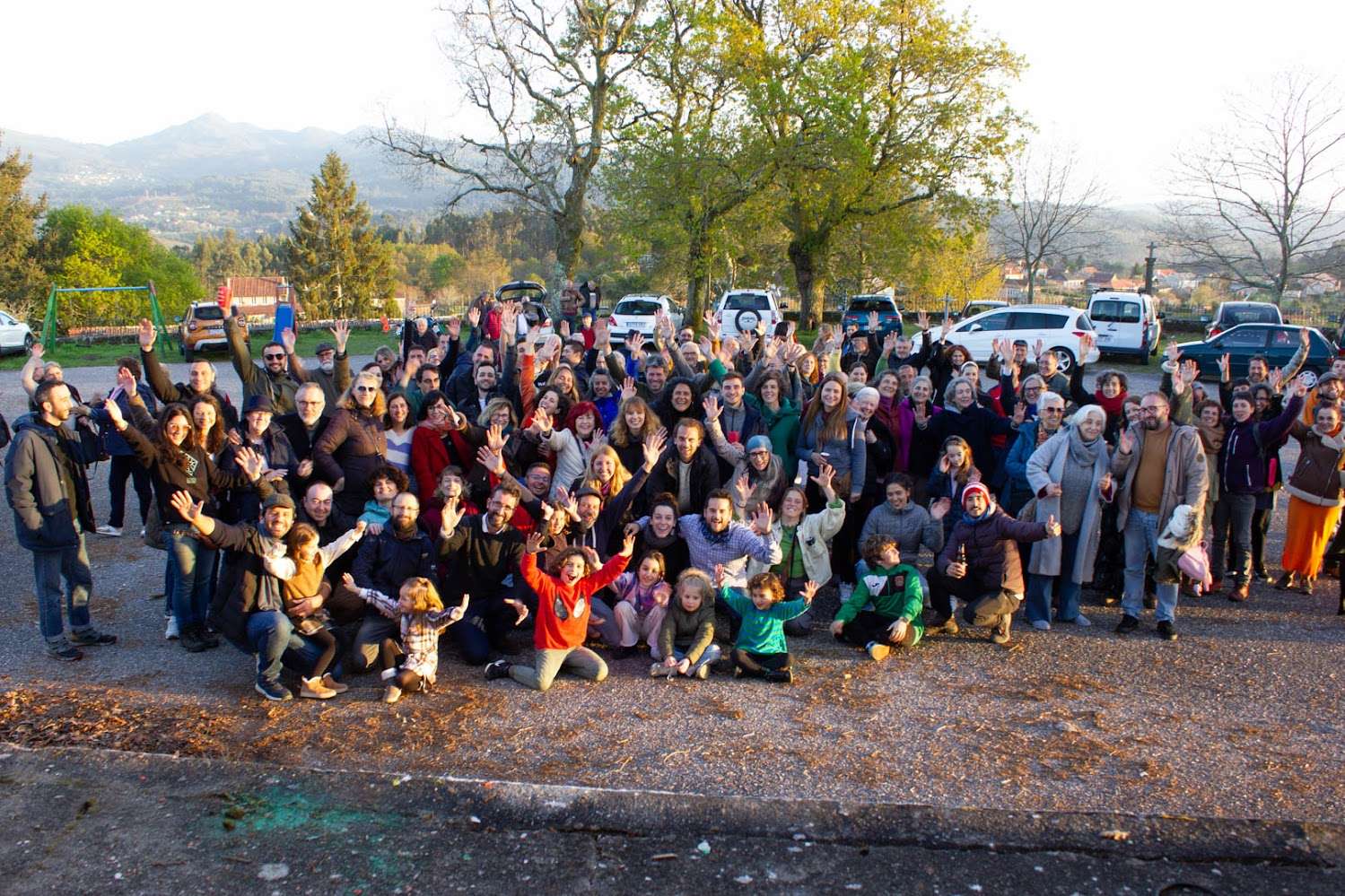
The most relevant option around Ponte Caldelas is the ecosystem around Anceu Coliving and the Rural Hackers residency. They share a location in the village of Anceu, inside the Ponte Caldelas municipality.
Anceu Coliving: coliving first, creative residency energy
Anceu Coliving describes itself as a rural coliving space in Anceu, Ponte Caldelas. It is not a classic state-funded art residency; it is a coliving that deliberately attracts creatives, remote workers, and artist-types, and it hosts artist-focused periods and knowledge-sharing events.
From the public information, you can expect:
- Location: A small rural village surrounded by forested hills and typical Galician countryside
- Set-up: Private or shared rooms, shared kitchens, workspaces, and common areas
- Programming: Regular knowledge-sharing events, community meals, and occasional artist residencies or themed weeks
- Community: A mix of artists, digital nomads, researchers, and remote workers interested in rural futures, tech, and sustainability
What this means for you as an artist:
- Expect a self-directed residency feel rather than a tightly curated art program
- You will likely pay a fee for your stay, similar to other colivings, instead of receiving a stipend
- Studios may be improvised from shared workspaces and outdoor areas rather than dedicated art studios with specialized equipment
- You gain a community of peers who may not all be artists but are usually open to collaboration and cross-pollination
This setup works especially well if you are:
- Writing, editing video, or developing research
- Working digitally or with portable equipment
- Developing site-responsive or conceptual projects that use the village, landscape, or local networks as material
- Interested in tech, rural innovation, or participatory formats
Rural Hackers Residency: art, tech, and rural experimentation
In connection with Anceu, the Rural Hackers residency appears in residency directories as a project based in Anceu, Ponte Caldelas. While framing and details can evolve, the core idea is clear: experimental work at the intersection of rural context, technology, community, and creative practice.
Based on available descriptions and their positioning, you can expect a program that:
- Invites artists, designers, technologists, and researchers curious about rural futures
- Values community engagement and collaborative processes as much as finished outcomes
- Uses the village and surroundings as a test ground for ideas: documentation, prototyping, small interventions
- Might provide structured activities such as talks, local collaborations, or thematic labs
This residency is especially suited for you if:
- Your practice sits between art, tech, and social practice
- You are comfortable working in a place with limited traditional art infrastructure
- You like co-creating with local residents, colivers, or regional partners
- You are okay with some ambiguity and the need to self-initiate projects
Before applying, clarify:
- Funding model: Is it fee-based, funded, or mixed?
- What “studio” means: Desk space, room, shared workshop, outdoors?
- Tech access: Internet reliability, available tools, and any fabrication equipment
- Community expectations: Are you expected to host a workshop, open studio, or public presentation?
How Ponte Caldelas fits into your wider residency plan
Many artists treat Ponte Caldelas not as a one-off, isolated experience, but as part of a longer trajectory in Galicia or the Iberian Peninsula. Thinking strategically can make a rural residency more useful for your practice.
Pairing Ponte Caldelas with regional residencies
You can combine a stay in Anceu with other programs in Galicia and northern Spain. For example:
- Rural retreat plus city exposure: Work quietly in Ponte Caldelas, then spend a period in a more urban residency in Pontevedra, Vigo, or elsewhere for exhibitions and networking.
- Field research before production: Use a short stay around Ponte Caldelas for research, walking, interviews, and documentation, then develop the final work in a better-equipped city studio.
- Extended Iberian circuit: Combine a Galician rural stay with programs elsewhere in Spain or Portugal to build a cohesive research arc across regions.
When planning a sequence of residencies, think about:
- What you can realistically produce without heavy infrastructure
- What materials are available locally or can be cheaply sourced
- How to use the landscape, local stories, and social fabric as content rather than importing everything
Artistic context: what kind of work thrives here
Ponte Caldelas suits certain practices more than others. It tends to support work that is:
- Site-responsive: engaging with forest, rivers, rural architecture, or village life
- Process-oriented: research, writing, or experimentation you rarely have time for in a full city schedule
- Low-tech or portable: drawing, photography, sound recording, coding, small-scale sculpture, or performance research
- Community-engaged: workshops, co-created projects, or interventions with local residents
Highly technical fabrication-heavy practices (large metal work, complex ceramics, industrial-scale printing) can still be possible, but usually require planning. You may need to:
- Prototype and test in Ponte Caldelas
- Outsource some production to Pontevedra, Vigo, or Santiago
- Schedule final fabrication after your stay, back in your home city or another residency
Daily life, logistics, and working conditions
The romantic side of rural residencies only goes so far. The practical side matters for how much work you actually get done. Ponte Caldelas is forgiving on some fronts and demanding on others.
Cost of living and what to budget
Compared with Spain’s big cities, Ponte Caldelas is generally kinder on your budget. Expect:
- Housing: Residency or coliving fees in rural Galicia can sometimes be lower than urban rent, especially if you stay longer or share. Food: Groceries and local produce are usually affordable. Eating out is cheaper than in major cities, though options may be limited.
- Transport: This is often the wild card. Without a car, you will rely on regional buses or lifts from others, which can cost more in time than money.
When budgeting, separate costs into:
- Fixed: accommodation, travel to Spain, insurance
- Variable: food, materials, local transport, occasional trips to Pontevedra or Vigo
- Project-specific: printing, fabrication, hiring local help, renting equipment
Where to stay if you are not in a formal residency
If the official residency dates do not align with your schedule, you can still base yourself around Ponte Caldelas.
- Within Anceu or Ponte Caldelas town: Guesthouses, rural tourism stays, or coliving stays at Anceu outside of residency periods.
- In Pontevedra city: If you need more cultural life, staying in Pontevedra and making day trips to Ponte Caldelas can work, especially at the research stage.
- Shared apartments: Local rentals are typically more affordable than in large cities, though short-term options may take more effort to find.
Think about where you actually need to be to make the work you have in mind: on-site in the village all the time, or with flexible access to both rural and city resources.
Studios, workspaces, and materials
In and around Ponte Caldelas, studio access is often tied to whatever residency or coliving you are part of. Before committing, ask directly about:
- Workspace type: desk-based, open-plan studio, or dedicated private workroom
- Light and ventilation: especially for painting, solvents, or dust-producing work
- Noise tolerance: can you work late, play sound, or test performance?
- Storage: where works-in-progress, equipment, or fragile pieces can safely live
Materials may require some creativity:
- Basic supplies: usually sourced from nearby towns or online orders
- Specialized materials: may require trips to Pontevedra or Vigo
- Found materials: wood, stone, plants, local textiles, and recycled objects can become part of your practice here
Art community, networks, and showing work
Ponte Caldelas itself has a small cultural footprint, so most professional visibility will come from wider regional networks. This doesn’t make it less useful; it just means you need a realistic plan for sharing your work.
Local and regional connections
Your main cultural nodes will likely be:
- Pontevedra: museums, exhibition spaces, independent venues, and a walkable historic center with regular art and cultural programming.
- Vigo: larger, more industrial, with its own galleries, institutions, and music scenes.
- Santiago de Compostela: university and institutional networks, often strong in research and theory-driven work.
Artists based in Ponte Caldelas often treat these cities as:
- Places to show work after rural production periods
- Sources of collaborators such as curators, designers, and other artists
- Fabrication hubs for high-spec printing, framing, or technical services
How residencies here handle public outcomes
Rural residencies and colivings usually lean toward intimate, context-embedded public moments. Rather than formal white-cube shows, expect:
- Open studios for peers and local residents
- Walks, talks, or small performances in and around the village
- Workshops or collective experiments with the local community
- Process documentation shared online instead of large-scale final exhibitions
If you want a more formal public outcome, plan how you will use your residency materials afterward: a later show in your home city, a publication, a web project, or an application portfolio for future opportunities.
Transport, visas, and timing your stay
Getting the logistics right can be the difference between a smooth residency and a frustrating one. Ponte Caldelas is accessible but not hyper-connected.
Getting to Ponte Caldelas
Your most likely route:
- Fly or train to a major hub such as Santiago de Compostela or Vigo
- Continue to Pontevedra by train or bus
- Then reach Ponte Caldelas or Anceu by regional bus, taxi, or pickup arranged with the residency
Public transport in rural Galicia exists but can be limited in frequency. A car makes it easier to move materials, scout sites, and take advantage of nearby cities, but brings extra costs. If you don’t drive, prioritize residencies that clearly state how they support arrivals and local movement.
Visa basics for international artists
If you are coming from outside the EU/EEA/Switzerland, check the visa situation early. Depending on your passport and the length of your stay, you may be covered by short-stay rules or you might need a Spanish national visa.
Before committing to a residency around Ponte Caldelas, confirm:
- How long you can stay in the Schengen area
- Whether your residency is paid, unpaid, or fee-based and how that interacts with visa categories
- What documentation you need: invitation letters, proof of accommodation, health insurance, and proof of funds
- Whether the residency organizers provide any support letters for consulates
Always cross-check with the Spanish consulate for your country and the residency host, since immigration rules change.
Weather and seasonality
Galicia has a mild Atlantic climate with a lot of green because it gets a lot of rain. That has a direct impact on how your residency feels:
- Spring and early autumn: Often the best balance of light, temperatures, and fewer tourists. Good for outdoor work and field recording.
- Summer: Warmer, more local activity, and a bit more tourism in the region. Nice for social projects, but you may share spaces with more visitors.
- Winter: Wet and quieter. Excellent for concentrated writing, editing, research, and studio-based work if your space is well heated.
Think about your practice needs: do you need dry outdoor days, long light hours, or do you thrive when the weather pushes you indoors to the studio?
Making Ponte Caldelas actually work for your practice
A residency around Ponte Caldelas can be transformative if you treat it as a strategic move, not just a scenic retreat.
- Clarify your aim: Research, production, recovery, or career step? Your goal will dictate how long you stay and what kind of program you choose.
- Plan around infrastructure: If you need heavy tools or institutional support, schedule that before or after the rural phase.
- Use the landscape and community: Let the forest, river, and village influence the work. Projects that ignore the context rarely feel fully grounded here.
- Build a regional network: Reach out to contacts in Pontevedra, Vigo, or Santiago while you are in residence. Think of Ponte Caldelas as your quiet lab, not the end of the chain.
- Document well: Strong documentation of your process and outcomes will help you use this residency to support future applications elsewhere.
If you are drawn to rural settings, community energy, and experimental formats at the intersection of art, tech, and ecology, Ponte Caldelas and Anceu in particular are worth a serious look as your next working base.
Filter in Ponte Caldeas
Been to a residency in Ponte Caldeas?
Share your review