Artist Residencies in Seyðisfjörður
4 residenciesin Seyðisfjörður, Iceland
Why artists keep ending up in Seyðisfjörður
Seyðisfjörður is tiny, remote, and somehow packed with artists. You get a steep-sided fjord, changing weather as a daily collaborator, and a town that has grown used to artists turning up with strange projects and long to-do lists.
It’s known as one of the strongest art communities in Iceland outside Reykjavík. A big part of that comes from the legacy of Swiss-German artist Dieter Roth, who spent a lot of time working there in his later years. That history anchors the town as a place where serious work happens, not just a backdrop for scenic photos.
Artists usually come to Seyðisfjörður for a few reasons:
- Focus and solitude: It’s quiet. You’re far from big-city distractions, which can be great for writing, research, and long-form studio work.
- Real community: Even with the remoteness, you meet local artists, visiting artists, students, and residents passing through different programs.
- Landscape as material: Light, fog, snow, rain, and the fjord itself easily become part of the work, whether you want them or not.
- Dense cultural infrastructure for a small town: An art center, cinema, community spaces, art school activity, and multiple residencies create consistent cultural traffic.
The key is to pick a residency that matches how you actually work. The three main options most artists look at are Skaftfell Art Center, HEIMA, and the LungA School residency. Ströndin Studio also exists but is no longer open as a standard self-directed residency.
Skaftfell Art Center Residency: Self-directed with strong print resources
Good fit if you want a structured but independent residency with solid facilities and light community engagement.
Organization: Skaftfell Art Center
Type: International, self-directed residency
Typical duration: 6 or 12 weeks
What working here actually feels like
Skaftfell combines a quiet working rhythm with being anchored to a proper art institution. You live in one of two houses in town, walking distance from the art center. Each house has private bedrooms and shared kitchens and workspaces, and each hosts about 1–3 artists at a time. It’s social enough that you don’t feel isolated, but not so busy that you can’t get serious work done.
The key asset is its link to Prentverk Seyðisfjörður, the collaborative fine art print workshop. If your work touches printmaking, this residency jumps up the list immediately.
Facilities and studio setup
The print workshop offers:
- Silkscreen
- Intaglio processes
- Linocut and woodcut
- Etching
- Letterpress
- General hand-printing setups
The residency apartments themselves function as live/work spaces, which makes it ideal for research, drawing, writing, and smaller-scale production. For large fabrication or heavy materials, you’ll want to clarify what’s realistic with the staff ahead of time.
Community and visibility
Skaftfell regularly encourages residents to share their work through:
- Open studios
- Artist talks
- Workshops with locals or visitors
They also have partnerships with places like the local cinema, community center, and primary school, so there are ways to situate your work within the town if that interests you. If you’re more introverted, you can keep it minimal and still have a meaningful residency.
Who Skaftfell suits best
- Artists who like self-directed structure rather than a taught or group program.
- Printmakers or artists who integrate print techniques into broader practices.
- Researchers, writers, and artists who need quiet time but still want an institutional anchor.
- Artists interested in modest community engagement without carrying a full social-practice project.
One practical limitation: the residency is listed as not wheelchair accessible. If accessibility is a concern, it’s worth contacting Skaftfell to ask about current options, but for now you should plan with that constraint in mind.
For current details, images, and application info, go to the Skaftfell listing on Res Artis: resartis.org/listings/skaftfell-center-for-visual-art or the Skaftfell website directly.
HEIMA Residency: Collective house with an LGBTQIA+ focus
Good fit if you want community, shared living, and a queer-centered environment.
Organization: HEIMA Residency / Heima Collective
Type: Artist-run, non-profit collective space
Typical duration: Around 50 or 80 days
How HEIMA is set up
HEIMA is a 350 m² combined living and studio space. It accommodates roughly 5–6 artists at a time, usually with each artist having a private bedroom and sharing studios, kitchen, and common spaces. It functions like an intentional temporary household of artists and activists.
The program explicitly focuses on LGBTQIA+ artists and activists, and is open across disciplines:
- Visual art
- Film and moving image
- Text-based work
- Performance
- Sound
- Curatorial and hybrid practices
The aim is to form temporary collectives, with a lot of emphasis on peer exchange, shared meals, informal crits, and collaborative experimentation.
Atmosphere and expectations
This is not a quiet hermit residency in the classic sense. You get periods of focus, but the house is a social organism: people cooking, talking, testing ideas, and sometimes working irregular hours. That can be energizing or overwhelming, depending on your personality and current project.
HEIMA often encourages residents to share work through open studios, small exhibitions, or events, but how you participate will be shaped by each cohort. The residency tends to attract experimental and process-oriented practitioners, so it works well if your practice can expand or shift based on group dynamics.
Costs and practicalities
HEIMA is a young, non-profit, artist-run space. Historically, the residency fee has covered accommodation and studio space only; residents cover travel, food, and materials. Fees can shift over time, so you should check the most recent call for up-to-date figures.
The essentials:
- Integrated live/work space; no need to find separate housing.
- Each resident gets a private bedroom; studios are shared.
- Open to Icelandic and international artists at different stages in their career.
For current info or to ask detailed questions, check their website h-e-i-m-a.com or email the collective.
Who HEIMA suits best
- LGBTQIA+ artists and activists looking for a queer-centered, supportive environment.
- Artists interested in collective living and peer-learning, not just a solo retreat.
- Emerging or mid-career artists who want to test ideas, build networks, and potentially collaborate.
- People comfortable with shared kitchens, shared studios, and a flexible structure.
If you need complete silence or a highly controlled routine, HEIMA might be more intense than you want. If you crave shared energy and conversation, it can be ideal.
LungA School Residency: Embedded in an educational ecosystem
Good fit if you like working alongside students and thrive in a school-like atmosphere.
Organization: LungA School
Type: Residency running alongside an educational program
Typical duration: About 12 weeks
Access: By invitation
What makes LungA different
The LungA residency runs in parallel with the school’s main program, often referred to as “84” in older descriptions. You’re not in a quiet bubble; you’re inserted into a structured environment of young artists and creative students working across disciplines.
The main studio is in an old Fishnet Factory by the fjord, around 1100 m². Inside, you find a mix of individual studio corners and large shared spaces. On top of that, LungA has access to a theater hall, cinema, music school, and wood workshop, which opens up options for performance, installation, sound work, and mixed-media projects.
Working dynamics
Because the residency is embedded within a school context, you can expect more interaction, conversation, and cross-pollination than in a standalone residency. That can be a strong advantage if your practice benefits from workshops, informal teaching, or experimenting with audience engagement.
The residency is usually by invitation, which makes it less immediately accessible but potentially more tailored once you’re in. If you’re interested, paying attention to LungA’s public programs, events, and networks can be a way to eventually build a relationship.
Who LungA suits best
- Artists who enjoy educational and mentoring contexts.
- People who don’t mind a busy environment with students and shared large studios.
- Artists working across performance, installation, or large-scale collaborative projects.
If your work is extremely solitary or sensitive, the intensity might be a lot. If you like being around younger practitioners and educational energy, this can be a unique context.
Ströndin Studio: Great space, limited access
Good to know about, but not a standard open-call residency at the moment.
Location: Strandavegur 29–33, about 2.2 km from Seyðisfjörður town center.
Ströndin Studio used to host self-directed residencies but now collaborates with artists and workshop leaders by invitation. It’s still part of the local ecosystem, with facilities such as:
- Two large studio spaces
- Black-and-white analog darkroom
- Digital imaging workspace
- Living space with two bedrooms, kitchen, laundry, and shower
The walk into town from here takes around 20–25 minutes, and there is no internal public transport system, so you’re slightly more remote than residents in the town center. If you end up collaborating with Ströndin, it’s worth planning around that distance.
While it’s not a typical residency you can just apply to, keep it in mind as a potential partner space for future workshops, collaborative projects, or invited programs.
How the art scene actually works in a town this small
Seyðisfjörður isn’t a big city with districts; it’s a compact town where you can walk most places and bump into the same people across different institutions.
Key art and culture anchors
- Skaftfell Art Center: Exhibitions, residency programming, library, and a bistro. This is the main visual arts institution and a natural first stop.
- Prentverk Seyðisfjörður: The printmaking workshop attached to Skaftfell, crucial for anyone doing print-based work or editions.
- Herðubíó Cinema: A local cinema that sometimes connects with art events, screenings, and residency activities.
- Herðubreið Community Centre: A multi-use venue for community and cultural events, talks, and workshops.
- Dieter Roth Academy: A symbolic and practical part of the town’s identity as an art place, occasionally intersecting with residencies and visiting artists.
HEIMA, LungA, Skaftfell, and Ströndin are interwoven with these spaces. You might show in a shared venue, hold a talk at the community center, or collaborate with local schools during your stay.
Presentation and sharing opportunities
Most residencies in town offer some kind of public outcome:
- Open studios at the end of your stay
- Short talks or presentations
- Workshops with local participants
- Screenings or performances in partner venues
The atmosphere is less about high-pressure career visibility and more about honest exchange with a small, curious audience. This makes it a good place to test risky or early-stage work that you might hesitate to show in a major city setting.
Getting there, moving around, and surviving the weather
Seyðisfjörður is both connected and remote. It’s the ferry point to mainland Europe via Smyril Line, yet the route to the next town goes over a mountain pass that can be closed in winter.
Arrival logistics
- Nearest airport: Egilsstaðir, about 25 km away, is the closest domestic airport.
- By road: You typically travel from Egilsstaðir over a mountain road into the fjord. Conditions are usually fine in summer and can be challenging in snow season.
- By ferry: Some artists arrive by ferry directly to Seyðisfjörður, which can be practical if you’re bringing a lot of equipment from Europe.
Local transport and distances
There is no regular town bus system. People walk, bike (in decent weather), or rely on cars and occasional rides. This has consequences for your planning:
- If you stay in central Seyðisfjörður (which most residencies do), you can walk to shops, Skaftfell, and community venues.
- If you’re based farther out, like near Ströndin, you’re looking at a 20–25 minute walk each way to town.
- If you know you’ll need frequent trips with equipment or groceries, check with the residency about local options for rides or consider budgeting for a rental car.
Weather and seasonality
The climate is subarctic, and the town’s rhythm shifts dramatically between seasons.
- Summer: Longer days, milder weather, more visitors in town. Good for fieldwork, photography, and site-specific projects. Travel is easier and the energy is livelier.
- Autumn / Winter: Short days, potential snowstorms, road closures, and deep quiet. Perfect for intense studio immersion, writing, and reflection, with less temptation to wander.
Your choice of season should align with your project. If your work depends on hiking, being outside, or filming, aim for the lighter months. If you’re chasing deep focus and atmosphere, winter can be powerful, as long as you’re realistically prepared for weather and limited daylight.
Costs, visas, and other practical details
Cost of living basics
Seyðisfjörður is remote, and Iceland is not cheap. The residency fee is only part of the budget; the bigger pressure often comes from general living expenses.
Budget for:
- Groceries: Higher than many countries, especially for imported goods.
- Travel: Flights or ferry, plus local transfer to/from Egilsstaðir.
- Materials: If your work uses specialized or bulky materials, consider shipping or rethinking your approach to use what’s locally available.
- Extras: Occasional meals out, field trips, emergency winter gear if you underestimated the weather.
Residencies may or may not include studio materials, so clarify what is provided. For printmaking at Skaftfell, for example, you may need to bring or pay for specific papers, inks, or plates.
Visa and entry considerations
Seyðisfjörður is in Iceland, which is part of the Schengen Area. What you need depends on your nationality and the length of your stay.
Before booking anything, you should:
- Check the Schengen rules that apply to your passport and planned stay duration.
- Make sure your passport is valid long enough beyond your trip.
- Confirm whether you can attend on a tourist/short-stay basis or need specific permission.
- Ask the residency for an official invitation letter, which can support visa applications if needed.
- Confirm health insurance requirements and any tax implications if you receive fees or honoraria.
The safest approach is to check current requirements with the Icelandic Directorate of Immigration and your local embassy or consulate, and to start this process early if your stay is long or complicated.
How to choose the right Seyðisfjörður residency for your practice
If you’re trying to decide where to apply, you can think of the residencies in town as three very different working moods:
- Skaftfell Art Center: You want an independent, structured residency, strong printmaking support, and some community visibility without living in a large collective. Good for mid- to long-term projects, writing plus studio, and research-driven work.
- HEIMA Residency: You want collective energy, shared living, and a queer-centered, interdisciplinary environment. Good for experimentation, collaboration, and practices that benefit from conversation and peer critique.
- LungA School Residency: You like educational contexts and large shared studios, and you’re open to being immersed in a school-like environment with students and workshops. Invitation-based, but powerful if it matches your working style.
All of them share the same outer frame: a small fjord town, no internal public transport, shifting weather, and a community that’s used to artists trying things out. If you can see your work thriving in that mix of isolation and connection, Seyðisfjörður is usually worth the logistics.
For more residencies in Iceland beyond Seyðisfjörður, including artist reviews and filters for housing and stipends, you can explore: reviewedbyartists.com/countries/iceland.
Heima Art Residency
Seydisfjordur, Iceland
Heima Art Residency is an independent, non-profit, artist-run collective house founded in that offers 6-week residencies for LGBTQIA+ artists and activists from around the world. Located in Seyðisfjörður, East Iceland, the program provides a 350 square meter living and studio space where residents live, work, and collaborate together while engaging with the local community. The residency emphasizes cultural exchange, artistic skill-sharing, and creating a safe space for queer artists and activists.
Heima Collective
Seyðisfjörður, Iceland
Heima Collective is an independent, non-profit, artist-run residency program founded in in Seyðisfjörður, Iceland, offering a 350m² space for living and studios where artists live, work, share, and experiment together. It features flexible, self-guided residencies, particularly open calls for LGBTQIA+ artists and activists emphasizing care, world-building, workshops for queer youth, and public presentations. All disciplines are welcome in this multidisciplinary program located in a vibrant artistic port town.
LungA School
Seyðisfjörður, Iceland
LungA School is an artist-run residential art school in Seyðisfjörður, East Iceland offering 12-week immersive programs in Art and Land, where participants live together at the school and engage in experimental artistic and land-based practices. The school functions simultaneously as an educational institution and as an artwork itself, using the concept of schooling as its medium.
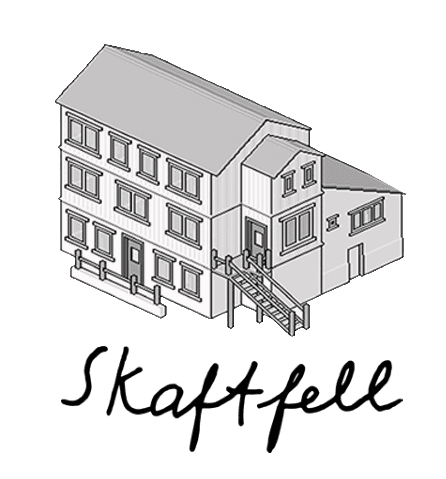
Skaftfell Center for Visual Art
Seyðisfjörður, Iceland
Skaftfell Center for Visual Art, situated in the quaint town of Seyðisfjörður, Iceland, serves as a pivotal cultural hub in East Iceland's visual arts scene. With a focus on self-directed residencies, Skaftfell provides a tranquil environment where artists are encouraged to explore their creative processes and engage deeply with their work, free from the rapid pace of urban art districts. The residency program accommodates individual artists and artist groups across multiple disciplines, offering facilities for visual arts, printmaking, and interdisciplinary practices. The residencies are housed within three historic buildings offering a blend of private and shared accommodations, aimed at fostering a communal and collaborative atmosphere among up to four artists at a time. Each space is equipped with essential amenities and work areas conducive to artistic creation and research. Although Skaftfell does not currently offer fully funded residencies, it strives to maintain accessible fees and provides a list of external funding opportunities to prospective applicants. Artists benefit from the opportunity to present their work through open studios, artist talks, or workshops, and can integrate into the local community via various cultural engagements organized by the center. The program's integration within the local educational and cultural fabric, along with its stunning natural surroundings, makes it an ideal setting for artists seeking a reflective and enriching residency experience.
Browse by discipline in Seyðisfjörður
Filter in Seyðisfjörður
Been to a residency in Seyðisfjörður?
Share your review