Artist Residencies in Skagaströnd
1 residencyin Skagaströnd, Iceland
Why Skagaströnd works so well as a residency base
Skagaströnd is a small fishing village in Northwest Iceland that punches way above its weight for artists. The town sits right on the sea, backed by low mountains and open land, with changing weather, big skies, and a strong sense of remoteness. Instead of a dense gallery strip, you get a residency-centered ecosystem built around NES Artist Residency and related local projects.
If you are craving time and space to work, Skagaströnd ticks a lot of boxes:
- Long, uninterrupted stretches of studio or writing time
- High solitude, low distraction, but still a clear structure to your days
- A stark, inspiring landscape: ocean, birds, wind, cliffs, fields, snow, low light
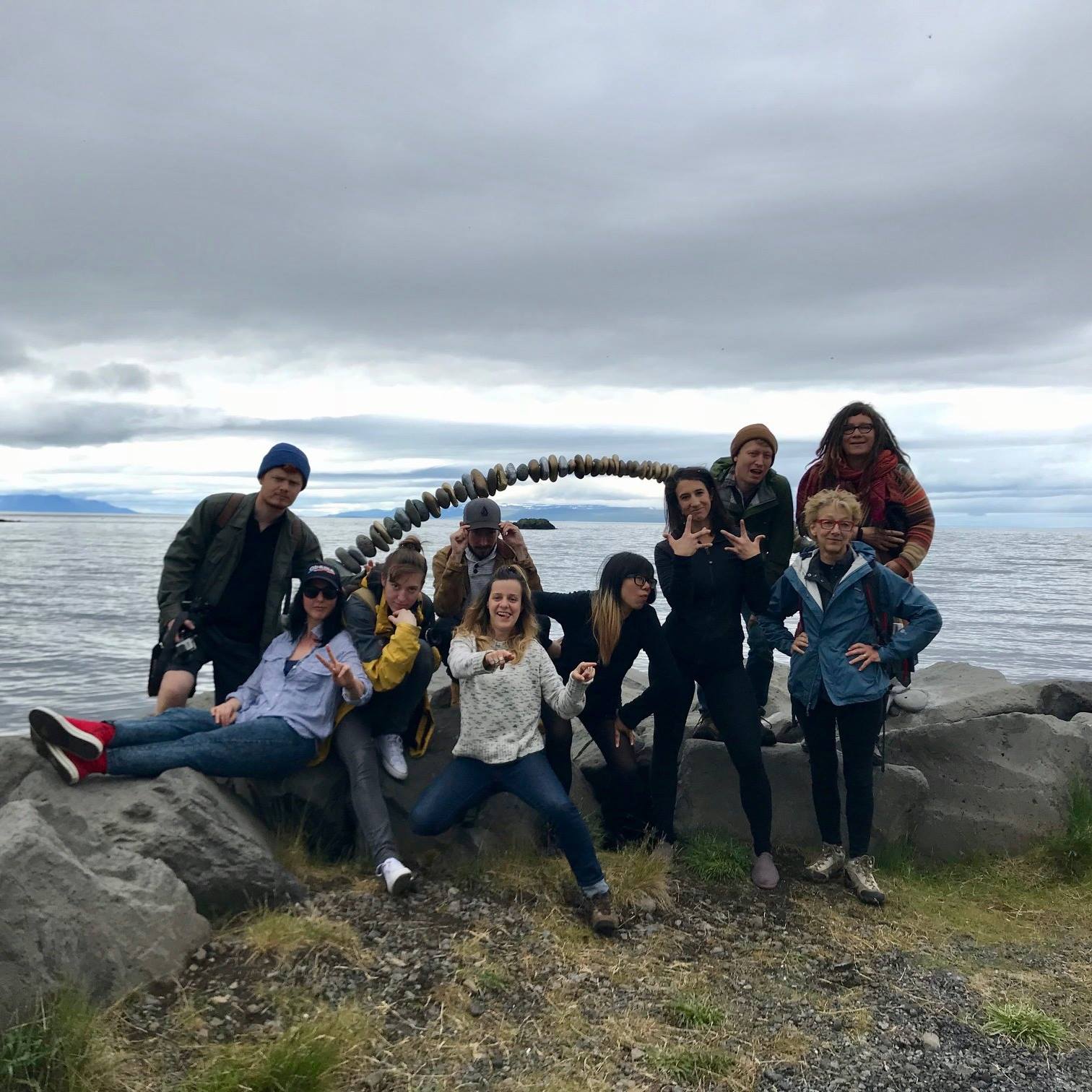
- A small, interested community used to having international artists around
- Built-in opportunities for open studios, presentations, and local collaboration
Think of Skagaströnd as a working village where artists are part of daily life, not an add-on. People will notice your work and often ask about it, which can be energizing if you like that kind of exchange.
The art scene: what actually happens in Skagaströnd
There is no big museum circuit or commercial gallery row here. Instead, most of the art energy is concentrated in a few key spaces and rhythms.
Residency-driven art life
NES Artist Residency is the core hub. It is one of the larger residencies in Iceland, hosting roughly 9–12 artists each month and somewhere around 90–140 a year depending on season and year. That means at almost any moment there is a small international cohort working in the studios and living around the village.
The typical art activities you will encounter are:
- Daily studio work in the old fish factory studios
- Informal peer critique, shared meals, and studio visits among residents
- Regular open studios where locals and visitors wander through
- Free-format artist talks or presentations (often twice monthly at NES)
- Occasional pop-up exhibitions, screenings, or performances
- Locally rooted projects: public art, school collaborations, and seasonal initiatives
The town is used to this pattern. You are not a curiosity; you are part of the ongoing flow of artists coming through. That makes it easier to propose simple projects like a small performance, a talk at the school, or a casual workshop.
Landscape as collaborator
Even if your work is not obviously landscape-based, the environment has a way of getting into the work. Artists often talk about:
- The constant presence of the sea and fishing industry
- Weather that changes many times a day, and the shift in how you plan your time
- Birds, especially gulls and arctic terns, almost acting like characters in daily life
- The mountain next to the town, which feels like a quiet anchor and lookout point
For some, this shows up literally in drawings, sound recordings, photography, or performance. For others it simply slows down the nervous system and clears space for thinking and writing.
Community and collaboration
Skagaströnd is small, so you will quickly recognize people and be recognized. Over time, NES has built a close relationship with the town through projects like artists in schools and public art. Residents who want connection can often:
- Visit the local school or kindergarten for simple art activities
- Develop site-specific works in dialogue with locals
- Collaborate with other artists in the cohort for shared presentations
- Join community events that happen while you are there
If you need quiet, you can keep public contact minimal. But if you are looking for an engaged audience, you will find one on a human scale.
NES Artist Residency: the main hub
Website: neslist.is
Address: Fjörubraut 8, 545 Skagaströnd, Iceland
What NES actually offers
NES is an international multidisciplinary residency that welcomes artists from all creative fields and career stages. You get:
- Shared open-plan studio in a former fish factory, divided into individual workspaces
- 24/7 studio access so you can work with your own rhythm (including odd hours)
- Specialized spaces where possible for writers, dancers, performers, and sound artists or musicians
- Accommodation in shared houses around town, usually a private bedroom with shared kitchen and living areas
- Family-friendly options such as a three-bedroom apartment and a private dance studio for those traveling with partners or children
- Two regular monthly events: artist presentations and public open studios
- Support for pop-up exhibitions or events in spaces connected to the studio, such as a former freezer space in the factory building
NES tends to encourage stays of at least two months for a deeper experience, although shorter stays are often possible. The atmosphere is relaxed and self-directed rather than tightly programmed.
Who NES works well for
NES is a good match if you are:
- A visual artist needing a simple, flexible studio space
- A writer, poet, researcher, or academic working on long-form projects
- A performance or dance artist who can adapt to a shared studio or dedicated dance room
- A sound artist or musician interested in experimenting with acoustics and field recording
- An interdisciplinary practitioner who likes to cross over with other fields
- Comfortable shaping your own schedule without external pressure
You are expected to be self-motivated. There is staff support, but you drive your own project and daily routine.
Working conditions: studio and accommodation
The main NES studio is in an old fish factory on the water. Inside, you will find an open-plan space divided into 10–12 work areas. It is simple, functional, and social but with enough separation to concentrate. Artists have 24/7 access, which is useful if you work late, record at quiet hours, or like to walk and photograph in the daytime and work at night.
Housing is spread across a few shared houses around town. Each artist typically has a private room and shares the rest of the house with two to eight other residents, depending on which house you are in. All houses are fully furnished, with linens and kitchen basics, and none are more than a short walk (usually under 10 minutes) from the studio.
Programming and expectations
There is no rigid curriculum. NES usually offers:
- Regular artist talks where each resident shares work or process in an informal format
- Open studio sessions where the public visits the fish factory studio
- Case-by-case support for exhibitions, performances, or screenings
- Introductions to local partners for artists interested in community engagement
You are not required to produce a finished exhibition during your stay. The focus is on process, research, and experimentation. This makes NES particularly good for mid-project deep dives, project pivots, or starting an entirely new line of work.
Salthús Artist Retreat: quiet retreat with light infrastructure
Website: search for “Salthús Artist Retreat Skagaströnd” or look via the Salthús guesthouse site.
What Salthús offers
Salthús Artist Retreat operates alongside the Salthús guesthouse in Skagaströnd and collaborates with NES. It is more of a quiet, self-directed retreat than a full studio residency.
- Spacious private rooms, often with sea views
- En-suite bathrooms for comfort and privacy
- Shared kitchen and dining area where you can cook and occasionally meet other guests and artists
- Good Wi‑Fi suitable for writing, research, and online work
- A calm atmosphere that supports reading, editing, sketching, and thinking
Typical stays are around two weeks, though arrangements can sometimes be shorter or longer. It works more like an artist-oriented guesthouse than a cohort-based residency.
Who Salthús works well for
Salthús is a strong fit if you:
- Do not need a large production studio
- Work mainly with a laptop, notebook, camera, or small-format materials
- Want a quieter, more private rhythm while still being in Skagaströnd’s environment
- Are combining research, travel, and art-making
- Prefer a retreat feel over structured events
You can still connect with NES or local artists if you choose, especially if you line up your stay with residency activity, but Salthús is not built around shared studios or mandatory programming.
Where you will actually live and work
Skagaströnd is compact. This means you will quickly have a mental map of the town, and distances are short enough to walk almost everywhere.
Areas artists tend to stay
You do not pick a “neighborhood” as in a big city. Instead, accommodation revolves around:
- NES studio at Fjörubraut 8 — the old fish factory on the shoreline
- Artist houses scattered within a 5–10 minute walk from the studio
- Salthús guesthouse — often with ocean views and quick access to walking paths
When comparing housing options, what usually matters most is:
- Walking distance to studio or sea
- Level of privacy (solo room vs. shared apartment vs. family space)
- Access to a functional kitchen and grocery shop
- Reliable internet if your practice needs it
The everyday experience can feel like living inside a small, informal campus, but dispersed through a real working village.
Cost of living and budgeting for a residency
Iceland is not cheap, and rural transport can add up, but living in a small village helps keep some costs under control. You will want to plan more carefully than you might for a big city residency.
Key expense categories
- Residency or accommodation fees: usually your largest single cost. NES charges for housing and studio; Salthús charges as a guesthouse/retreat.
- Food: groceries are more expensive than many artists are used to, and eating out often is unrealistic. Cooking at home is the default.
- Transport: travel from Keflavik or Akureyri to Skagaströnd, plus any car rental or bus tickets, can be significant.
- Materials: basic supplies can be improvised or ordered, but specialized items are better brought with you.
- Insurance and visas: especially for non-EU/EEA artists.
Budget tips that help in Skagaströnd
- Plan to cook almost all your meals and share cooking with other artists when it makes sense.
- Bring key art supplies, inks, specific papers, or electronics you depend on; do not assume you will find them locally.
- If renting a car, consider sharing with other residents for food runs or field trips.
- Build in a buffer for unexpected transport changes due to weather.
- Look up grants that cover both residency fee and travel; many funding bodies like the clarity of a focused, residency-based project.
Transport, access, and weather realities
Skagaströnd is easy to handle once you are there; the more complicated part is getting there and planning around weather.
How to get there
Typically you will:
- Fly into Keflavik International Airport (near Reykjavík) or Akureyri for some routes.
- Travel onward by bus or rental car to Skagaströnd. The drive from Reykjavík region is several hours.
Rural bus services exist but may not run daily and can involve transfers. A rental car offers much more flexibility, especially if you plan to photograph, record, or explore sites along the coast.
Weather and seasonality
The season you choose will shape your residency experience as much as the program itself.
- Summer: long daylight, relatively easier travel, comfortable temperatures, and good conditions for hiking, photography, and fieldwork.
- Spring and autumn: more changeable weather, dramatic skies, and a balance between outdoor access and studio time.
- Winter: short days, strong wind, ice and snow, and the possibility of travel disruption. In exchange, you get deep studio time and powerful light conditions for those who enjoy working with darkness and limited color.
Whatever the season, add extra time on either side of your booked residency for travel delays. Weather can shift plans quickly, especially in winter.
Visas, entry, and legal basics
Iceland is part of the Schengen Area. That shapes what kind of entry permission you need.
If you are from a Schengen country
You can usually travel freely for short stays in Iceland, but if you are planning a very long residency or series of residencies, check that your total time in the Schengen Area still fits the rules that apply to you.
If you are from outside Schengen
You may need:
- A short-stay Schengen visa, depending on your nationality
- Proof of accommodation (e.g., residency confirmation)
- Travel insurance and evidence of funds
For long stays that exceed typical tourist allowances, you may need a different status such as a long-stay visa or permit. Residencies themselves do not automatically grant work rights, so if there is paid teaching or other income involved, double-check the rules with the residency and Icelandic immigration authorities.
How to choose season and length for your project
Instead of asking “When is the best time,” it is more useful to match the season to your actual work plan.
Good fits by project type
- Landscape, photography, walking-based practices: late spring to early autumn gives you more daylight and flexibility.
- Writing, editing, digital work: any season works; winter can be particularly strong for uninterrupted focus.
- Sound recording and weather-based work: off-season months bring more dramatic storms and atmospheric conditions.
- Projects needing community interaction: NES has residents year-round, and the town is lived-in, not seasonal, so you can plan for engagement in most months.
In terms of length, many artists find that a month is enough to start, but two months allows a full cycle: arrival and adjustment, deep work, and time to wrap up or test something publicly.
Local art community, open studios, and how to plug in
The strongest art community in Skagaströnd is the one built by the current residents, NES staff, and the local people who regularly attend events.
What connection usually looks like
- Resident cohort: artists from multiple countries and disciplines working side by side in the fish factory studio.
- Open studios: local residents, visiting travelers, and artists from nearby towns drop in, ask questions, and see work in progress.
- Artist talks: informal presentations where you share your work, often in the studio or a nearby common space.
- Local projects: chances to respond to the specific context of Skagaströnd, like its fishing history, geology, folklore, or contemporary life.
If you are proactive, you can shape this further: propose a small workshop, arrange a screening, or invite local collaborators. If you are more introverted, you can keep things simple and just participate in the standard events.
Is Skagaströnd right for your practice?
Skagaströnd is particularly strong for artists who want:
- Time and quiet to work deeply on a project
- A landscape that actively influences thought and mood
- A residency structure with low pressure and high flexibility
- Community contact on a small scale instead of a big-city scene
- An international but compact peer group to share process with
It may be less aligned with your needs if you require:
- Constant gallery openings, museums, and art fairs
- Highly specialized fabrication facilities or large-scale production workshops
- Easy public transport and a car-free lifestyle
- Dense nightlife or an extroverted city environment
If your project thrives on solitude, weather, and sustained focus with just enough community to keep you grounded, Skagaströnd’s residency ecosystem is a strong candidate. NES gives you the cohort and studio; Salthús gives you retreat and privacy. The town itself ties it together with a sense that your work is happening in a specific, lived-in place rather than in isolation.
Filter in Skagaströnd
Been to a residency in Skagaströnd?
Share your review