Artist Residencies in Tallinn
3 residenciesin Tallinn, Estonia
Why Tallinn works so well for residencies
Tallinn is small enough that you keep running into the same people, and big enough that those people are curators, artists, researchers, and organizers with serious projects. That mix is what makes it a solid residency city.
You get a compact, walkable core with institutions, off-spaces, and studios all layered together: medieval streets, Soviet-era housing blocks, renovated industrial areas, and quick access to forest and sea. That’s helpful if your work leans on architecture, memory, ecology, or social practice, because the city wears its history on the surface.
The art infrastructure is surprisingly dense for the size: Tallinn Art Hall, the Estonian Artists’ Association, Kumu, EKKM, Kai Art Center, and a network of galleries and artist-run spaces. English is widely used in professional contexts, so you can function in the art scene pretty quickly, even on a short residency.
Most residency programs here are plugged directly into this ecosystem: they either live inside an institution (Tallinn Art Hall, Estonian Artists’ Association) or are run by working artists and researchers (KORDON, Copper Leg, and others near Tallinn). You are not just renting a room; you are stepping into a web of existing conversations.
The main residency options in and around Tallinn
There is no single “Tallinn residency.” Instead, you have a cluster of programs that reach different kinds of practices. Here are the key ones artists usually look at first.
Tallinn Art Hall / Goethe-Institut residency
Type of program: Institutional, structured, stipend-based research residency.
This residency is hosted by Tallinn Art Hall in partnership with Goethe-Institut Estland. Calls have focused on artists living in Germany and themes around ecological responsibility, the ethics of being “good,” and how art responds to environmental crisis.
Typical features:
- On-site accommodation in a studio-apartment in Tallinn
- Residency length around two months
- Travel costs covered from and to the host country (for example, Germany)
- Weekly stipend and small production or materials budget
- Built-in networking: curators, writers, other artists, institutional staff
- Obligation to participate in public events (talks, workshops, walks, etc.)
Who it suits: Artists who work research-first and do not mind speaking publicly about their practice. If your work touches climate, multispecies thinking, ethics, or any critical approach to how we live together, this is a natural fit.
How it positions you in the city: Tallinn Art Hall is a major contemporary art venue, so you get immediate visibility in the local scene. Expect a more structured rhythm here: check-ins, events, and clear expectations around how you share your work.
Estonian Artists’ Association (EAA) guest studio and exchanges
Type of program: Professional exchange and guest studio, tied to membership.
The Estonian Artists’ Association (Eesti Kunstnike Liit) manages a guest studio in Tallinn Art Hall and runs international exchanges. These are usually for members of the EAA or partner organizations.
Typical features:
- Free living and working space in a combined studio-apartment
- Often includes travel support
- Duration usually about one month, but check each exchange
- Possibility to present work, hold a talk, or organize an exhibition by prior agreement
Notable exchange formats:
- Residency exchanges with Hamilton Arts Council (Canada)
- Residency exchanges with partners like the Vantaa Artists’ Association in Finland
Who it suits: Artists who are already in a professional association (EAA or a partner) and want a solid, low-cost base in Tallinn with strong local connections. Less “public program heavy” than some institutional residencies, more about studio time and peer networks.
How it positions you in the city: The guest studio sits on the top floor of Tallinn Art Hall in a building historically central to Estonian art life. You are literally surrounded by galleries, studios, and the Kuku Club restaurant, which has long been a gathering spot for artists. You can walk almost everywhere you need to go.
KORDON Residency
Type of program: Artist-run, research-driven, focused on space and site.
KORDON is operated by KORDONair MTÜ, founded by the team of Vaikla Studio. The focus is on space in all senses: architecture, interior, film, scenography, and how these fields meet critical artistic practice.
Typical features:
- Residencies open to artists, architects, filmmakers, and researchers
- Site-specific and research-heavy projects encouraged
- Expectation that you engage with the surrounding environment critically
- Artist-run context, which often means more flexibility and more direct peer contact
Who it suits: If your work is about buildings, landscapes, spatial politics, or filmic views of space, KORDON is a strong match. It is especially useful if you want to experiment without the pressure of a big institutional framework, but still want a serious, conceptually strong context.
Arvo Pärt Centre Creative Residency (near Tallinn)
Type of program: Quiet, reflective residency in a cultural institution just outside the city.
The Arvo Pärt Centre in Laulasmaa offers a creative residency for composers, performers, writers, visual artists, architects, filmmakers, and choreographers. It is not in Tallinn proper, but many visiting artists treat it as part of their Tallinn experience because it is close enough for day trips.
Typical features:
- Spacious residency room with views of pine forest and access to the sea nearby
- Suitability for individuals and small groups (up to four people)
- No requirement to complete a finished project
- Focus on process, reflection, and quiet working time
Who it suits: Artists and composers who need silence and time more than urban data and social buzz. If your work requires deep listening, writing, or careful editing, this setting supports that.
How it connects to Tallinn: You can base yourself at the residency and schedule focused days in Tallinn to meet curators, visit exhibitions, and attend events, then retreat to Laulasmaa to process.
Copper Leg Art Residency (near Tallinn)
Type of program: Rural-leaning, community-oriented residency close to the capital.
Copper Leg is an art residency in northern Estonia, near Tallinn, launched with support from the local municipality and the Rae Culture Center. It works as a meeting place for visual artists, musicians, writers, and other creative people.
Typical features:
- Multidisciplinary residents: visual art, sound, writing, and more
- Combination of making work and sharing it with local audiences
- Community feel backed by municipal and cultural-center support
Who it suits: Artists who want manageable access to Tallinn’s institutions but prefer to live and work in a quieter, more local setting. Good if you like small-town rhythm plus occasional city days.
Where you will actually spend your time: neighborhoods and art hubs
A residency might be your base, but you will probably shape your work around specific areas of Tallinn. Here is how the city tends to break down for artists.
Old Town and City Centre
This is the symbolic core. Tallinn Art Hall sits just off the Old Town area, and many galleries and institutions are within walking distance.
Why it matters for artists:
- Quick access to gallery openings, museum shows, and talks
- Easy coffee or lunch meetings with curators and writers
- Historic architecture if your project touches on heritage, tourism, or urban change
The downside is that it can be tourist-heavy and sometimes pricier for food and short-term rentals. For a short residency, that is often outweighed by the convenience.
Kalamaja, Telliskivi, and Noblessner
This corridor is where a lot of contemporary culture is concentrated. Think independent spaces, design studios, and galleries mixed into former industrial sites.
Key spots:
- Telliskivi Creative City – studios, shops, eateries, and venues in a former industrial zone
- Kai Art Center – contemporary art exhibitions and public programs at the Noblessner seafront
- Nearby galleries and project spaces that appear in rotations over time
Why it matters for artists:
- Good for informal networking and running into people multiple times
- Photo-friendly urban textures for site-specific or lens-based work
- Plenty of places to sit with a laptop and sketchbook between studio sessions
Kadriorg, Lasnamäe, and the outskirts
Kadriorg is more residential but houses major institutions like the Kumu Art Museum, which you will probably visit at least once for research and context. The surrounding park is useful for artists working with landscape or public space.
Lasnamäe and other large housing districts and industrial zones come into play if your work deals with post-Soviet architecture, social housing, or peripheral urbanity. These areas offer a different visual and social texture than the postcard image of Tallinn.
Practical life on a Tallinn residency
Your experience will live or die on the logistics: how easily you move, what you spend, and how you connect with people.
Cost of living basics
Tallinn is generally more affordable than cities like Berlin, Paris, or Copenhagen, but it is not ultra-cheap if you are on a tight budget.
Typical pattern for visiting artists:
- Housing – Often your biggest cost if your residency does not cover accommodation. Programs that offer a studio-apartment or guest room simplify things a lot.
- Food – Supermarkets are manageable; eating out a lot will add up. Many residencies provide shared kitchens, which helps keep costs down.
- Transport – Public transport is inexpensive, and if you stay central, you can walk most places.
- Studio space – Usually included in residency programs. Renting a separate studio short-term on the open market is possible but less common for visiting artists.
If you are self-funded, prioritize residencies that include either housing, a stipend, or both. That will directly change how much time you can spend focusing on your work instead of chasing freelance tasks during your stay.
Getting around the city
Tallinn is easy to navigate, even on a first visit.
- Public transport – Buses, trams, and trolleybuses form a simple network. Tickets can be bought on-board or via local systems, and passes are inexpensive for short stays.
- Walking – The city center and main art areas are very walkable. Many artists end up doing most trips on foot, especially between Old Town, Telliskivi, and nearby neighborhoods.
- Airport access – The airport is close to the center; you can reach your residency base by tram, bus, or taxi quickly.
- Regional trips – Trains and buses connect Tallinn to other cities like Tartu and Viljandi. If your residency topic touches rural or small-town contexts, plan a day or two outside the capital.
Visa and paperwork
Residencies in Tallinn are used to hosting international artists, but the support they offer with visas varies.
General pattern:
- EU/EEA and Swiss nationals – can stay and work with minimal friction.
- Non-EU nationals – may need a Schengen visa or another short-stay permit, depending on duration and citizenship.
- Funded residencies – often provide an official invitation letter, confirmation of accommodation, and details about the stipend for visa applications.
When you talk with a residency, ask clearly:
- What documentation they provide (invitation letter, contract, etc.)
- Whether they have hosted artists from your country before
- What length of stay they usually support (this may affect visa type)
Making the most of your time: networks, events, and project planning
Most Tallinn residencies give you space and time; what you add on top of that is what will really shape your experience.
Where to plug into the art community
Useful names to keep in your notes:
- Tallinn Art Hall – exhibition program, talks, and curatorial networks.
- Estonian Artists’ Association (EAA) – membership body, exchanges, and connections into studios and galleries. Website: https://www.eaa.ee/en
- Kumu Art Museum – national art museum, essential for contextual research.
- Kai Art Center – contemporary exhibitions and events at Noblessner. Website: https://www.kai.center
- EKKM (Estonian Contemporary Art Museum) – artist-friendly contemporary space with experimental programming. Website: https://www.ekkm.ee
- Telliskivi Creative City – cluster of cultural and creative businesses, galleries, and venues. Website: https://telliskivi.cc
- Galleries such as Temnikova & Kasela, Vaal Gallery, and Draakon Gallery for a sense of the local commercial and independent scenes.
Events and formats that are especially useful for residents
Even if your residency does not require public engagement, building a loose event schedule helps you meet people and test ideas.
- Opening receptions – Easiest starting point for meeting people; Tallinn is compact enough that regulars often attend the same events.
- Artist talks and panel discussions – Good for understanding local debates and for asking questions after the event.
- Workshops and walks – Great for site-based research and spending time with local practitioners.
- Open studios – Some residencies and collectives have open studio days; these are ideal for soft feedback and practice-led conversation.
Residencies like the Tallinn Art Hall / Goethe-Institut program explicitly build public events into their structure. Other residencies may leave it up to you, but are usually happy to help you arrange a talk or small show if you propose it early.
When to schedule your residency
The city’s atmosphere shifts a lot through the year.
- Late spring to early autumn – Long days, more festivals and public events, easier outdoor work, and more casual social encounters. Good for site-specific pieces, photography, and public engagement.
- Autumn and winter – Darker, colder, quieter, and often ideal for concentrated studio work and writing-heavy projects. If you are fine with limited daylight, this can be incredibly productive.
Think about what your project needs: interaction and activity, or isolation and focus. Tallinn can offer both, just in different seasons.
Choosing the right Tallinn residency for your practice
To narrow your options, line them up against your working style and what you want out of the stay.
- You want a funded, structured residency with strong institutional visibility – Look at the Tallinn Art Hall / Goethe-Institut program and other institutional calls linked to Tallinn Art Hall.
- You are already in the Estonian art ecosystem or linked to it through an association – Explore Estonian Artists’ Association guest studio options and reciprocal exchanges.
- Your work is about architecture, space, or film – KORDON offers a focused, research-friendly context where those interests are the main language.
- You need silence, nature, and time to think – The Arvo Pärt Centre residency near Tallinn is designed for open-ended, process-based work.
- You want a multidisciplinary, community-centered environment near the capital – Copper Leg gives you that rural-urban balance.
Whichever program you choose, Tallinn rewards artists who stay curious, show up to a few events, and treat the city itself as an extended studio. The networks are there; you just have to step into them.
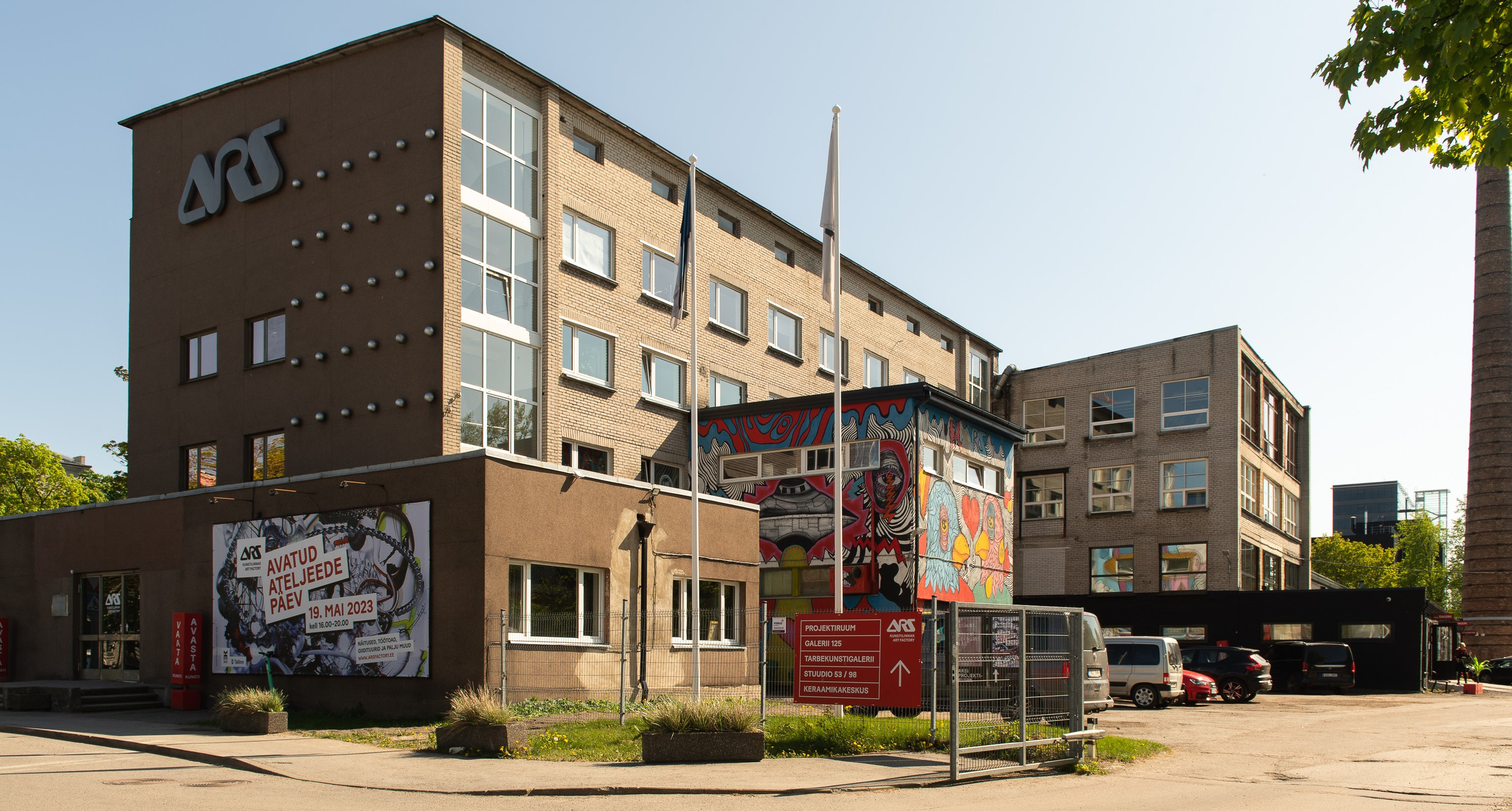
ARS Keraamikakeskus
Tallinn, Estonia
ARS Ceramics Centre offers a self-directed residency program for ceramic artists and designers in collaboration with the Estonian Ceramists' Association. The program provides individual professional artists with a unique working experience at a historic ceramic production space with access to gas firing facilities, throwing wheels, kilns, and other specialized equipment. The centre supports emerging and established makers through creative work, production, education, and interdisciplinary research projects.

Estonian Artists Association
Tallinn, Estonia
The Estonian Artists' Association (EAA) organizes a guest artist residency in Tallinn, Estonia, featuring a 50 m² studio with working space and accommodation on two levels, available to international artists since 1998 or 1999 and located on the top floor of the Tallinn Art Hall near the Old Town. This central hub of Estonian art life includes artists' studios, galleries, and the EAA office, fostering immersion in the local art scene. While EAA primarily offers residencies abroad to its members via partnerships, the Tallinn guest studio supports visiting artists.

Writers' and Translators' House in Käsmu
Tallinn, Estonia
The Writers' and Translators' House in Käsmu is a retreat in Estonia run by the Estonian Writers' Union, providing accommodation and working spaces for up to four professional writers and translators simultaneously. It offers private living spaces with bedrooms, bathrooms, and facilities conducive to focused literary work. The program supports creative retreats in a serene environment suitable for literary professionals.
Filter in Tallinn
Been to a residency in Tallinn?
Share your review