Artist Residencies in Visby
3 residenciesin Visby, Sweden
Why Visby works so well as a residency town
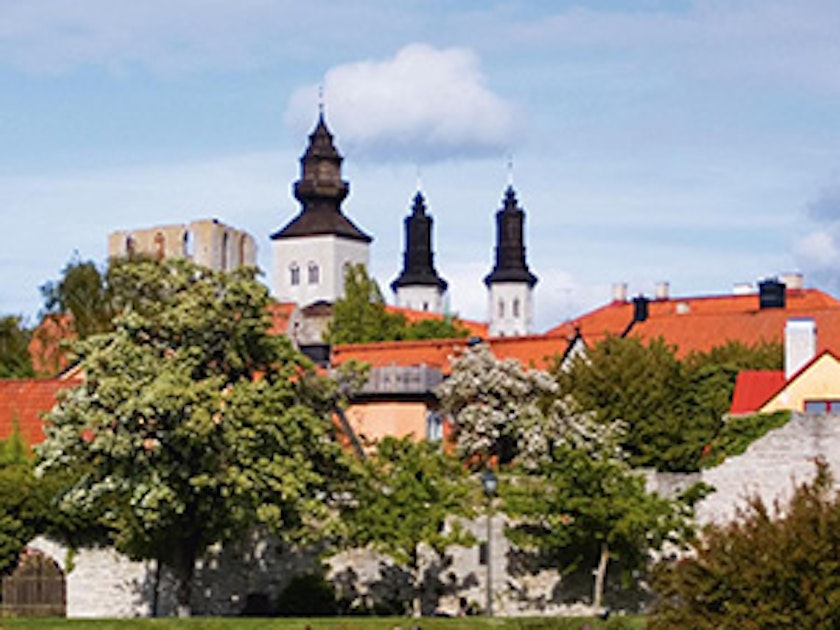
Visby is the main town on Gotland, a Baltic Sea island off the Swedish coast. It’s small, walled, and very atmospheric: medieval streets, stone ruins, and sea light in every direction. That combination of old city and exposed landscape is a big part of why artists end up here.
What makes Visby particularly useful for residency life is the balance between isolation and access:
- Concentration – it is quiet, compact, and easy to move around, so you can sink into work.
- Professional contact – several established residencies bring in artists, composers, and writers from everywhere, which means you meet people even in a small town.
- Distinct sense of place – the sea, cliffs, ruins, and seasonal shifts give you a clear context to respond to, whether you are working visually, musically, or in text.
Visby tends to suit artists who like process, research, and time-heavy work. It is less about constant events and more about having the headspace to actually finish something, with enough conversation around you to keep it sharp.
Key residencies in and around Visby
You do not go to Visby and then look for residencies; it works the other way around. You get into a program first, then the town becomes your base. Here are the main players artists usually mean when they talk about residencies in Visby.
Baltic Art Center (BAC)
Website: balticartcenter.com
Baltic Art Center is a contemporary art residency and project organization based in Visby. It positions itself as an international meeting place around the Baltic Sea, but the focus is really on serious, often research-driven contemporary practice.
Who it fits
- Visual and interdisciplinary artists with a strong contemporary art orientation
- Curators and artists working on longer research or context-specific projects
- People who want dialogue and institutional connection as much as physical space
What to expect
- Time and space to develop new projects rather than a production sprint
- Support that adapts to your process instead of a rigid program
- Chances to meet other artists, institutions, and curators connected to the Baltic region and beyond
BAC is not a retreat where you quietly paint all day and never talk to anyone. It is more like a flexible contemporary art lab. If your practice involves research, collaborations, or experimental formats, this is the Visby residency that will feel closest to how you already work.
Brucebo Foundation / Brucebo Fine Art Scholarship
Website: brucebo.se
The Brucebo Foundation residency is based on a historic artist home outside central Visby, with a long tradition of bringing Canadian and Swedish artists to Gotland. It is quieter and more solitary than BAC.
Who it fits
- Fine artists (painting, drawing, sculpture, etc.) who want concentrated studio time
- Canadian and Swedish artists, especially emerging professionals with a solid portfolio
- Artists who work best embedded in nature, with minimal distractions
What to expect
- A private cottage near the sea, used as both home and studio
- Kitchen, bedroom, bathroom, and workspace in one live/work setup
- Immediate access to coastline, light, and open landscape
The scholarship side is coordinated through Concordia University’s Faculty of Fine Art and the Royal Institute of Art in Stockholm, depending on nationality, so eligibility is specific. If you fall into the right category, Brucebo gives you what many residencies promise but rarely deliver: a simple, focused place where your only real job is to work.
Visby International Centre for Composers (VICC)
Info: see the listing on TransArtists at transartists.org and VICC’s own materials
Visby International Centre for Composers is a specialized residency for composers, not a general arts retreat. It attracts musicians working in many genres who need concentrated time and good technical facilities.
Who it fits
- Composers from any genre who need a quiet, well-equipped place to work
- Artists whose practice is built around studio time, notation, or sound design
- Composers interested in contemporary music networks and project-based collaboration
What to expect
- Dedicated composing environment with studios and a grand piano/notation rooms
- Accommodation in a shared guest house, with private bedrooms and shared kitchen
- Links to concerts, seminars, and other contemporary music activities on Gotland and beyond
VICC is for those who want serious work time with the technical side taken seriously. The setup is practical: you work in the studio, cook in the shared kitchen, and step outside to sea air when you need to reset.
Baltic Centre for Writers and Translators (BCWT)
Website: search for the Baltic Centre for Writers and Translators or visit the organization directly
BCWT is a residency for writers and translators, but it matters to visual artists too because it thickens the cultural life of the town. It brings in literary professionals from many countries year-round.
Who it fits
- Authors, poets, essayists, and dramatists
- Translators working between languages, often with a European or regional focus
- Artists whose practice is primarily language-based
What to expect
- Individual rooms or studios designed for writing
- A mixed international group of residents
- Occasional events, readings, or cross-border projects
BCWT helps keep Visby’s cultural calendar alive even in quieter months, and you will likely cross paths with its residents if you are in town through another program.
How Visby actually feels to live and work in
Once you land in Visby for a residency, life is shaped by three things: scale, season, and where exactly you stay.
Scale: small, walkable, and visible
Visby is compact. The medieval core is easy to cover on foot in a short walk, the harbor is close, and the residential streets around the city walls blend quickly into coastal paths and fields.
For residency life, that means:
- No long commutes – studios and accommodation are usually within walking or short cycling distance of essentials.
- Low-level social pressure – you will bump into the same faces, including other residents, which can be helpful for building quick connections.
- Clear work–rest structure – it is easy to separate studio time from walks, errands, or coffee breaks, because distances are short but spaces are distinct.
Season: summer brightness vs winter focus
Season has a strong impact on daily rhythm and cost.
- Summer brings long days, tourists, and a livelier streetscape. Cafes, bars, and cultural events are more active. Prices for short-term housing, eating out, and some services rise, which matters if your residency does not fully cover living costs.
- Autumn and winter bring quieter streets, shorter days, and a more internal working climate. You get more solitude, lower intensity, and a heavier atmospheric light that many artists appreciate for deep work.
If your practice thrives on external input and people, the warmer seasons will feel richer. If you need a cocoon for writing, drafting, or long studio stretches, the colder months can be a gift.
Where you stay: inside the walls vs edge vs coast
A lot of your day-to-day experience in Visby comes down to which part of town you call home during the residency.
- Inside the medieval walls – stone streets, churches, and ruins, with immediate access to cafes and small shops. Great if you like to punctuate studio time with short walks and people-watching. It can be intense during peak tourism, but inspiring if you work with history, architecture, or the built environment.
- Near the walls / just outside the core – quieter residential areas with easier access to supermarkets and slightly less tourist flow. Often a good compromise when you need calm but still want quick access to the old town and harbor.
- Coastal outskirts / Brucebo area – nature, sea views, and open sky. More travel time into central Visby, but the trade-off is a retreat-like atmosphere. Strong fit for painters, sculptors, and anyone who uses landscape directly in the work.
Residency programs usually place you for a reason: BAC might keep you relatively close to activity, Brucebo leans into solitude, VICC focuses on proximity to the composing facilities. When choosing where to apply, match the location style to your working rhythm, not just your fantasy of what a scenic residency should look like.
Practical life: costs, transport, and daily logistics
Visby is not a low-cost destination, but your budget will depend heavily on what the residency covers. Many programs include housing and workspace; some also provide stipends or grant support.
Cost of living and budgeting
Key points for planning:
- Housing is the big variable – if your residency covers accommodation, your remaining costs are mainly food, local transport, and occasional outings.
- Food – groceries are manageable if you cook at home. Residencies like VICC provide self-catering kitchens, which makes a big difference.
- Eating out – expect higher prices in central Visby, especially in the summer. Treat cafes and restaurants as occasional treats, not daily habits, unless you have a generous stipend.
- Materials and production – specialized art materials can be harder to source locally, so plan to bring what you really rely on or arrange deliveries ahead of time.
A simple way to think about it: if the residency is fully funded, you are mostly balancing personal spending choices. If it is partially funded or self-funded, factor in seasonal price swings and the cost of getting to the island.
Getting to Visby
Visby sits on the island of Gotland, so your route will include either air or sea.
- By air – flights connect to Visby Airport (VBY) from Stockholm and other cities, sometimes seasonally. It is usually the fastest route and is useful when you are carrying equipment or tight on time.
- By ferry – regular ferries run between the Swedish mainland and Gotland, typically arriving right at Visby harbor. Travel takes longer but can be more relaxed and sometimes more economical.
Residencies may advise on the simplest routes, and in some cases they help coordinate travel or cover part of the cost. If you are moving large works or gear, ask explicitly about what is realistic to bring and how.
Getting around the island
Once you are in Visby:
- Walking – usually enough if you live and work near the center.
- Bicycle – useful if your studio or accommodation is slightly outside the core or if you like to take regular rides along the coast.
- Bus or car – helpful if your project needs access to the wider island, remote landscapes, or specific sites away from town.
Visby itself is very manageable on foot; the decision to rent a bike or car depends more on your working method than on distance.
Art scene, community, and how to plug in
Visby does not have a dense gallery district, but it does have a concentrated cultural network built around its residencies and institutions. That network is what you will plug into as a visiting artist.
Residency ecosystem and crossovers
The presence of BAC, Brucebo, VICC, and BCWT means that, at any given time, the town holds a small, rotating group of visual artists, composers, and writers. This creates:
- Informal peer circles – dinners, shared walks, and studio visits between residents, even across disciplines.
- Structured events – talks, small exhibitions, concerts, readings, or open studios organized by the residencies or their partners.
- Visibility – in a small town, presentations and open events stand out, so your work does not disappear into a massive schedule.
Even if your residency does not formally require public output, there are usually opportunities to share work-in-progress. This can be particularly useful if you are testing a new direction or medium.
Connecting beyond Visby
Visby residencies often connect to larger networks in Sweden and the wider region. When researching, you will likely see names like:
- IASPIS (Stockholm) – an international programme for visual and applied arts, with studios and grant-supported residencies.
- Björkö Konstnod (BKN) – an artist-run space in the Stockholm archipelago that combines nature with community life.
- Other Swedish regional residencies that link artists to rural or small-city contexts.
These are not in Visby, but they show the kind of ecosystem you are stepping into. Artists sometimes use a Visby residency as part of a longer Sweden-focused stretch, moving between cities and rural settings.
Visas, timing, and picking the right season for your work
Practical planning matters a lot when you are crossing borders for a residency, especially if funding and time are tight.
Visa basics
If you are an EU/EEA citizen, staying in Sweden for a residency is usually straightforward. For others, the main questions are length of stay and type of support.
- Short residencies often fit within Schengen short-stay rules, depending on your nationality.
- Longer residencies or scholarship-based stays may require a specific type of visa or residence permit.
- Official documents – programs like BAC or Brucebo can usually provide invitation letters and documentation about financial support. This is helpful for visa applications.
It is always safer to check the latest information from Swedish migration authorities and confirm details directly with the residency before you commit to tickets or additional plans.
Choosing your season intentionally
An easy mistake is to think only about weather. Instead, align the season with your working style:
- Light-heavy summer months suit residency phases where you want external stimulation, people around, and physical exploration of the island. Great for location scouting, photography, social practice, and projects that thrive on active surroundings.
- Quieter late autumn and winter support concept development, editing, writing, and slower studio processes. The island feels more introspective, which can help if your project needs focus more than events.
Residency schedules differ, so it is worth checking which months each program actually hosts residents. Some keep a steady year-round rhythm, others cluster around certain seasons.
Matching yourself to Visby: who this city actually serves
Visby is not for every artist, but it is very good for certain working styles and disciplines.
- Visual artists and researchers – BAC is strong if you want institutional connection, critical conversation, and room for experimental formats.
- Painters, sculptors, and fine artists craving solitude – Brucebo offers a classic live/work setting in a coastal landscape, with few distractions and strong nature access.
- Composers – VICC is geared specifically to your needs, with facilities and peer context tailored to composing.
- Writers and translators – BCWT provides an international literary hub, with a set-up that respects long, quiet writing days.
If you want constant nightlife and a dense gallery circuit, Visby will feel small. If you want a defined place, clear light, and a structured residency environment where people are actually there to work, Visby usually delivers exactly that.
How to use this guide when you plan
To make this concrete for your own practice, approach Visby in three steps:
- Start with fit – match your discipline and working style to BAC, Brucebo, VICC, or BCWT.
- Then look at logistics – funding, accommodation, visa needs, and travel.
- Finally choose a season – decide if you want light and activity or quiet and depth, and time your application and project accordingly.
Used this way, Visby stops being a pretty medieval postcard and becomes what you actually need: a clear, structured place to focus on your work, with just enough community and context to keep it moving.
Baltic Art Center
Visby, Sweden
Baltic Art Center (BAC) is a prominent artist residency program based in Visby on the island of Gotland, Sweden, since 2001, serving as an international meeting place in the Baltic Sea region for contemporary artists. It provides artists with time, space, and resources to develop new ideas and projects individually or collaboratively. BAC focuses on contemporary art practices and has hosted programs like The Site Residency.
Baltic Centre for Writers and Translators
Visby, Sweden
The Baltic Centre for Writers and Translators is an international residential centre located in medieval Visby on Gotland, Sweden, welcoming literary professionals including authors, translators, poets, and screenwriters from all countries, with priority given to those from the Baltic Sea region and Scandinavia. The centre provides free residencies of 3-5 weeks on average, with housing, studio space, and facilities for creative work and international collaboration.

Visby International Centre for Composers
Visby, Sweden
The Visby International Centre for Composers (VICC) in Visby, Sweden, is a work and meeting place for professional composers from around the world, regardless of genre, offering a focused creative environment with studios and accommodation. It hosts residency programs, such as the ISCM-VICC collaboration providing up to 6 composers per year with free 4-week stays, and promotes contemporary music through concerts, seminars, and projects. Residencies emphasize deep concentration in state-of-the-art facilities like Studio Alpha, Notation rooms, and the Carlqvist Villa guest house.
Filter in Visby
Been to a residency in Visby?
Share your review