Artist Residencies in Waiblingen
1 residencyin Waiblingen, Germany
Why Waiblingen works as a residency base
Waiblingen sits just outside Stuttgart in Baden-Württemberg, and that location shapes how a residency here feels. You’re close enough to a major cultural center to visit big museums and meet curators, but your day-to-day is grounded in a smaller town with fewer distractions and a tighter community.
The city has built a clear profile around drawing, paper, and related media. If your practice leans into paper in any way — from delicate works on paper to sculptural installations and artists’ books — Waiblingen gives you a context where that isn’t a side note, it is the main focus.
Most artists come here for a few key reasons:
- A city-backed residency that is specifically about drawing and paper
- A strong institutional partner in Galerie Stihl Waiblingen
- A structured, funded residency format with mentoring and public outcome
- Easy access to Stuttgart’s art scene without paying Stuttgart rents
The Scholarship for Drawing and Paper Art of the City of Waiblingen
The core residency in Waiblingen is the Scholarship for Drawing and Paper Art of the City of Waiblingen, often called the Waiblingen Paper Art Stipend. It’s tightly linked to Galerie Stihl Waiblingen and uses Galerie im Kameralamt as its working and exhibition space.
Basic structure
The scholarship is built around a six-week stay in Waiblingen. Three artists are invited to work in the city, share studios, and present their work to the public through weekly open studios and a final exhibition.
The format is designed for actual production, not just networking. You are expected to make work on site, engage with visitors, and build toward a public presentation.
What the scholarship typically includes
According to recent calls, artists can generally expect:
- Travel: Return travel to and from Waiblingen covered
- Accommodation: Housing for the full six-week residency
- Honorarium: Around €2,500 as a fee for your work
- Food allowance: Around €1,000 to support daily living costs
- Materials budget: Around €1,000 for production and on-site work
- Studio / work space: Workspaces linked to Galerie im Kameralamt
- Open studios: Weekly open studio days with visitors, school groups, and locals
- Final exhibition: A group show, typically in Galerie im Kameralamt
- Workshops & outreach: Collaboration with Kunstschule Unteres Remstal for workshops and educational formats
- Family-friendly structure: Children and partners are explicitly welcome
The working languages are generally German and English. You can function with English alone, but basic German makes everyday life and public conversations smoother.
Who this residency suits
The Waiblingen scholarship is clearly framed, and that makes it easier to decide if it’s for you. It fits artists who:
- Work primarily with drawing, paper, collage, artists’ books, or paper-based sculpture
- Are emerging or early-career (typically within a limited number of years after graduation)
- Are open to public engagement, open studios, and education
- Enjoy working in a small cohort rather than as a lone resident
- Want a residency that ends with a concrete exhibition and new work
The program allows applications from individual artists, duos, or groups of three, as long as the project stays rooted in drawing and paper. That is non-negotiable; this is not a general open-theme residency.
Mentoring and intergenerational setup
One thing that makes Waiblingen stand out is the tandem structure. The city invites an established artist who works with paper as a kind of lead fellow and mentor. The emerging artists who receive the scholarship are considered additional prize winners within that framework.
The mentor is not just a figurehead. Their role usually includes:
- Informal studio visits and feedback
- Sharing approaches to paper, materials, and process
- Creating a cross-generational conversation inside the residency
If you are looking for transparent career advice, concrete feedback on your work, and a chance to observe another paper-based practice at close range, this structure can be very helpful. It also means the residency is not purely about private retreat; it is framed as a shared, developmental project.
Galerie Stihl Waiblingen and Galerie im Kameralamt
The residency is tightly anchored in the city’s gallery infrastructure. Understanding those spaces helps you understand what your time in Waiblingen can actually look like.
Galerie Stihl Waiblingen
Galerie Stihl Waiblingen is the main municipal gallery and the conceptual heart of the city’s paper-art focus. The gallery regularly hosts exhibitions that emphasize drawing, paper art, and related media, aligning closely with the scholarship’s theme.
For residency artists, this matters in a few ways:
- Your work is being made in a city that publicly values paper art, not just tolerates it
- You can position your project in relation to past and current exhibitions
- You are likely to meet audiences who already understand drawing and paper-based work as serious contemporary practices
Galerie im Kameralamt
While Galerie Stihl Waiblingen sets the curatorial tone, Galerie im Kameralamt is the practical site for the scholarship: studios, open studios, and exhibitions. It’s where visitors will see you working and where the final presentation usually happens.
As a residency base, Galerie im Kameralamt offers:
- Workspaces that can handle drawing, collage, and paper-based sculpture
- A built-in audience from the gallery’s programming and the city’s outreach
- Visibility to local schools, educators, and regional visitors
Because the space is part of a public institution instead of a remote studio warehouse, you are working within an existing public rhythm — which suits artists who want conversation rather than total isolation.
The local art scene: small, focused, and connected to Stuttgart
Waiblingen’s scene is specialized rather than broad. You won’t find dozens of independent art spaces, but you do have a well-structured ecosystem around paper and drawing.
Key local partners
- Galerie Stihl Waiblingen – The city’s flagship gallery with a strong focus on works on and with paper.
- Galerie im Kameralamt – Workspace and exhibition site for the scholarship; where open studios and presentations usually happen.
- Kunstschule Unteres Remstal – The local art school partnering on workshops and educational activities.
The close link between residency, gallery, and art school creates a loop: you make work, you show work, and you also have the option to teach or run workshops. If your practice includes education or participatory formats, this is a strong fit.
Connection to Stuttgart
Waiblingen’s biggest resource beyond the residency itself is its proximity to Stuttgart. By train, it’s a short ride into the city, which opens up:
- Staatsgalerie Stuttgart – Major collection and exhibitions, good for research and inspiration.
- Kunstmuseum Stuttgart – Strong contemporary and modern programming.
- Württembergischer Kunstverein – Important contemporary art institution and project space.
- Akademie Schloss Solitude – One of Germany’s most respected residencies, also in the Stuttgart region.
- Commercial galleries and independent project spaces across the city.
During a stay in Waiblingen, you can use your days for focused studio work and your off-days or evenings for research trips into Stuttgart. That combination is one of the city’s biggest advantages as a residency location.
Practical living: costs, housing, and neighborhoods
Baden-Württemberg is a relatively high-income region, but Waiblingen is typically less expensive than central Stuttgart. For artists, that balance between quality of life and cost can be very workable, especially with a funded residency.
Cost of living basics
If you were staying outside the residency format, you might expect:
- Housing: Rents usually lower than Stuttgart city center, though still not “cheap”.
- Food: Standard German supermarket and café prices, fairly consistent with other mid-sized cities.
- Studio space: Independent studio rentals can be expensive relative to small towns but more reasonable than in major capitals.
- Transport: Public transport is efficient and cheaper than maintaining a car if you stay near an S-Bahn or bus route.
The Waiblingen scholarship covers accommodation and provides a food allowance and materials budget, so your main personal costs during the residency are likely to be:
- Any extra food, travel, and leisure beyond the allowance
- Additional materials or special equipment
- Personal insurance and incidental expenses
Where to stay and spend time
If you extend your stay before or after the residency, or if you’re scouting Waiblingen independently, a few areas are particularly practical:
- Old town / central Waiblingen – Close to galleries, cafés, shops, and the general city rhythm.
- Near Waiblingen station – Ideal if you rely on S-Bahn or regional trains to Stuttgart and the wider region.
- Residential districts in Waiblingen – Quieter, more family-oriented, sometimes better value.
In the broader Rems-Murr and Stuttgart orbit, artists also look at places like Fellbach, Backnang, Weinstadt, or Stuttgart districts such as Bad Cannstatt and Stuttgart-Ost. The main thing is access to S-Bahn or regional rail if you plan to move between Waiblingen and Stuttgart regularly.
Transport: getting in and around
Waiblingen is well integrated into the Stuttgart region’s public transport network. You don’t need a car for the residency itself unless your project has specific logistical needs.
Arriving from abroad
- Stuttgart Airport (STR) is the closest major airport.
- From the airport, you can reach Waiblingen via S-Bahn and regional trains with one or two changes, depending on the route.
- Waiblingen’s central station is the main hub you will use for trips to Stuttgart and beyond.
Daily movement
- S-Bahn / regional rail – Best for commuting between Waiblingen and Stuttgart or other regional cities.
- Local buses – Cover shorter stretches around Waiblingen and neighboring towns.
- Bike or on foot – The town itself is compact enough that a bike or walking can cover many daily needs.
For most residency projects, especially those focused inside the gallery and studio, public transport and walking are enough.
Visa and admin for international artists
If you’re coming from outside the EU/EEA/Switzerland, visa requirements depend heavily on your passport and the length of your stay. A six-week residency usually falls under short-stay terms, but you still need to check specifics.
What to clarify before you go
- Visa type: Confirm with the German embassy or consulate in your country which category applies to a funded short-term artistic residency.
- Income and tax: Ask the residency whether the stipend is taxed at the source and whether you need to declare it in your home country.
- Health insurance: Germany typically expects valid health insurance; make sure your policy covers your full stay, including travel days.
- Invitation documents: Request an official invitation letter and funding confirmation from the host; these often support visa applications and border checks.
If you plan to extend your stay in Germany after the residency — for example, to continue working as a freelance artist — you will need to look into a national visa or residence permit tied to self-employment or artistic work. That is a separate process from the short residency stay.
Residency rhythm: open studios, education, and public contact
The Waiblingen scholarship is not a “hide in the studio and see no one” residency. Its structure encourages regular contact with the public and with local education partners.
Open studios
Weekly open studio days are part of the program. Those days typically mean:
- Visitors walking through your workspace
- Conversations about process and materials
- Curious questions from non-specialist audiences
- Occasional school group visits
If you enjoy talking about your work, this is a chance to test language, presentation, and framing. If you prefer privacy, it’s still workable but you need to be ready to share at least part of your process.
Workshops and educational work
Through cooperation with Kunstschule Unteres Remstal, the scholarship often includes workshops or similar educational formats. This can be a space to:
- Test small participatory versions of your work
- Try out teaching strategies or new formats for sharing skills
- Build material for future grant applications that value educational outreach
For artists who already balance studio and teaching, Waiblingen’s setup can feel like a natural extension of your usual practice.
Who should consider Waiblingen — and who might not
Waiblingen’s residency ecosystem has a very specific profile. That clarity helps you figure out quickly if it aligns with your needs.
Waiblingen is a strong fit if you:
- Work in drawing, paper, collage, book arts, or paper-based sculpture
- Want a structured six-week period with clear start and end points
- Value a final exhibition and open studios as part of your process
- Are interested in cross-generational mentoring and feedback
- Prefer a small-town environment with easy access to a bigger city
- Want your family or partner to be able to join you during a residency
Waiblingen might be less ideal if you:
- Work in media completely unrelated to drawing or paper
- Want a long, open-ended residency with no public commitments
- Need extreme isolation away from audiences, institutions, and educational settings
- Are looking specifically for a large, dense scene of independent artist-run spaces
Using Waiblingen strategically in your practice
If you’re thinking about how Waiblingen fits into a larger career arc, it can be useful to frame it as a focused project block within a broader regional plan.
A few strategic ways to use a Waiblingen residency:
- Build a paper-focused portfolio: Use the six weeks to create a fully coherent body of paper-based work, photographed and documented in an institutional context.
- Test ideas for larger installations: Paper-based installations can be developed in Waiblingen and later adapted or expanded for other venues.
- Strengthen your educational profile: Workshops and open studios give you concrete examples of public-facing work to reference in future applications.
- Connect to the Stuttgart region: Use your time in Waiblingen to meet people and see work in Stuttgart’s institutions, laying groundwork for future collaborations.
If your practice already gravitates toward paper, drawing, and material experimentation, Waiblingen can act as a concentrated, funded lab phase near a major cultural hub, with enough structure to keep you moving and enough quiet to actually get the work done.
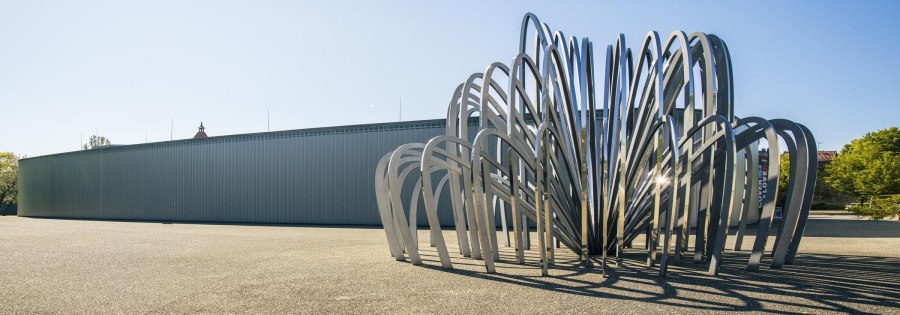
Filter in Waiblingen
Been to a residency in Waiblingen?
Share your review