
City Guide
Brno, Czech Republic
How to use Brno’s residencies, institutions, and neighborhoods to actually get work done
Why artists choose Brno for residencies
Brno sits in a sweet spot: big enough to have real institutions and art schools, small enough that you can actually meet people and follow threads. It’s generally cheaper and less hectic than Prague, but still has a serious contemporary-art ecosystem and an international-facing residency program right in the city center.
If you want focused time to work, access to curators and peers, and a city that’s manageable on an artist budget, Brno is a strong option.
A dense but manageable art ecology
Brno’s scene is compact. You have:
- Municipal institutions like Dům umění města Brna (Brno House of Arts)
- University art education and research environments
- Artist-run and experimental spaces
- An institutional residency program embedded directly in the city center
For you, that usually translates into:
- Easier access to curators, technicians, and peers
- Lower living costs than major Western European cities, and often lower than Prague
- Enough infrastructure to actually produce work, not just sketch ideas
- A good base if you’re doing research-based, socially engaged, or context-specific projects
Who Brno is especially good for
Brno is particularly aligned with:
- Visual artists working in contemporary, experimental, installation, or media-based practices
- Curators and researchers who need archives, institutions, and conversations
- Theoreticians and writers who want a mix of quiet and regular events
- Architects and designers plugged into contemporary culture rather than purely commercial design
- Artists interested in socially engaged, site-responsive, or research-heavy projects
If you’re looking for a massive commercial market and constant art-fair buzz, Brno will feel small. If you want a structured residency with real support and time to think, it’s a good match.
Brno’s flagship residency: Brno Artists in Residence / Brno House of Arts
The key residency program in Brno is run by Dům umění města Brna (Brno House of Arts) and hosted at the House of the Lords of Kunštát in the historic center. This is the main hub to know if you’re considering a residency in the city.
How the residency is set up
The program is folded into a Renaissance building in the very center of Brno:
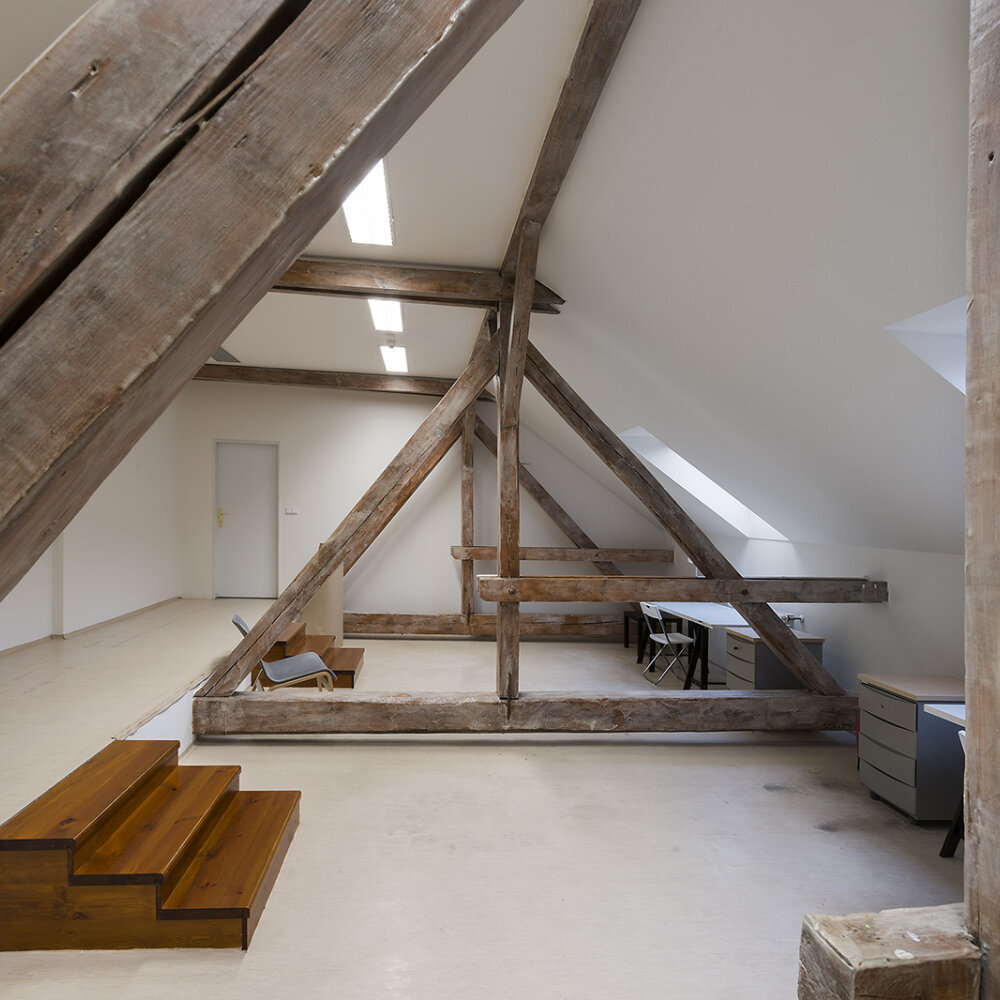
- Residency floor located in the House of the Lords of Kunštát
- Studios and accommodation in the same building (no commuting across town)
- Typically 3 studios for artists/theorists/curators
- Rooms to accommodate around three residents at a time
- Shared kitchen and common spaces for informal exchange
- Basic set of tools and audiovisual equipment
- Technical support from in-house technicians for production
- Production, promotional, and curatorial support from the institution
The residency is closely connected to the G99 gallery, which focuses on contemporary visual art and serves as a potential platform for presentations, talks, or exhibitions.
What kind of practice it suits
This residency is a strong fit if you are:
- A visual artist working in contemporary or experimental forms
- A curator wanting to research topics, connect with Czech and international scenes, and test ideas publicly
- A theorist or researcher in contemporary art, using Brno as a base for study and writing
- An architect or designer with a conceptual or socially engaged project
The program is designed as a medium for projects and experiments. You’re not pushed to deliver a polished “end product” at all costs. Formats can include:
- Research that feeds into future work
- Socially engaged projects and discursive formats
- Alternative modes of presentation (talks, screenings, small interventions)
- Exhibitions or open studios when relevant
Expectations and conditions
Typical expectations for residents include:
- Spending at least 75% of the residency period physically in Brno
- Participating in programs organized by Brno House of Arts when agreed
- Working in English or Czech as main communication languages
- Producing a final report with photographic documentation at the end of the stay
The residency covers the cost of the studios and accommodation. Production, curatorial, and promotional support are also included. Travel, meals, and materials may be covered entirely or partially depending on specific partnerships or grants attached to each call.
Funding and stipends
In at least one recent open call, the House of Arts residency offered:
- A stipend of 40,000 CZK for the residency period (roughly around 1,600 EUR at that time)
- Accommodation and studio space provided
- Access to technical equipment and workshops
- Production assistance and consultations with the residency team
The exact stipend and support structure can change, so you always want to check the current call on the House of Arts website or partner platforms such as Transartists or Res Artis.
How selection and applications usually work
Brno Artists in Residence works in two ways:
- Via partner institutions: some residents are invited or nominated by partner organizations
- Via open calls: irregularly announced open calls where you apply directly
To position yourself well for an open call, it helps if you can articulate:
- How your project connects to Brno or the Czech context
- Why you need an urban, institutionally-supported residency rather than an isolated retreat
- How you imagine sharing your work or process (talk, open studio, text, exhibition, research sharing)
- Any technical needs and how they fit the available studios and equipment
For current details, calls, and contact information, go to the Brno House of Arts website: https://www.dum-umeni.cz/en.
Living and working in Brno during your residency
Brno is generally more affordable than Prague, and much cheaper than cities like Berlin, Vienna, or Amsterdam. That said, central rents and some services have risen, so planning your budget is still key.
Cost of living basics
If your residency covers housing and studio, your main costs are:
- Food: supermarkets are reasonable and eating in is budget-friendly. Eating out ranges from cheap lunch menus to mid-range restaurants.
- Local transport: tram and bus passes are affordable and efficient.
- Materials and production: generally cheaper than in many Western European cities, but specialized materials may require planning or ordering.
- Personal travel: trains and buses are well-priced if you want to explore the region.
Brno is not a bare-bones budget city anymore, but you can live comfortably on a modest artist-scale budget, especially if housing is provided.
Neighborhoods you’ll actually use
The art scene is compact, which makes orientation simple. Key areas:
- City center / historical core
You’ll probably spend a lot of time here, especially if you’re at the House of the Lords of Kunštát. You get:- Walking-distance access to galleries and institutions
- Easy meetings with curators, students, and collaborators
- Cafes, bars, and small venues for informal networking
- Veveří and university-adjacent areas
These zones are popular with students and younger artists:- Mix of older buildings, cafes, and bars
- Slightly lower rents than right on the main square
- Close to academic and cultural infrastructure
- Královo Pole
More residential and quiet. Good if you like a calm base and don’t mind a tram ride into the center. Useful for longer stays or those who quickly outgrow institutional housing. - Zábrdovice, Trnitá, and inner-city pockets
These areas can offer cheaper long-term housing and some emerging creative pockets. If you’re staying outside the residency period or extending your time, they’re worth checking.
Because the public transport system is strong and the city is compact, you can prioritize affordability and work needs over being exactly in the main square.
Studios and working conditions
The institutional residency at House of the Lords of Kunštát solves the basic studio question. You get:
- Dedicated studio spaces adapted for visual art
- A separate study space for theorists/curators
- Basic tools and audiovisual equipment
- Technical support from in-house staff
If you plan to extend your stay outside the residency, you may want to look at:
- Shared artist-run studios and project spaces
- University-linked studios (if you have an institutional connection)
- Temporary live/work arrangements in larger apartments
When you’re discussing studio needs with a residency, be specific about:
- Ventilation for painting, chemicals, or dust
- Access to water and sinks
- Daylight and working hours
- Noise limits if you work with sound or performance
- Storage and security for unfinished work
Art infrastructure, transport, and practical logistics
Brno’s residency experience is shaped not just by the studio, but by what surrounds it: institutions, transport, visas, and the everyday rhythm of the city.
Institutions and galleries to know
- Dům umění města Brna (Brno House of Arts)
Core municipal contemporary-art institution. It runs exhibitions, public programs, and the residency. You’ll encounter curators, producers, and technicians there, and it’s a key node in your local network.
Website: https://www.dum-umeni.cz/en - G99 gallery
A gallery under the House of Arts structure that focuses on contemporary visual art and is tightly connected to the residency program. It’s often used for resident presentations, exhibitions, or public programs. You can think of it as an extension of the residency’s public-facing side. - Universities and art departments
Art students, researchers, and faculty are a big part of the ecosystem. Connecting with them can open doors to conversations, archives, and participants for socially engaged work. - Artist-run and project spaces
Independent spaces shift over time but are worth seeking out for experimental work, smaller events, and peer connections. Ask local artists, residency staff, or curators which spaces are currently active.
The strength of Brno is the ongoing infrastructure and conversation: a regular calendar of exhibitions, talks, and events rather than one big annual event.
Getting around Brno and beyond
Within the city, you have a reliable tram and bus network:
- Most institutions and galleries are reachable quickly by tram
- The city center is very walkable
- Transport tickets and passes are affordable
From outside Brno, the city is well connected by:
- Train to Prague, Vienna, Bratislava, and other cities
- Regional buses that are often inexpensive and frequent
- Brno–Tuřany Airport for a limited set of flights
Many international artists arrive via Prague, Vienna, or Bratislava and then take a train or bus to Brno. The travel time is manageable and often quite comfortable.
Visa and entry basics
Visa requirements depend entirely on your passport, so always cross-check with official sources. General patterns:
- EU/EEA/Swiss artists: usually no visa needed to enter and stay, but registration obligations may apply for long stays.
- Non-EU artists: often need a Schengen short-stay visa for brief residencies, or a long-stay visa / residence permit for longer periods.
When you’re accepted to a residency, ask the organizer for:
- Formal invitation letter
- Proof of accommodation with dates and address
- Any available support letters for visa authorities
- Guidance on health insurance expectations in the Czech Republic
Start your visa process early; processing times can be slow. Also clarify when and how stipends are paid (before arrival, upon arrival, or later) if this affects your proof of funds.
When to be in Brno
You can work in Brno year-round, but different seasons have different rhythms:
- Spring: Active cultural season, mild weather, and strong academic-year energy. Good for research, site visits, and social connections.
- Early autumn: Similar to spring; plenty of openings and events, plus comfortable weather.
- Summer: Excellent for concentrated studio work; some institutions reduce programming, and student life slows down, but you get space and quiet.
- Winter: Darker and colder, but productive if you’re focused on writing, planning, and studio-based work. Some programming slows around holidays.
Application cycles for the Brno House of Arts residency vary and are usually tied to specific calls, so it helps to have your materials (portfolio, CV, project description) ready to adapt quickly.
Local communities and how to plug in
Brno rewards artists who show up consistently. To integrate into the scene, you can:
- Attend exhibition openings at Dům umění and G99
- Ask for studio visits with local artists or curators
- Visit university exhibitions and thesis shows to see emerging work
- Look for open studio events and project-space programs
- Follow local institutions and artist-run spaces on social media
The scale of Brno makes it possible to meet the same people multiple times, which helps relationships develop more naturally than in very large art capitals.
Is Brno the right residency city for you?
Brno tends to work best for artists who want:
- A serious but not overwhelming art environment
- An institutional residency with central housing and studios
- Scope for research, experimentation, and process instead of a rigid exhibition deadline
- Access to contemporary art discourse through curators, students, and researchers
- Time for making, reading, and conversations in a walkable city
You may want to look elsewhere if your priority is:
- A large international commercial gallery market
- Constant art-fair or biennial-style events
- A huge number of private studios and collector-driven openings
For many artists, Brno hits a productive middle ground: supported, structured, and connected, but calm enough that you can actually get work done.
If you’re already considering a residency in the Czech Republic, it’s worth putting Brno and the Brno House of Arts residency high on your research list and seeing how your next project could grow there.
Explore Czech Republic
More city guides
Opportunity Intelligence
Ready to find your next residency?
Get a personalized shortlist — scored against your practice, discipline, and what you need right now.
See how Intelligence works →