
City Guide
Bucharest, Romania
How to plug into Bucharest’s residency scene, neighborhoods, and networks as a visiting artist
Why Bucharest works so well for residencies
Bucharest is one of Eastern Europe’s most active and still relatively affordable capitals, which makes it a strong base for residency work. You get a visible contemporary scene, growing international attention, and costs that are usually lower than Berlin, Paris, or Amsterdam.
The city suits artists who want to think about post-socialist change, public space, language, memory, and politics, but it also works if you just want good working time in a city that has enough culture around you to stay energized.
- Costs are moderate: rent and food usually stretch further than in most Western European capitals.
- Active art ecosystem: commercial galleries, artist-run spaces, nonprofit initiatives, and university-related venues all mix in the same city grid.
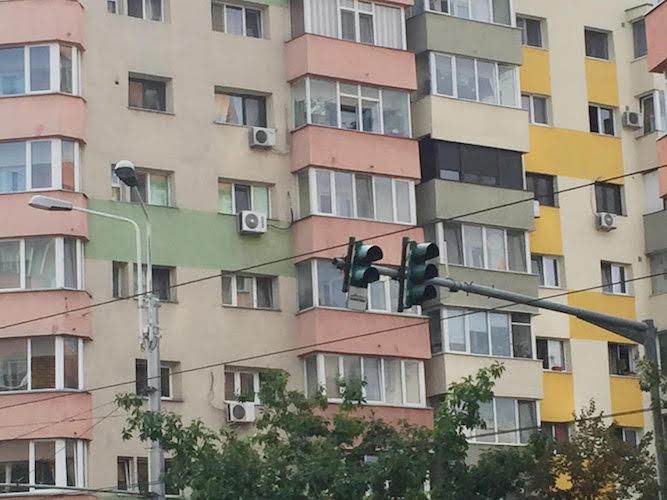
- Context-rich: the city carries visible traces of socialism, rapid development, and uneven urban planning, which many artists use as direct material.
- International entry points: several residencies are built for visiting artists and curators, often with public presentations or exhibitions.
- Regional hub: Bucharest is a practical base if your work looks at Romania, the Balkans, or Black Sea and Eastern European contexts.
A lot of the energy here is contextual: residencies respond to Romanian social reality, media, public speech, and urban change. If your work is research-based or site-responsive, Bucharest can give you plenty to work with.
Key residency programs in Bucharest
Bucharest has a mix of funded, semi-funded, and self-organized options. Here are the main names that consistently come up and how they differ, so you can decide what actually fits your practice.
ARAC Art & Residency
Who runs it: Romanian Association of Contemporary Art (ARAC)
Focus: Contemporary art with strong research and social themes
Website: ARAC residency info
ARAC offers around six-week residencies where you develop new work leading to a final exhibition in Bucharest, historically connected with venues like Anca Poterasu Gallery. Calls often highlight themes such as climate change, migration, or technology, but the common thread is thoughtful, context-aware work.
What it tends to include:
- Private, furnished accommodation (room with wifi, bathroom, kitchen space)
- Approximate stipend figure mentioned in past calls: around 1900 EUR to cover living and travel
- Production budget for new works and exhibition setup
- Public outcomes such as an exhibition and a talk or evening event
Good fit if you:
- Have a clear project proposal and are happy to work towards a public exhibition
- Enjoy research and thematic frameworks
- Want a residency with money for both living and production
- Value curatorial support and a defined structure
If you need documentation, visibility, and a firm schedule, ARAC is one of the more structured options in Bucharest.
Bucharest AiR
Who runs it: Bucharest Artists in Residence
Focus: Language, voice, media, and public discourse
Website: Bucharest AiR
This program is built for process-heavy, experimental, and discursive work. The residency has a strong emphasis on language, voice, public speech, and the politics of discourse. It welcomes not just visual artists but also performance makers, researchers, writers, anthropologists, and experimental filmmakers.
Typical practices they mention:
- New media and internet-based work
- Performance and lecture-performance
- Research-based and text-heavy projects
- Video and moving image
- Voice-based practice and sound
- Installation and site-specific interventions in public space
What the residency offers:
- Tailor-made living and working space, usually around 50 sqm
- Internet and utilities covered
- Location adapted to your project (central or towards the outskirts)
Good fit if you:
- Prefer a residency shaped around your working method rather than a fixed “house + studio” template
- Work at the intersection of art, theory, and activism or media
- Are open to public presentations but do not necessarily need a formal exhibition
- Want to connect with local thinkers, writers, and small venues
Public outcomes vary: talk, performance, screening, or something specific to your project. It’s a good option if you value conversation and research as much as finished objects.
Casa Arte
Who runs it: Artist-run project and gallery
Focus: Eclectic, cross-disciplinary, research-friendly
Listing: Casa Arte on TransArtists
Casa Arte is described as an artist-run, eclectic research place that folds together living, working, and showing. It welcomes a broad range of practices: visual arts, new media, performance, architecture, textile, music, literature, film, scenography, art history, social work, and more.
Key traits:
- Artist-run, community feel rather than a formal institution
- Open to individuals and small collaborative groups
- Mix of residency and gallery, so you have a built-in space for trials or small public events
- Some information mentions weekly fees that cover accommodation and facilities
Good fit if you:
- Are early-career or testing something new and want low-pressure support
- Like living and working in the same house-style environment
- Travel with collaborators or want to invite local collaborators into your space
- Don’t mind a semi-DIY setup as long as there is community and freedom
If you prefer informal networks and direct peer contact over institutional frameworks, Casa Arte is worth a closer look.
ARC Bucharest (for curators and researchers)
Who runs it: ARC Bucharest
Focus: Short, intensive residencies for curators and cultural workers
Website: ARC Bucharest
ARC Bucharest offers 5–14 day residencies, mainly aimed at freelance and institutionally affiliated curators. The format suits people coming to Bucharest to deepen research, meet artists, and understand the context quickly.
Good fit if you:
- Curate or do research and want a structured, short stay in the city
- Need to map out local spaces and artists efficiently
- Already have a project in mind and just need concentrated time and contacts
This is less about production and more about thinking, scouting, and building collaborations.
Other Bucharest-linked calls and hosts
Beyond permanent programs, Bucharest regularly appears in European mobility and research calls. These are often partnerships between international organizations and local Romanian hosts.
One example is Arts on the Edge Spaces (ARES), where Bucharest features alongside Helsinki and Portugal in a multi-city residency partnership. Conditions in that call include:
- Accommodation
- Working grant (for example, one call mentioned around 1500 EUR per month)
- Material budget and additional exhibition/event budget
These project-based calls change over time, but the pattern is stable: Bucharest is increasingly used as a site for transnational, research-heavy residencies. It pays to keep an eye on databases like AIR_J and On the Move for partnerships that specifically name Bucharest.
Costs, practicalities, and what to ask your host
Even when a residency is funded, you still need a sense of Bucharest’s basic costs and the exact conditions offered. Not every program includes all expenses, so ask detailed questions before you accept.
Cost of living and production
As a rough orientation, Bucharest is generally cheaper than many Western European capitals but not “cheap” in an absolute sense. You can usually expect:
- Accommodation: rent for local apartments ranges widely by neighborhood and standard; residency housing often saves you the biggest chunk.
- Food: supermarket prices are moderate; eating out ranges from very accessible local spots to mid-range restaurants in central areas.
- Transit: metro, buses, and trams are affordable; ride-hailing is usually cheaper than in many Western cities.
- Studios and making: peripheral or shared spaces are more affordable, central studios cost more. Fabrication, printing, and specialized technical help still need a real budget.
Residency examples from the research:
- ARAC: stipend around 1900 EUR, plus housing and a production budget.
- ARES-type calls: working grant (for example 1500 EUR/month), material budget, and exhibition funds.
- Bucharest AiR: housing and workspace included; stipend details may vary or not exist, so you should ask directly.
Questions you should always ask a Bucharest residency
- Is housing included? Is it private or shared?
- Is there a stipend? How is it paid, and what is it meant to cover?
- Is there a separate production budget? What counts as production?
- Is the studio separate from the living space?
- Are tools, equipment, and tech support available, or do you need to outsource?
- What kind of public outcome is expected: exhibition, talk, open studio, publication?
- Does the host help with visas, letters, and local registrations if needed?
Getting clear written answers will save you time and money once you are on the ground.
Neighborhoods, transport, and how to place yourself
Bucharest is spread out, but most art-related activity clusters around central and near-central districts. Your residency may pre-choose where you live; if you have a say, here is how to think about it.
Central and historic areas
Living close to the center makes it easier to attend openings, meet curators, and reach multiple venues in one day.
- Pros: Walkability, quick access to galleries and institutions, better for short residencies or dense research schedules.
- Cons: Higher rents, more noise, smaller spaces.
Galleries like Anca Poterasu Gallery, tied to programs such as ARAC, sit in accessible central-east areas (for example, Sector 2). Being nearby can be useful if your residency includes a show there or regular meetings.
Inner-ring and Sector 2 / east-central areas
Areas slightly out of the historic core but still central on the map tend to mix residential streets with project spaces and small venues. These zones are popular with artists because you get proximity without paying the very highest rent levels.
- Good if you want daily access to the scene but a bit more space or quiet.
- Often well connected by metro and tram.
Outskirts and semi-peripheral neighborhoods
Some residencies, such as Bucharest AiR, place residents towards the outskirts if that matches the project. This can make a lot of sense if you are working on interventions in specific neighborhoods, large installations, or need calm and room to build.
- Pros: More space, potentially cheaper, better for large-scale or site-specific work.
- Cons: Longer travel times to central openings and meetings.
Transport basics
Bucharest has a usable mix of metro, buses, trams, and ride-hailing. For residency life, this usually means you can live slightly further out and still get into the center efficiently, especially if you are near a metro line.
- Metro: Fast and predictable across main axes.
- Tram and bus: Good for shorter links; can be slower at peak hours.
- Ride-hailing/taxis: Helpful late at night after openings or when carrying work.
The main airport, Henri Coandă (OTP), is connected by bus, train links, and road. If you bring large works or technical equipment, plan your airport-city transfer in advance and factor in extra baggage fees.
Visas, timing, and connecting with the local art community
Bucharest residencies often welcome artists from a wide range of countries, but your actual entry conditions depend on your passport.
Visa basics
EU/EEA/Swiss citizens can generally stay and work in Romania under freedom-of-movement rules, with local registration requirements for longer stays. Non-EU citizens may need a short-stay visa or a long-stay visa/residence permit, depending on the residency length and your status.
When you are accepted, ask your host:
- Can they provide a formal invitation letter with dates, address, and purpose of stay?
- Can they specify in writing whether your stay is classified as cultural activity, research, or employment?
- Do they have experience supporting visas for artists from your region?
Always double-check with the Romanian consulate or embassy where you apply; rules can change, and each case is slightly different.
When to be in Bucharest
The art scene runs year-round, but the most comfortable periods for residencies are usually:
- Spring (roughly April–June): mild weather, active exhibition calendars, easy to work outdoors or in public space.
- Early autumn (roughly September–October): many openings, cultural programs restart after summer.
Summer can be hot, which matters if you rely on non-air-conditioned studios or do large-scale outdoor work. Winter is better for studio-heavy, editing, or writing projects, and you still find events, just fewer outdoor ones.
Plugging into local communities and events
Bucharest’s art ecosystem runs on relationships and informal introductions. Residencies often serve as a bridge into those networks, but you can push it further by being proactive.
- Openings and talks: Use every invitation from your host to attend openings at galleries, artist-run spaces, and small initiatives. Introduce yourself and mention your residency.
- Research groups and collectives: Some residencies, such as Bucharest AiR, have strong ties to people working on public speech, language, and media. Ask your host to connect you with researchers and activists, not just visual artists.
- Open studios and informal events: Many residencies encourage a final open studio, talk, or screening. Treat this as a focused way to invite specific curators, artists, and writers you meet during your stay.
- Databases and platforms: Sites like Reviewed by Artists: Romania list residencies and include peer reviews, which can help you understand how programs actually operate over time.
When you reach out to local contacts, being clear about your timeframe and interests helps. Let them know what you are researching, how long you are in town, and whether you are open to studio visits, collaborations, or just a coffee and conversation.
How to choose the right Bucharest residency for you
Once you know the basics, choosing between programs is less about “prestige” and more about alignment with your work and needs. A simple way to think about it:
- You want a funded, exhibition-focused residency: Prioritize structured programs like ARAC that build towards a clear public outcome and cover both living and production costs.
- You want discourse, experimentation, and flexibility: Look at Bucharest AiR or similar research-driven programs that adapt the living/working setup to your project.
- You want an informal, community-based environment: Artist-run projects such as Casa Arte let you live and work in close contact with peers and often welcome cross-disciplinary experiments.
- You are a curator or researcher on a tight schedule: Short residencies like ARC Bucharest or EU-funded mobility calls can give you concentrated time on the ground.
Match the residency’s expectations with your own: do you want a finished body of work, a new network, or time to rethink your practice? Bucharest can support all of these, as long as you choose a program that’s set up for the kind of work you actually want to do.
Residencies in Bucharest
Bucharest AiR
Bucharest, Romania
Bucharest AiR is an artist residency program in Bucharest, Romania, founded in , that hosts practitioners working with new media, performance, research-based work, video, installation, and site-specific interventions related to language, voice, public speech, and discourse. It offers tailor-made living and working spaces of around 50 square meters in or near the city center, with flexible durations of 1 to 3 months, ongoing applications year-round, and encourages transdisciplinary collaborations and public events like exhibitions or presentations. Residents must live and work in Romania during their stay, with priority for projects engaging the local Romanian context.
Casa Arte
Bucharest, Romania
Casa Arte offers artist residencies in Bucharest for visual arts, new media, performing arts, music, literature, film, etc. Shared/private rooms, studio, kitchen, 100 euro/week/person incl. accommodation & facilities.
The Romanian Association of Contemporary Art (ARAC)
Bucharest, Romania
The Romanian Association of Contemporary Art (ARAC) in Bucharest offers artist residencies, such as the ARAC Art & Residency and 58 Plantelor Residency, enabling international artists and curators to develop artworks for exhibitions while engaging with the Romanian cultural scene. Programs typically last six weeks, focus on themes like climate change, migration, and technology, and culminate in shows at venues like Anca Poterasu Gallery. ARAC, a non-profit founded in , promotes contemporary art through residencies, exhibitions, and cultural exchanges.
Explore Romania
More city guides
Opportunity Intelligence
Ready to find your next residency?
Get a personalized shortlist — scored against your practice, discipline, and what you need right now.
See how Intelligence works →