
City Guide
Cape Town, South Africa
How to plug into Cape Town’s residency scene, neighborhoods, and art networks as an visiting artist
Why artists choose Cape Town for residencies
Cape Town pulls in artists because it mixes a serious contemporary-art ecosystem with a physically dramatic setting and a tight network of galleries, studios, and institutions. You get a real art city, not just a pretty backdrop.
At a residency here, you can usually expect:
- Access to a dense gallery and museum circuit
- A large community of painters, sculptors, photographers, filmmakers, designers, and socially engaged artists
- A compact city with distinct creative neighborhoods that are easy to move between
- Chances to show work, meet curators and gallerists, and test ideas with peers
- Quick access to nature: mountains, ocean, industrial zones, vineyards, and townships within reach of the studio
The city’s art ecosystem is anchored by institutions like Zeitz Museum of Contemporary Art Africa (Zeitz MOCAA), galleries such as Southern Guild, Stevenson, WHATIFTHEWORLD, SMAC Gallery, Blank Projects, and spaces like Greatmore Studios and other artist-run initiatives in Woodstock, Salt River, and the city bowl.
Cape Town especially suits artists who want to:
- Spend focused time in the studio but still plug into a high-visibility art circuit
- Engage with South African and broader African art networks
- Make work that responds to layered histories, social questions, and cultural diversity
- Use the landscape itself as research material: photography, performance, site-specific work, or field recordings often thrive here
Key residencies in Cape Town and what they’re really like
Residencies in Cape Town range from tightly curated, invitation-only programs to informal, exchange-based stays. The main question for you is not which one is “best”, but which one matches your practice, budget, and temperament.
Cape Town Art Residency (Woodstock)
Website: cptresidency.com
This is an international, invitation-focused residency based in Woodstock, a central creative neighborhood. It leans toward artists with strong, distinct practices and is geared to serious production and visibility.
What you get
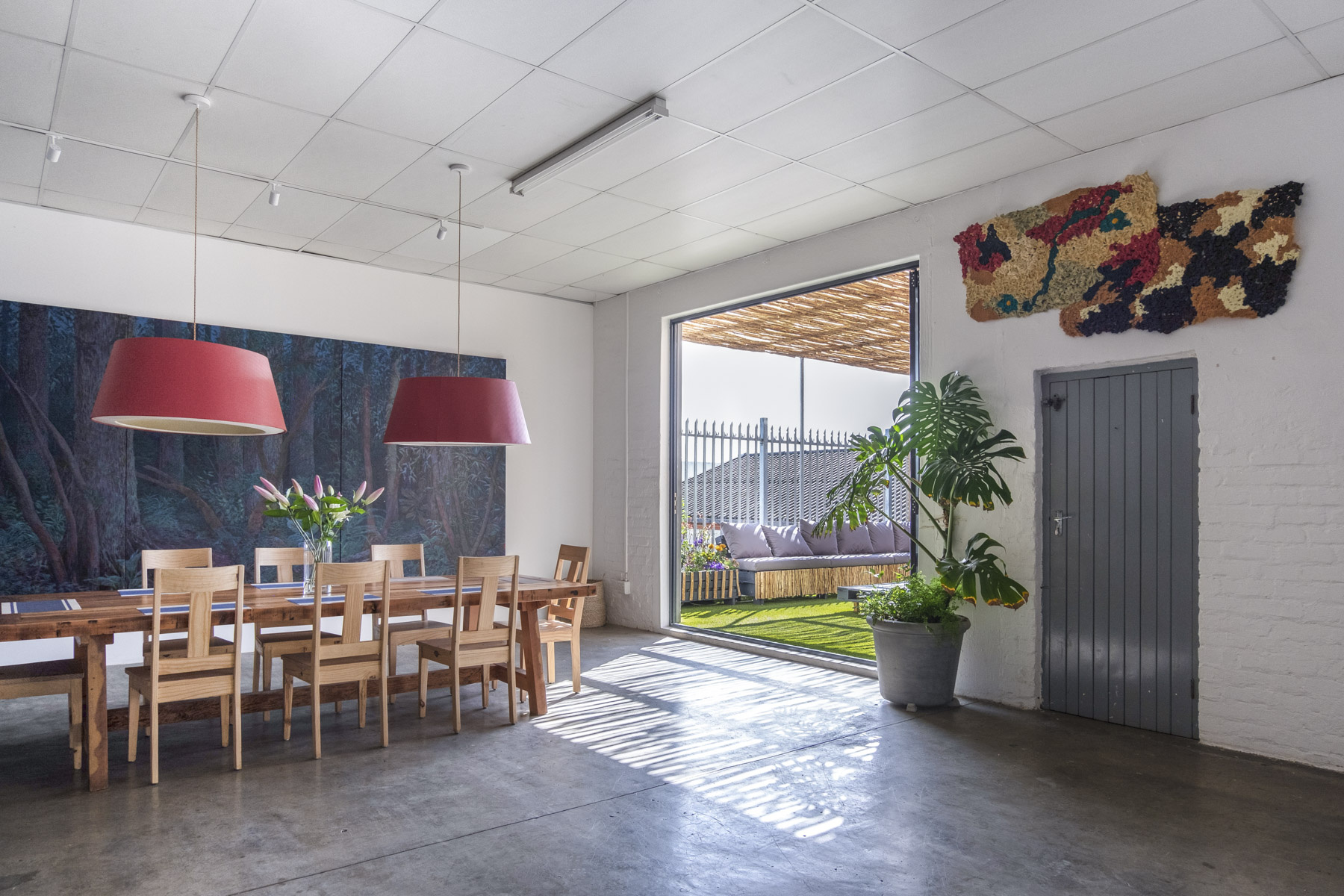
- Large, open studios with good light and high ceilings
- Accommodation directly connected to a shared living area
- Fully equipped kitchen and terrace with neighborhood views
- Introductions to the local scene and key art players
- Support for production during a stay usually between one and three months
- Often, an end-of-residency exhibition or public presentation
Who it suits
- Artists with a solid portfolio and a clear voice in their work
- Those who want close contact with galleries, curators, and collectors
- International artists aiming to grow visibility on the African continent
- People comfortable in an invitation-based, curated environment
If you already have relationships with galleries or curators in Cape Town, this residency can feel like a well-supported extension of that network.
THEFOURTH Artist Residency Programme (Green Point)
Website: thefourth.co.za
THEFOURTH offers a four-week residency aimed at artists from diverse socio-economic backgrounds, with a focus on a calm, supportive live/work situation.
What you get
- Fully furnished apartment in Green Point with two rooms, kitchen, bathroom, and outdoor area
- Easy access to the city center, Waterfront, and Atlantic seaboard
- Support to experiment and deepen your practice
- Connections to prominent art professionals in Cape Town
Who it suits
- Artists who want a shorter, clearly structured timeframe
- Those who function well in a home-like live/work context
- Practitioners who want proximity to central galleries without feeling like they’re in a white-cube bubble
The four-week format works well if you want to test Cape Town as a base, or if you have a specific project that fits into a month of concentrated work.
Southern GUILD Residency (city center)
Website: southernguild.com
This residency is run by Southern Guild, a gallery known for collectible design and contemporary art. It’s an international program open to artists, designers, curators, and cultural thinkers, accessed via nomination or direct invitation.
What you get
- Large, approximately 350 sqm work-living space in the city
- Carefully furnished environment with vintage and contemporary pieces
- Location within reach of Kloof Street, Woodstock, and the V&A Waterfront
- Chances to share skills, host conversations, and engage deeply with local culture
Who it suits
- Mid-career or established practitioners with developed practices
- Artists and designers used to working in dialogue with curators and institutions
- People interested in the crossover between art, design, and collectible objects
Expect an environment where the stakes feel high: strong visibility, high production standards, and proximity to serious collectors and curators.
Greatmore Studios (Woodstock)
More info: greatmoreart.org (or through residency directories)
Greatmore Studios is an artist-led complex in Woodstock that has hosted local and international artists since the late 1990s. It has a well-earned reputation for community engagement and genuine exchange between visiting and permanent studio holders.
What you get
- Private studio within a larger complex of 20+ permanent South African artists
- Support in finding accommodation rather than on-site housing in all cases
- Access to exhibitions, workshops, and public events
- A mix of sponsored and self-funded residency options
- Digital resource center and shared facilities
Who it suits
- Artists who value peer-to-peer exchange and critique
- Socially engaged practices, community projects, or process-driven work
- People who prefer a working studio environment over a polished live/work loft
Greatmore is a good match if you want to be embedded in an ongoing community of local artists rather than a self-contained international cohort.
Side Street Studios Residency (Woodstock)
Website: sidestreet.co.za
Side Street Studios runs a free, short-term residency based on an art exchange: you stay up to three weeks, and in return you leave a piece of work behind.
What you get
- Free short-term stay within a creative hub
- Time to explore the local art scene and produce a focused project
- A more informal, DIY atmosphere
Who it suits
- Artists on a tight budget
- Those who are independent and used to making things happen without heavy institutional support
- Artists who work fast and can develop a piece within a two to three week window
This can be a good way to scout Cape Town’s scene before committing to a longer or more structured residency.
Other Cape Town-linked opportunities
Aggregators such as Reviewed by Artists – Cape Town with Housing and regional platforms like Art Residency Africa often list additional options. A few useful ones to watch:
- Africa Centre AIR – collaborates with international host institutions to send African artists on fully funded residencies, sometimes including programs in or near Cape Town.
- Zeitz MOCAA-related fellowships – often aimed at curators, writers, or museum professionals but sometimes intersect with artist opportunities and public programs.
- Rural or nearby retreats such as Oaklands Artist in Residence, close enough to combine with a Cape Town visit if you want a quiet phase and a city phase.
Which Cape Town residency fits your practice?
Think in terms of your goals rather than the residency’s prestige. A quick way to filter options:
For visibility and professional contacts
If you want to connect with dealers, collectors, and major institutions, look at:
- Cape Town Art Residency – strong ties to the gallery ecosystem and potential for exhibitions.
- Southern Guild Residency – close to one of Cape Town’s most recognized galleries, particularly strong for design-aware practices.
These suit artists who already have a developed body of work and are ready to show at a high level.
For short, supported stays
If your schedule or budget only allows a compact residency:
- THEFOURTH – four weeks, comfortable live/work space, good for a focused project.
- Side Street Studios – up to three weeks and free, in exchange for leaving a work.
Both are solid if you want time on the ground to test ideas and make connections without committing to months away.
For experimentation and community
If you care about conversations with peers and a less formal structure:
- Greatmore Studios – long-standing artist-led space with a strong local community and history of international guests.
- Side Street Studios – informal, experimental, and exchange-based.
These environments are ideal if your work is collaborative, socially engaged, or process-heavy.
Neighborhoods that matter to artists
Your neighborhood will shape your daily rhythm as much as the residency itself. Cape Town is relatively compact, but each area has a different energy.
Woodstock and Salt River
Woodstock is one of Cape Town’s most important creative neighborhoods. It mixes long-time residents with galleries, studios, and small creative businesses.
- Home to or closely linked with Cape Town Art Residency, Greatmore Studios, Side Street Studios, and several galleries.
- Good if you want to live near studios and production spaces.
- Easy access to the city center and main roads.
Salt River sits right next to Woodstock and has a more industrial, work-oriented feeling.
- Favored for studio rentals, fabrication spaces, and print shops.
- Often more affordable than the city bowl for workspace.
City bowl and Cape Town city center
The “city bowl” covers areas like Gardens, Tamboerskloof, Vredehoek, and the central downtown area.
- Close to many galleries, institutions, and project spaces.
- Walkable access to Kloof Street and Long Street, with plenty of cafés, bars, and bookshops.
- Convenient if your residency is near the center, like the Southern Guild program.
This area works well if you like combining studio time with frequent exhibition visits and openings.
Green Point and the Waterfront
Green Point is a central neighborhood near the Atlantic seaboard, used by THEFOURTH residency.
- Comfortable, relatively polished urban environment.
- Close to the V&A Waterfront, public parks, and the promenade.
The V&A Waterfront itself is more commercial but crucial because of Zeitz MOCAA and other cultural spaces. Even if you do not stay there, you will probably visit for exhibitions and research.
Observatory and other pockets
Observatory is a slightly more informal, student-heavy neighborhood with a strong presence of young creatives.
- Often more budget-friendly than the city bowl.
- Good for shared housing and independent studios.
Artists also sometimes base themselves slightly outside the core, combining quiet living with commutes into Woodstock or the center for studio time and openings.
Cost of living and practical planning
Cape Town is usually cheaper than London, New York, or Berlin, but it is still a city where costs add up quickly if you are not supported by a stipend. Each residency has different levels of support, so always check the fine print.
Costs to budget for
- Housing: If your residency does not include accommodation, short-term rentals in central areas can be relatively expensive. Shared apartments and sublets are common among artists.
- Studio and materials: Some residencies provide studios; others do not. Factor in costs for canvas, paper, printing, digital storage, fabrication, and shipping.
- Transport: Ride-hailing adds up, especially if you stay far from your studio or regular galleries.
- Food: Cooking at home is usually more economical; eating out varies from very affordable to high-end.
- Connectivity: Local SIM card and data are usually cheaper than roaming; some residencies include Wi-Fi.
When you speak with a residency, ask specifically:
- Is housing included, or only studio space?
- Is there a stipend for living costs or materials?
- Are travel costs covered, partially covered, or self-funded?
- Are there shared tools or production facilities (wood shop, printers, etc.)?
Galleries, institutions, and where to show up
Residencies in Cape Town are valuable partly because of what lies outside the studio door. Showing up consistently in the same places builds relationships fast.
Key institutions
- Zeitz MOCAA – major museum for contemporary art from Africa and its diaspora at the V&A Waterfront; good for research and staying tuned into regional debates.
- Iziko South African National Gallery – historical and contemporary exhibitions, important for understanding local art histories.
- Norval Foundation – museum and sculpture park outside the central core; excellent for large-scale and sculptural work.
- University-linked venues – spaces connected to art schools and research centers often host talks, screenings, and symposia that are useful if your work is theory-heavy or research-based.
Galleries and spaces to know
- Southern Guild – collectible design and art, often linked to the residency program.
- Stevenson – major gallery representing leading South African and international artists.
- WHATIFTHEWORLD – contemporary gallery focusing on artists from Africa and the diaspora.
- SMAC Gallery, Blank Projects, and others – each with different curatorial focuses and communities.
- A4 Arts Foundation – non-profit, research-oriented space with exhibitions, events, and a strong library.
Artist-run initiatives and pop-up spaces in Woodstock, Salt River, and the city center are just as important for informal conversations and experimental shows as the big-name galleries.
Transport, visas, and timing your residency
Getting around the city
Cape Town is manageable, but you need a plan for transport.
- Ride-hailing apps – often the simplest option, especially at night or when carrying work and materials.
- Renting a car – useful if you plan regular trips to beaches, mountains, or outlying areas for research or filming.
- MyCiTi bus – reliable on specific routes; check if your residency sits near a bus corridor.
- Minibus taxis – widely used locally; cost-effective but can be confusing without guidance.
- Walking – possible in certain areas during the day, but always ask locals or your hosts about safe routes and times.
When planning, ask your residency:
- How do most residents move around?
- Is the studio within walking distance of housing?
- Do you help with transport to openings, events, or site visits?
Visa basics
Visa needs depend on your passport, length of stay, and exact activities. Many artists enter South Africa on visitor status for short residencies, but you need to check current regulations.
Before committing, ask the residency:
- Which visa type previous residents from your country have used.
- Whether they provide official invitation letters for visa applications.
- Whether public talks, sales, or teaching are expected and how those fit into visa rules.
Then cross-check with the South African Department of Home Affairs or your nearest South African consulate. Regulations can change, so treat residency advice as guidance, not legal confirmation.
When to be in Cape Town
Cape Town has a Mediterranean climate: warm, dry summers and cooler, wetter winters. That translates into different studio conditions and energy levels through the year.
- Warm season – good for outdoor research, photography, walking-based practices, and general visibility. Also busier and often more expensive.
- Cooler, wetter months – ideal for hunkering down in the studio, editing video and sound, writing, or making more introspective work.
For applications, a safe rule is to plan several months ahead. Many programs select residents far in advance, and flights become more expensive closer to your dates.
Local art communities, events, and how to plug in
A residency in Cape Town becomes much richer once you plug into the informal layers of the scene: open studios, talks, screenings, and pop-up shows.
Where community tends to form
- Artist-run studios in Woodstock and Salt River – casual studio visits, shared meals, and spontaneous collaborations often start here.
- Gallery openings – especially in the city bowl and around the Waterfront.
- Universities and foundations – public lectures and panel discussions that draw artists, curators, and students into the same room.
- Craft and design communities – ceramics, printmaking, textiles, and furniture design are strong; crossovers into fine art can be productive.
Events and rhythms to look out for
Instead of chasing specific festivals, think of habits you can build:
- Keep a running list of openings each week and choose a few to attend regularly.
- Ask your residency hosts which studios tend to have open days or informal visiting hours.
- Use social media to follow Cape Town galleries and institutions; many announce talks, screenings, and performances there.
Open studio culture is especially active in Woodstock, Salt River, Observatory, and some city bowl spaces. Always ask: can you host your own open studio at the end of your residency, even if it’s just a low-key gathering with local artists?
How to make the most of a Cape Town residency
To turn a Cape Town residency into something that keeps working for you long after you leave, a few strategies help:
- Define a focus, then stay flexible. Have a project or research thread in mind, but leave room for the city to shift it.
- Say yes to studio visits. Invite local artists, curators, or writers over. People are generally open to conversation if you reach out clearly and respectfully.
- Document process, not only outcomes. Cape Town’s landscape and social context are rich; process images, notes, and recordings often become future work or proposals.
- Share your work publicly if you can. Even a small open studio, talk, or zine launch can anchor your time in the city in other people’s memory.
- Stay connected afterward. Keep in touch with peers, curators, and residencies via email and social media; Cape Town is a place many people pass through repeatedly.
If you are drawn to a mix of intense studio time, layered social histories, and a gallery circuit that takes contemporary practice seriously, Cape Town is a strong residency city to consider. The key is picking the residency structure that matches your way of working, then letting the city do the rest.
Residencies in Cape Town
Africa Centre
Cape Town, South Africa
The Africa Centre's Artists In Residency (AIR) programme, established in , partners with artist residency programs globally to fund and support African artists across all artistic disciplines. The program covers all residency costs and round-trip airfare, allowing artists at various career stages to participate in short-term residencies that enable them to consolidate their work and develop new projects.
Cape Town Art Residency
Cape Town, South Africa
The Cape Town Art Residency is an invitation-only international program in Woodstock, Cape Town, supporting emerging and established contemporary artists from Africa and worldwide through creative production, cultural exchange, and networking with global art networks. It offers vast open studios, adjoining accommodation with kitchen and terrace, stays typically ranging from 1-3 months, and culminates in exhibitions for broader audience engagement.
Greatmore Studios
Cape Town, South Africa
Greatmore Studios is an artist-led residency program in Woodstock, Cape Town, South Africa, established in 1998 to provide studio spaces and foster collaboration between local and international artists from diverse cultural backgrounds. It offers residencies that encourage creative experimentation, professional development, and community outreach through exhibitions, workshops, and public events. The program supports both sponsored and self-funded artists with facilities including studios, exhibition spaces, and a digital resource center.
Explore South Africa
More city guides
Opportunity Intelligence
Ready to find your next residency?
Get a personalized shortlist — scored against your practice, discipline, and what you need right now.
See how Intelligence works →