
City Guide
Douala, Cameroon
How to plug into Douala’s public art scene, residencies, and everyday working realities as a visiting artist
Why Douala is worth your residency time
Douala is one of Central Africa’s key contemporary art cities, especially if your practice leans toward public space, social engagement, and urban research. It’s Cameroon’s economic capital, a major port, and a place where artists work directly with streets, markets, intersections, and neighborhoods as their “studio.”
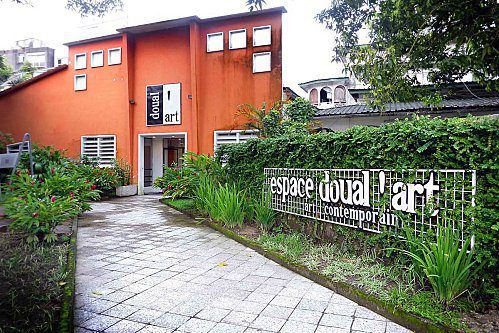
The city’s reputation is strongly tied to public art, largely thanks to doual’art, the contemporary art center behind the Salon Urbain de Douala (SUD), a triennial public art program that has seeded permanent and temporary works across the city.
A well-known example is Joseph-Francis Sumégné’s monumental recycled-material sculpture La Nouvelle Liberté (New Freedom), installed at a busy intersection. It was controversial when it went up, which tells you a lot about Douala: public art here isn’t decoration, it often sparks debate about identity, politics, and urban life.
Artists tend to come to Douala for:
- Public-space practice: murals, sculpture, installation, urban interventions
- Community engagement: neighborhood projects, participatory work, collaborations with residents
- Access to local materials and craftspeople: metalworkers, carpenters, sign painters, fabric vendors, and more
- A tight network of Cameroonian artists and curators connected to regional and international circuits
- Mixed presentation formats: gallery shows, public interventions, workshops, and informal events
If your practice needs a perfectly silent studio bubble, Douala will stretch you. If you like the city itself as a collaborator, it’s an exciting fit.
Key residency options around Douala
Residencies in and around Douala aren’t all the same. Some are city-embedded and socially intense; others give you a quieter base with optional access to the urban scene. Here’s how the main options differ in practice.
doual’art SUD Artist Residency Programme
Host: doual’art (Centre d’art contemporain)
Location: Central Douala (Bonanjo area)
Good for: public art, urban interventions, socially engaged work, architecture, design, performance in public space
This is the residency that defines Douala’s reputation as a city for public art. The program is closely tied to SUD – Salon Urbain de Douala, a triennial public art festival that turns the city into an open-air laboratory. The residency is often structured in two phases:
- Phase 1 – Research & immersion: you spend time in Douala getting to know the “local, social, physical, and artistic realities.” This usually means walking neighborhoods, talking with residents, scouting sites, and refining your project concept within the city’s actual conditions.
- Phase 2 – Production in public space: you realize your project in the city, often timed with the SUD program so the work is presented within a larger public-art context.
Projects can range from sculptural interventions and urban furniture to sound-based works, light pieces, participatory processes, or temporary interventions that leave traces in community memory rather than permanent objects.
What you typically get
- Accommodation: doual’art arranges housing during the residency periods. Expect basic but functional conditions; details are negotiated based on timing and project needs.
- Workspace: access to Espace doual’art in Bonanjo, which includes exhibition spaces, meeting rooms, an outdoor garden, and office areas for planning.
- Network: introductions to local artists, technicians, craftspeople, and community stakeholders.
- Visibility: being part of doual’art’s long-term urban program alongside prominent Cameroonian and international artists.
Who this suits
- You work site-specifically and want the city as your main material.
- You’re ready to rethink your project in dialogue with residents, streets, and infrastructures.
- You’re comfortable with unpredictability: weather, bureaucracy, traffic, and community dynamics all influence your work.
How to approach them
Applications aren’t always via open calls. Many artists reach out directly with project ideas aligned with public space and Douala’s context. Check the doual’art website:
When you write, be specific about why you want to work in Douala, how your practice fits public space, and what kind of engagement you imagine.
Galerie MAM Artist Residency Programme (Souza / Douala)
Host: Galerie MAM / Fondation MAM
Location: Souza, approximately 30 km from Douala
Good for: visual artists, writers, performers, multidisciplinary practitioners
This residency is based at Fondation MAM in Souza, a quieter area outside Douala. You get distance from the city’s traffic and noise while staying close enough to tap into Douala’s cultural life and logistics.
What it offers
- Retreat setting: a calmer environment where you can focus, reset, and develop work without constant urban overstimulation.
- Studio space: tailored to your medium; painting, sculpture, installation, writing, or performance development can all be accommodated.
- Production support: depending on your project, you may get help sourcing materials, connecting to local craftspeople, or using facilities in Douala.
- Gallery connection: link to Galerie MAM, a long-established contemporary art gallery with regional and international visibility.
Who this suits
- You want concentrated studio time with optional access to the city.
- You’re working on a project that requires writing, research, rehearsals, or slow painting/installation processes.
- You like the idea of a retreat but still want to attend openings, meetings, or fairs in Douala.
How to approach them
The program tends to be project-dependent rather than rigidly scheduled. Reach out with a clear proposal and timeline via their website or social media:
- http://www.galeriemamdouala.com
- Instagram: @galeriemam
Be concrete about your space needs, scale of work, and whether you’ll need transport to Douala for sourcing or networking.
MTN-related residency formats and neighborhood projects
The MTN residency was developed in connection with Douala’s artistic context and environmental/social questions. The model emphasizes:
- Extended interaction with specific neighborhoods
- Environmental and social themes
- Public presentation in Douala, often with an emerging-artist focus
This kind of residency points to a broader pattern: Douala-based projects often blend research, community collaboration, and public outcomes rather than a purely studio-based retreat.
Information about MTN-specific cycles can be sporadic, so a smart move is to:
- Ask doual’art and local curators about current or similar neighborhood-based programs.
- Stay open to hybrid arrangements where a host invites you for a project rather than a branded “residency.”
L’Art de l’Inclusion (ADI) at LABA
Host: Académie Libre des Beaux-Arts (LABA) / LABA Hub
Location: Douala
Good for: women and young artists, artisans, early-career practitioners, artists interested in training and collaboration
The L’Art de l’Inclusion (ADI) residency at LABA brought artists into a structured environment combining studio time, training, and community-oriented activities.
What it offered in past editions
- Several weeks of residency time in Douala
- Access to LABA courses, critiques, and teaching resources
- Use of LABA Hub as a space for exchange, workshops, and networking
- Technical support and Wi-Fi
Who this suits
- You’re at an early or mid-career stage and want both production time and structured learning.
- You’re interested in inclusion, community, and peer exchange, not just solitary studio work.
- You like being embedded in an art school/hub ecosystem.
Because ADI calls are not constant, keep an eye on LABA and related local channels. You can also write to LABA to ask about future residency or workshop cycles.
How to choose the right Douala residency for your practice
You’ll get more out of Douala if you choose a program that matches your working style rather than just chasing the most famous name.
Pick doual’art / SUD if:
- Your work belongs in public space or engages directly with urban questions.
- You’re ready for community processes and conversations that may reshape your project.
- You want to be part of a long-term, city-wide public-art discourse.
Pick Galerie MAM (Souza) if:
- You need a focused production period with less distraction.
- You’re writing, composing, rehearsing, or producing studio-based work that doesn’t require daily city contact.
- You want to combine retreat with gallery-oriented connections.
Look at LABA / ADI or similar programs if:
- You value learning, mentoring, and training alongside production.
- You’re an early-career artist wanting to strengthen technique, theory, or project development.
- You care about inclusion, social practice, and youth/women’s perspectives.
Stay flexible and open to hybrids
In Douala, not everything comes with a neat residency brochure. Some of the most meaningful projects happen through hybrid setups: short research trips, informal stays with artist-hosts, or commissions tied to festivals and events.
The city itself: neighborhoods, costs, and working conditions
Residency life in Douala is shaped by the city’s logistics and climate as much as by the art institutions. Planning with that reality in mind will save you stress and money.
Cost of living and basic budgeting
Douala is generally more affordable than major Western art hubs, but expenses add up quickly if you lean on imported goods or upscale housing.
Main cost areas:
- Housing: biggest variable; central and “secure” neighborhoods are pricier.
- Food: local food and markets are usually accessible; international products can be expensive.
- Transport: taxi and rides add up, especially if you cross the city daily.
- Materials: imported art supplies can be limited or costly. Many artists either ship specific materials in advance or adapt to local options.
To stay flexible, budget conservatively and confirm current prices with your host. Ask explicitly whether housing and some production costs are covered or partially supported.
Areas artists actually use
The city is sprawling; your experience will depend a lot on which area you stay in and where your host is based.
- Bonanjo: administrative and cultural center. Home to Espace doual’art and several institutional spaces. Convenient for institutional meetings and events.
- Akwa: busy commercial district with services, shops, and transport links. Dense and lively; useful for logistics and everyday errands.
- New Bell: historically important, socially layered neighborhood often referenced in community-based and public-art projects. Projects here are usually done through local partners; don’t just parachute in on your own.
- Bonapriso / Bali / Bonamoussadi: mixed-use to residential areas with mid-range to higher-end housing. Often chosen by expatriates and middle-class locals. Can be practical for longer stays if your budget allows.
- Souza: outside Douala, used by Galerie MAM / Fondation MAM as a quiet base. Good when you want nature and calm with access to the city when needed.
Studios and working spaces
Many spaces in Douala are multi-use: exhibition venues double as meeting spaces, outdoor courtyards become sculpture yards, and neighborhood workshops function as fabrication sites.
Key nodes:
- Espace doual’art: exhibition and project space, plus offices and garden for events.
- Fondation MAM (Souza) / Galerie MAM (Douala): studio zones and gallery spaces, plus links to collectors and fairs.
- LABA / LABA Hub: art school infrastructure, classrooms, and hub activities.
- Street-level workshops: welders, carpenters, sign painters, fabric vendors, mechanics – essential if you do material-heavy or installation work.
When negotiating a residency, ask about:
- Ceiling height and floor load (for large sculptures)
- Ventilation and power supply (for welding, electronics, or media work)
- Storage possibilities for works before and after exhibition
- Technical assistance and access to tools
Galleries, art spaces, and where to meet people
Beyond residency hosts, a few spaces are helpful to know.
- doual’art – contemporary art center, SUD organizer, regular exhibitions, talks, and public programs.
- Galerie MAM – commercial gallery with long-term commitment to contemporary African art and connections to international fairs.
- LABA / LABA Hub – educational hub with workshops, student shows, and cross-disciplinary events.
- Institut Français du Cameroun (Douala) – cultural institute hosting exhibitions, talks, film screenings, and performances.
- Other project spaces and collectives – including women-led and youth-focused initiatives that may not always have strong online visibility but are central to the local scene.
Your residency host is usually the best connector to these circles. Ask them directly which events, studios, or community spaces you should not miss.
Moving around, visas, and timing your stay
Douala’s daily rhythm is shaped by traffic and climate, which matters a lot if you’re moving materials or installing work outside.
Transport and logistics
Inside the city
- Traffic can be heavy and unpredictable, especially at peak hours and during rain.
- Short trips can stretch in time; always add a buffer for meetings or installs.
- Taxis and app-based rides are common; some residencies may arrange drivers for specific project needs.
If your work involves large or fragile elements, plan for:
- Vehicle hire or delivery services
- Protection against rain and humidity
- Secure storage and overnight parking when needed
Getting in and out
- Douala is served by Douala International Airport (DLA), with connections to regional and some international hubs.
- Your host may offer airport pickup; ask early so you can plan arrival times and local currency needs.
Visa considerations
Visa rules vary by nationality, so always confirm with the closest Cameroonian embassy or consulate and check with your host.
Commonly required documents include:
- Valid passport
- Invitation letter from your host institution
- Proof of accommodation
- Program/residency documentation
- Sometimes proof of return or onward travel and financial means
Ask your residency host if they can provide:
- Official invitation/acceptance letters
- Supporting letters for visa officers
- Guidance on any local registration steps after arrival
When to be in Douala
Douala has a humid equatorial climate with significant rainfall. This affects:
- How easy it is to move around with works and materials
- The practicality of outdoor installs or performances
- Comfort in non-air-conditioned spaces
Drier months are generally easier for outdoor-intensive projects, though residency schedules may be tied more to institutional calendars and festivals than to climate alone. For big outdoor works, discuss timing with your host; they will know when heavy rains are most disruptive.
Local art communities and how to plug in
Douala’s art ecosystem runs on relationships as much as on institutions. A lot happens through conversations, introductions, and long-term projects in specific neighborhoods.
Community patterns
You can expect to encounter:
- Artist collectives and peer groups who co-organize events and share resources.
- Neighborhood collaborations where residents are active participants, not just spectators.
- Workshops and talks at doual’art, LABA, Institut Français, and other hubs.
- Long-running projects tied to specific sites, intersections, or historical questions.
The Salon Urbain de Douala (SUD) is the most visible moment when many of these threads converge, with new and existing public works activated across the city.
Making the most of your residency
To turn a Douala residency into something meaningful, a few strategies help:
- Ask for introductions early: curators, local artists, craftspeople, and community leaders can make or break a project’s depth.
- Spend time walking and listening: many of the most compelling works in Douala grow out of careful observations of everyday life, not just grand concepts.
- Stay flexible: adapt your proposal if local realities point you in a more relevant direction.
- Think beyond the residency period: Douala rewards long-term relationships; consider how you might maintain connections after you leave.
Summary: what kind of artist thrives in Douala
Douala is a strong match if your work thrives on:
- Urban energy and public space
- Social engagement and collaboration
- Context-responsive, site-specific thinking
- Connections to broader African contemporary art networks
It’s less ideal if you need a fully controlled, insulated residency with museum-like infrastructure. But if you want to work in a living, complex city where art interacts directly with people, infrastructure, and daily life, Douala is a compelling place to invest your residency time.
Explore Cameroon
More city guides
Opportunity Intelligence
Ready to find your next residency?
Get a personalized shortlist — scored against your practice, discipline, and what you need right now.
See how Intelligence works →