
City Guide
Jerusalem, Israel
How to choose, plan, and actually work in Jerusalem’s intense residency scene
Why artists choose Jerusalem for residencies
Jerusalem is not a neutral backdrop. The city carries overlapping histories, religious narratives, and present-day political tensions that sit right outside the studio door. That weight can either energize or overwhelm you, so it helps to be honest about why you want to work there.
Many artists go to Jerusalem to:
- Work with political and social complexity that shows up in everyday life.
- Access religious and historical layers for research-based practice and archival work.
- Engage with diverse communities: Jewish, Muslim, Christian, secular, local, and international.
- Develop site-specific projects in a city where space, borders, and memory are constantly contested.
- Work across visual art, performance, writing, research, architecture, and curation in a concentrated environment.
Residency programs in Jerusalem tend to prioritize:
- Research and production time, with a strong emphasis on context.
- Dialogue with local artists, communities, and institutions.
- Projects that respond to social, political, or historical conditions.
- Interdisciplinary exchange between artists, curators, writers, and architects.
Compared to larger art capitals, Jerusalem’s residency ecosystem is small but unusually intense. You are less likely to get lost in a huge scene, and more likely to work closely with curators, hosts, and peers who expect you to engage with where you are.
Key residency programs in Jerusalem
Jerusalem’s residency network is compact enough that you can realistically get to know the main players during a single stay. Each program has a clear personality; the right fit depends on your practice, politics, and how public-facing you want your time to be.
Al Ma’mal Foundation — Artist-in-Residence (AiR)
Location: Tile Factory building in Jerusalem’s Old City
Website: almamal.org/programs/residency
Al Ma’mal’s AiR hosts Palestinian and visiting artists, curators, and researchers in a former tile factory inside the Old City. The program combines accommodation and studio facilities with a strong emphasis on research, production, and critical engagement with Jerusalem and its communities.
Good fit if you:
- Work with Palestinian cultural contexts, decolonial perspectives, or critical history.
- Need a residency that is deeply grounded in the Old City, not just visually but politically.
- Are a curator or researcher looking for archival and field-based work.
- Want to be in dialogue with a long-standing institution connected to artists like Mona Hatoum and Zoe Leonard.
Al Ma’mal also foregrounds access issues. The residency must navigate the enforced separation between Jerusalem, the West Bank, and Gaza, and the permit systems that limit who can physically be in the city. For Palestinian artists in particular, these constraints are part of the reality of working there and often shape the work itself.
Art Cube Artists’ Studios — LowRes Jerusalem
Location: Art Cube Artists’ Studios, Jerusalem
Website: artiststudiosjlm.org/lowres-jerusalem-program.html
LowRes Jerusalem is the international residency at Art Cube Artists’ Studios. It invites artists who explore social, political, and economic conflicts to reflect critically on their surroundings during a short, intensive stay.
What it typically offers:
- A fully funded, roughly month-long stay.
- Travel support, accommodation, and studio space.
- Production budget and honorarium.
- Curatorial guidance and a platform to show your research or project.
Art Cube also runs a guest studio program for Israeli and international artists who need workspace for a limited period. This is usually more flexible and oriented toward artists with specific projects or research, without the full package of funding and presentation support.
Good fit if you:
- Want a structured, professional residency with clear resources behind it.
- Work around conflict, systems, and social conditions, and are ready to engage critically.
- Need both production support and curatorial dialogue.
- Are planning a focused, time-bound project rather than open-ended wandering.
Jerusalem International Fellows
Website: jerusaleminternationalfellows.org
The Jerusalem International Fellows program brings a small cohort of leading artists to the city for around ten weeks. Fellows work with independent artists, ensembles, and cultural institutions across both East and West Jerusalem.
Disciplines include:
- Performing arts and choreography.
- Visual arts and socially engaged practice.
- Architecture and urban planning.
The program has hosted artists from countries such as Brazil, India, Mexico, and the U.S., and leans toward practitioners already operating at a relatively advanced stage in their careers.
Good fit if you:
- Want a longer residency with strong collaborative expectations.
- Work across performance, space, and urban questions.
- Are interested in engaging across Jerusalem’s divided urban fabric.
- Can commit to an intensive, project-driven residency period.
Kol HaOt — Artist Residency
Location: Chutzot HaYotzer Artists’ Colony, just outside the Old City walls
Website: kolhaot.com/artist-residency
Kol HaOt invites visual and multimedia artists who want to work with Judaism’s texts, symbols, and history as core material. The residency is based in the Chutzot HaYotzer Artists’ Colony, a long-standing art zone near the Old City.
Structure and expectations:
- Short-term residencies typically between 1 and 4 months.
- Overseas residents are usually limited to about 3 months due to visa rules.
- Studio space in an active gallery context.
- Daily presence at the gallery during working hours.
- Continuous interaction with visitors, plus occasional participation in Kol HaOt programs.
- An exhibition or presentation at the end of the residency.
Some calls request that artists donate works to the Kol HaOt gallery, either existing pieces or those created during the residency, so read the conditions carefully.
Good fit if you:
- Have a genuine interest in Jewish sources, ritual, and history, and want to research them artistically.
- Enjoy public-facing studio practice and constant audience interaction.
- Want a clear thematic frame for your residency instead of a fully open brief.
Mishkenot Sha’ananim — Residency Programs
Location: Mishkenot Sha’ananim, Jerusalem
Website: mishkenot.org.il/en/company/residency/main
Mishkenot Sha’ananim is a prominent cultural institution that runs several residency tracks, especially strong in literature and translation. Programs include the Marie Residency, a Translators’ Residency, and the Windmill Residency, among others.
Good fit if you:
- Are a writer, poet, translator, or literature-oriented artist.
- Want a residency that prioritizes reflection, writing, and dialogue over heavy production.
- Value being based in a historic, visible cultural setting.
Where to stay and work: neighborhoods and logistics
The right neighborhood shapes what your residency feels like. In Jerusalem, small distances can mean big shifts in culture, pace, and access.
Old City and surrounding areas
Why stay nearby:
- Immediate access to sites that are central for history- and religion-focused projects.
- Proximity to Al Ma’mal and other Old City art and cultural spaces.
What to keep in mind:
- Streets are dense and tourist-heavy; moving large works or equipment can be difficult.
- Accommodation can be limited and often oriented toward short-term visitors or pilgrims.
- Noise levels, crowding, and security presence may affect concentration.
East Jerusalem
Why artists choose it:
- Access to Palestinian communities and institutions.
- Rich terrain for socially engaged and politically conscious work.
Logistics:
- Access and mobility can depend on your nationality and documentation.
- Factor in extra time for commuting, checkpoints, and security checks.
- Ask residency hosts for realistic advice about where to live in relation to your project sites.
Central and west-side neighborhoods
Areas like the city center, Talbiya, Rehavia, the German Colony, and Baka are common choices for visiting artists.
Pros:
- Good access to public transport, cafes, and cultural venues.
- A mix of residential calm and urban infrastructure.
- Practical for short stays, meetings, and day-to-day errands.
Cons:
- Housing can be expensive, especially for private short-term rentals.
- Less immediate contact with Palestinian cultural spaces unless you travel across town.
Chutzot HaYotzer and industrial zones
Chutzot HaYotzer, where Kol HaOt is based, sits just outside the Old City walls and is used to a constant flow of visitors. Industrial and mixed-use areas such as parts of Talpiot and Arnona can sometimes offer more affordable studio-type spaces or a different kind of urban texture.
These areas work well if you:
- Need space to build, install, or work at scale.
- Want to be close to your residency studio rather than nightlife or tourist areas.
- Prefer a working district feel over a picturesque view.
Costs, visas, and practical planning
Jerusalem is not a low-cost city, and residencies that cover housing or offer stipends can make a huge difference to your stress level and your work.
Budgeting realistically
When planning a residency, think in terms of broad categories rather than exact numbers, which will shift with currency rates and neighborhood choices.
Main cost areas:
- Accommodation: Usually the biggest expense if not provided by the residency. Short-term furnished rentals can be especially high.
- Food and daily living: Cafes and restaurants are similar to many European cities; cooking at home cuts costs.
- Transport: Buses and light rail are relatively affordable; taxis add up quickly.
- Studio and materials: Some residencies cover these; others don’t. Ask about tools, equipment, and local suppliers.
- Insurance: Health and travel insurance are worth sorting before you go.
- Visas and permits: Some artists have straightforward entry; others face more complex processes and restrictions.
Residencies like LowRes Jerusalem, which provide housing, travel, and an honorarium, reduce much of the financial pressure. Others may give you a studio but expect you to handle accommodation and daily expenses.
Getting around the city
Jerusalem’s size works in your favor. Many key arts spaces are reachable by public transport or short taxi rides, although your experience will vary depending on which part of the city you are working in.
Within the city:
- Light rail: Runs along key corridors through central areas, with frequent service.
- Buses: Extensive network, but routes and signage may take time to learn.
- Taxis and ride-hailing: Useful at night, for equipment, or when connecting between less connected neighborhoods.
Allow extra time when moving between East and West Jerusalem, especially with equipment or on days with heightened security. Your residency coordinator can usually suggest practical routes and strategies.
Arriving from the airport
Most international artists fly into Ben Gurion Airport. From there, you can reach Jerusalem by:
- Shuttle or shared taxi services that go directly to the city.
- Train to Jerusalem and then local bus, light rail, or taxi.
- Private taxi if you are arriving with heavy luggage or at difficult hours.
Confirm with your residency if they provide any pickup or if there are recommended routes based on where you are staying.
Visas and access
Visa requirements differ widely by nationality, length of stay, and the nature of your residency. Some programs provide invitation letters or help you clarify which status you should enter on.
Key questions to ask early:
- Does the residency provide an official invitation letter for visa purposes?
- Is a tourist entry sufficient, or do you need a different status?
- Does any stipend or honorarium create work-authorization or tax questions?
- Are there known obstacles for artists of your background or nationality?
Access is uneven. For Palestinian artists from the West Bank, Gaza, or the diaspora, permits and residency controls can limit or prevent physical presence in Jerusalem, something programs like Al Ma’mal explicitly acknowledge. If that affects you, it is crucial to discuss options and constraints with the host institution well in advance.
Working in the scene: institutions, community, and timing
A residency in Jerusalem is rarely just about the studio. The strongest projects tend to draw on the city’s institutions, archives, and informal networks.
Institutions and spaces to know
- Al Ma’mal Foundation: A central node for Palestinian contemporary art, exhibitions, research, and residencies in the Old City.
- Art Cube Artists’ Studios: A major studio complex and residency center with programs like LowRes and strong ties to local and international curators.
- Kol HaOt: A focused residency around Jewish sources and visual/multimedia work, with heavy public interaction.
- Mishkenot Sha’ananim: A key address for literature, translation, and cultural residencies.
- Manofim festival: A contemporary art festival associated with Art Cube, connecting galleries, institutions, and community projects across the city.
Universities, museums, and independent project spaces also play a role; it is worth asking residency staff for a current list of active venues and artist-run initiatives while you are there.
Local community and open studio culture
Jerusalem rewards artists who show up consistently. Openings, talks, and studio visits are often where the most useful conversations happen.
During a residency, try to build in time for:
- Open studios: Many residencies organize them, and they are an easy way to meet artists, curators, and local audiences.
- Studio visits: Invite local artists and curators to see your work in progress, not just the final presentation.
- Public talks or workshops: These can help frame your project and give you feedback from people rooted in the city.
- Archive and library visits: Especially relevant if you are working with history, religion, or urban research.
Residencies like Kol HaOt build public interaction into their structure, while others leave it more open. Either way, treat community contact as a key part of the residency, not an optional extra.
When to be there
Climate and programming both affect how comfortable and productive your residency will feel.
Climate basics:
- Spring and autumn tend to be the most comfortable for working, walking, and site visits.
- Summer is hot and dry; outdoor work can be challenging in the middle of the day.
- Winter can be cold and rainy, with short days, but it can also be quiet and focused.
Application timing:
- Many funded or cohort-based residencies select participants well in advance, so plan on applying 6–12 months before you hope to arrive.
- Programs that accept rolling applications, like Kol HaOt, offer more flexibility but can still fill up early.
- Leave time for visas, travel arrangements, and any project-based permissions or collaborations you want to secure.
Choosing the right Jerusalem residency for your practice
When you are comparing programs, it helps to match your priorities with what each residency actually emphasizes.
Consider Al Ma’mal if you:
- Are a Palestinian artist or work closely with Palestinian narratives and communities.
- Want to be situated inside the Old City’s political and historical density.
- Focus on research, archives, and socially or politically engaged practice.
Consider LowRes Jerusalem (Art Cube) if you:
- Need a fully supported, short-term residency to realize a specific project.
- Work critically with conflict, power structures, and social dynamics.
- Value close work with curators and a clear path to public presentation.
Consider Jerusalem International Fellows if you:
- Already have an established practice and want to expand through collaboration.
- Work across performance, architecture, or urban questions.
- Are ready for an intensive residency with high expectations and visibility.
Consider Kol HaOt if you:
- Want your residency to revolve explicitly around Judaism, Jewish history, and text-based research.
- Enjoy being in a gallery every day, meeting visitors, and explaining your process.
- Like working within a defined thematic and public framework.
Consider Mishkenot Sha’ananim if you:
- Are a writer, translator, or artist whose practice leans strongly into language and text.
- Prefer reflective time and cultural dialogue over heavy production demands.
- Want affiliation with a high-profile cultural institution.
Whichever residency you choose, go in with a clear plan and a flexible mindset. Jerusalem will challenge your assumptions, stretch your work, and pull your project into conversations you cannot always predict. That is part of why artists keep going back.
Residencies in Jerusalem
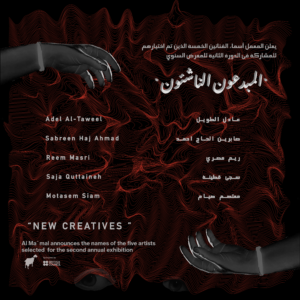
Al Ma'mal Foundation for Contemporary Art
Jerusalem, Israel
Al Ma'mal Foundation for Contemporary Art offers a non-thematic Artist-in-Residence program in its historic Tile Factory building in Jerusalem's Old City, providing accommodation and studio facilities to Palestinian and international artists, curators, and researchers for developing new work and engaging with the local community. The program promotes cultural exchange, critical thinking, and artistic expression while encouraging residents to consider Jerusalem's socio-political context and participate in public events. It serves as an incubator for ideas, fostering connections between local and global art scenes.

Jerusalem Center for the Visual Arts
Jerusalem, Israel
International artists-in-residence program fostering cross-cultural dialogue between visiting artists/curators and Israeli art community, museums, and audiences. Now based at Mishkenot Sha’ananim.
Explore Israel
More city guides
Opportunity Intelligence
Ready to find your next residency?
Get a personalized shortlist — scored against your practice, discipline, and what you need right now.
See how Intelligence works →