City Guide
Omalo, Georgia
How to decide if a remote Tusheti mountain residency is right for your work
Why artists go to Omalo
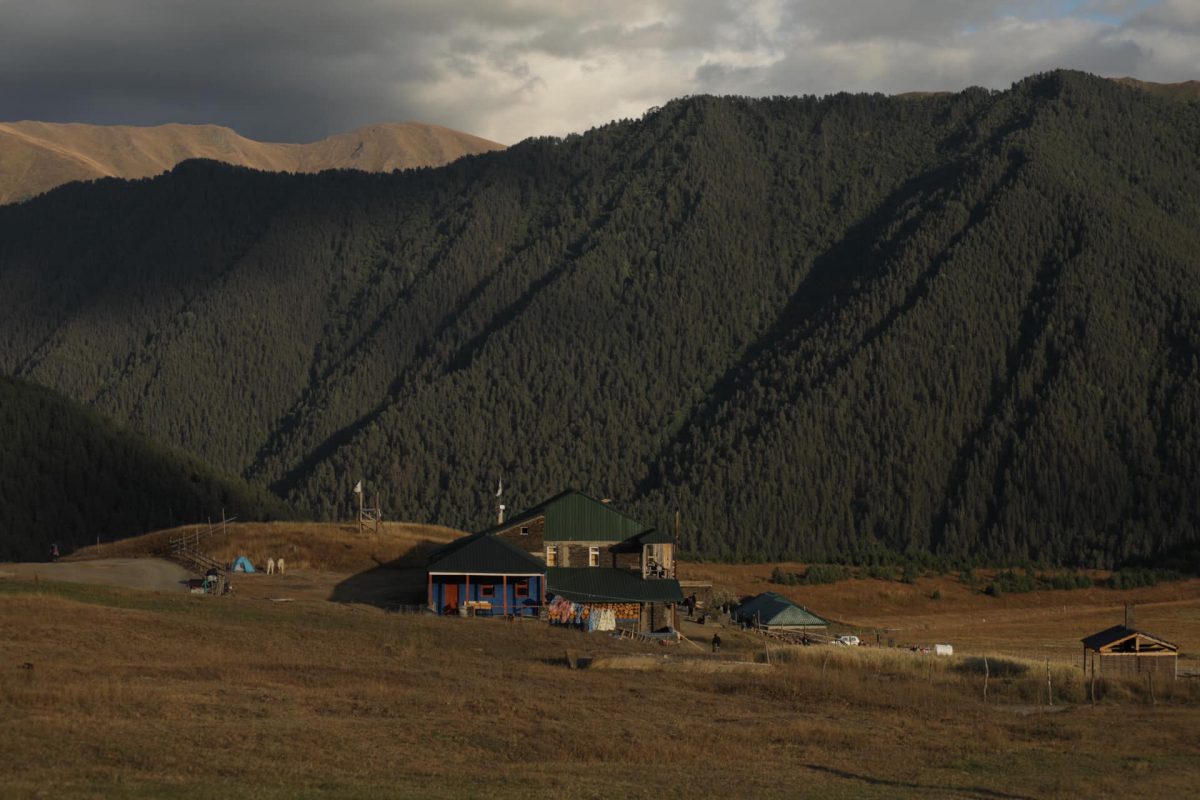
Omalo is the main village in Tusheti, a high mountain region in northeastern Georgia. Think steep winding roads, stone tower houses, and sky that feels almost too close. This is not a gallery district or a place to network with curators over openings. It’s where you go when you want your work to be shaped by landscape, remoteness, and living tradition.
Artists are drawn to Omalo for a few clear reasons:
- Isolation that actually sticks – You are many hours (and a serious mountain road) away from major cities. That distance gives you rare focus and long, uninterrupted stretches of work time.
- Strong sense of place – Weather, altitude, architecture, and local customs give you a very specific context. It’s ideal if your work leans into site, ecology, or lived histories.
- Living cultural heritage – Tusheti’s traditions, music, architecture, and stories are very present. There’s a lot to work with if you’re interested in oral history, ethnographic approaches, or community-based practice.
- Interdisciplinary peers – The main residency in Omalo deliberately mixes visual artists, musicians, writers, performers, and researchers, so you’re likely to be in conversation across disciplines every day.
If you want an urban residency with galleries, fabrication labs, and nightlife, Omalo will frustrate you. If you want a concentrated period of making, researching, and listening, it can be a powerful choice.
AqTushetii: the core residency in Omalo
The key residency you’ll find in Omalo is AqTushetii, often written as Aqtushetii. Think of it as a hybrid: part residency, part festival, part temporary artist village.
What AqTushetii offers
AqTushetii is based in Omalo, Tusheti, on the northern slopes of the Caucasus. It’s one of the most remote locations for an artist residency in Georgia. The program focuses on cultural exchange, collaboration, and actual production, not just retreat-style reflection.
Facilities described across listings and reviews include:
- Studios and workspaces
- Painting studios
- Outdoor working areas for large or messy projects
- Shared library and working space for reading, writing, and research
- Technical spaces
- Recording studio for sound and music work
- Darkroom for photography
- Ceramic kiln and tools for clay-based practices
- Printing press for printmaking
- Presentation spaces
- Gallery or performance areas for showings and events
- Common spaces that can be adapted for talks, screenings, or informal sharings
For a remote mountain village, this is unusually solid infrastructure. If your practice relies on specific tools, you still want to confirm details directly with the program (what’s working, what’s available during your dates, and what materials you need to bring).
Housing and daily life at AqTushetii
Housing is typically split between different types of accommodation:
- Capsule-style dorms – Compact, social, and usually the most affordable option.
- Private rooms in nearby hostels or guesthouses – Better if you need solitude or a strict writing routine.
Catering is often part of the package, or at least available as an option, which matters in a place where shopping like you would in a city is not realistic. You’ll usually find shared common areas where artists gather, eat, and plan projects together.
Life rhythm is set by the mountain environment: early mornings, shifting weather, and a lot of walking between studios, housing, and village landmarks. Nightlife is more like conversations under the stars than going out.
Who AqTushetii is for
The residency calls in a wide range of disciplines:
- Visual arts (painting, installation, photography, printmaking, ceramics)
- Sound and music
- Dance and performance
- Writing and literature
- Theory and research fields like philosophy or anthropology
- Interdisciplinary and experimental practices that don’t fit neatly anywhere
The program leans toward artists who are open to collaboration, conversation, and community-facing work. If you need complete privacy or dislike group dynamics, you’ll want to factor that in.
What the residency expects from you
AqTushetii isn’t a place where you vanish into your studio and never come out. The program typically encourages or expects some of the following:
- Workshops or lectures – Sharing your method, research, or practice with other residents or local participants.
- Performances – Musicians, performers, and sound artists are often asked to play at least once during their stay.
- Exhibitions or open studios – End-of-season shows or mid-residency presentations are common.
- Contribution to a permanent collection – Some artists leave a work or documentation with the residency.
If you like building publics around your practice, this is a strength. If you’re applying with a deeply introverted or strictly research-only project, mention clearly in your application how you would still engage with others.
How applications usually work
Details shift slightly over the years, but core elements tend to stay consistent. You can expect to prepare:
- A clear project description or research intention
- A portfolio or documentation of recent work
- Your preferred dates and length of stay
- A short explanation of how you relate to place, collaboration, or community
Applications are often submitted by email or via a form linked through their site or partner organizations such as Res Artis or Reviewed by Artists. Always check the most current instructions on the program’s own channels.
What it’s actually like to work in Omalo
Because Omalo is small, you won’t be choosing neighborhoods the way you might in a city. You’re mostly moving between:
- Upper Omalo – Known for the historic stone towers and panoramic views. This is the iconic image of Tusheti you see in photos.
- Lower Omalo – Additional housing, guesthouses, and everyday village life.
- Residency buildings – Studios, libraries, and accommodation tied to AqTushetii.
Everything is walkable, but the terrain is hilly, and your day naturally includes movement between spaces. That movement can actually shape your work rhythms: you might find yourself sketching during walks or using the transitions as thinking time.
Studios and work modes
Most artists in Omalo work within AqTushetii’s ecosystem of studios and shared spaces. Common modes of working include:
- Studio-based making – Painting, drawing, printmaking, ceramics, and sound work using the residency’s facilities.
- Outdoor and site-specific work – Land-based practice, photography, video, and performance piece development in the landscape.
- Research and writing – Taking advantage of the quiet and the library/working room for long-form writing, scores, scripts, and theoretical projects.
If you depend heavily on specific materials (certain papers, inks, electronics, or film), treat Omalo as a place where you should arrive fully stocked. Local shops aren’t set up for specialized art supplies, and deliveries can be unpredictable or slow.
Exhibition and sharing formats
Omalo does not have a commercial gallery circuit. Instead, you might find yourself showing work in:
- Residency-organized exhibitions or end-of-season shows
- Temporary installs in or around the village
- Informal studio visits and open studios with other residents
- Workshops, talks, or performances where process is more visible than products
If you’re used to white cube spaces, this can be a chance to experiment with different ways of presenting work, or to focus more on research and process than on a polished final exhibition.
Practical details: money, transport, and timing
Cost of living and budgeting
Omalo’s costs have less to do with rent markets and more to do with logistics. Getting things there takes effort, and you feel that in your budget.
Plan carefully for:
- Travel to and from Omalo – Reaching Tusheti usually involves a long drive by 4x4 on a mountain road that is only passable part of the year. Factor this as a serious line item, especially if you’re coming from abroad.
- Food – Meals can be handled through the residency or local guesthouses. Because supplies come in over mountain roads, grocery-style self-catering is not always cheaper or easier.
- Production costs – AqTushetii may provide certain basic materials (like clay or some art supplies) alongside equipment. Still, you should assume you’re responsible for most of your own consumables.
- Cash vs. cards – Card infrastructure can be limited. Bring enough cash to cover what the residency does not invoice directly, plus a buffer for unexpected expenses.
If you’re applying with a project that needs expensive materials or large-scale fabrication, look into securing funding or doing heavy production elsewhere and focusing on research, testing, or documentation in Omalo.
Getting to Omalo
The road into Tusheti is famous for being both beautiful and demanding. A few key points:
- Seasonal access – The road is typically only open in the warmer months. Outside that window, you may see the residency mention special transport options such as helicopter access, which hints at how isolated the region becomes.
- 4x4 vehicles – Standard cars are usually not recommended. Many artists either book seats in shared 4x4 transport or coordinate with the residency for advice.
- Buffer days – Mountain weather can disrupt travel. Build in extra days on both ends of your residency to avoid missing flights or trains.
- Packing strategy – Pack light but deliberate. Heavy materials can be difficult and expensive to move. Prioritise essentials you cannot source in Georgia.
For most international artists, the route looks like: fly into Tbilisi or another major city, reach the nearest access town by bus or shared taxi, then transfer to a 4x4 that takes you up to Omalo.
Visas and entry
Georgia has relatively flexible entry rules for many nationalities, but the details depend on your passport. Before you commit to a residency slot, check:
- Do you qualify for visa-free entry, or do you need an e-visa or advance visa?
- Is your allowed stay long enough for your full residency plus travel days?
- Will you need a letter of invitation from the residency for your visa or for border control?
- Are you carrying equipment that could be questioned at customs (large gear, high-value electronics, etc.)?
Sorting your paperwork early matters more than usual because Omalo is remote. You don’t want visa issues cutting into the narrow seasonal window when you can actually reach Tusheti.
When to go
Tusheti’s entire rhythm is seasonal. That shapes both the residency calendar and your experience of the place.
- Late spring to early autumn – Generally the most workable window for residencies. Roads are more likely to be open, and outdoor work is possible.
- Peak summer – Warmer, with more visitors and potentially a livelier mix of residents. Good for community-based projects and fieldwork.
- Early or late shoulder seasons – Quieter, cooler, and more focused if you prefer fewer distractions but can handle variable weather.
- Winter – Access is difficult or impossible by road. Any programming that happens then will look very different and might rely on special transport.
When you think about timing, connect it directly to your project: do you need dry paths for hiking and shooting? Snow? Specific flora or fauna? The vibe of peak season vs. almost-empty mountain village?
Community, events, and how to make the most of it
Local art ecosystem
Omalo doesn’t have a permanent contemporary art infrastructure in the sense of multiple institutions. Instead, the residency itself is the main engine for art activity. Every cohort effectively becomes a temporary micro-community of artists, writers, musicians, and researchers in conversation with Tushetian life.
Community-oriented elements of AqTushetii often include:
- Workshops with other residents or local participants
- Talks and informal seminars
- Collaborative performances and events
- End-of-season exhibitions or public sharings
The “scene” is small, but that can actually mean deeper, slower conversations and collaborations than you might get in a busier residency.
How to approach collaboration in Omalo
If you want to get the most out of an Omalo residency, go in with some flexible collaboration ideas. For example, you could:
- Pair a visual project with a sound artist to record local soundscapes and music
- Develop a joint workshop where different disciplines respond to Tushetian stories or architecture
- Work with writers to document the residency through text, interview, or experimental publishing
- Plan a small performance or public event that involves both local residents and visiting artists
Collaboration doesn’t have to mean full co-authorship. Even simple things, like inviting peers to influence a work-in-progress or co-hosting a talk, can make the residency richer.
Is Omalo right for your practice?
Omalo tends to be a strong fit if you:
- Crave quiet, focus, and a clear break from urban routines
- Work with themes like landscape, ecology, rural life, heritage, or memory
- Can adapt to limited infrastructure and unpredictable weather
- Enjoy sharing your work through talks, workshops, or performances
- Are open to interdisciplinary exchange and experimentation
It may be less ideal if you:
- Need constant access to specialized fabrication services or large industrial equipment
- Rely on very fast, dependable internet for your core practice
- Are looking primarily for an urban network, curatorial visits, or market exposure
- Prefer a highly private, low-interaction residency format
If you’re undecided, read detailed program descriptions on Reviewed by Artists and cross-check them with AqTushetii’s own pages or listings on platforms like Res Artis. Look for details that specifically match your needs: equipment, expectations of public engagement, and support structure.
How to prepare for an Omalo residency
Once you know Omalo is a good fit, a bit of prep will make your time there smoother and more productive.
- Project planning – Frame a project that responds to place but can also adapt. Weather or access can shift; build flexibility into your idea.
- Materials checklist – Decide which materials must travel with you and which can be sourced in Georgia. Prioritise light, compact essentials.
- Tech backup – Bring offline resources (books, PDFs, reference images) in case internet is slow. Download what you need before you go up the mountain.
- Health and comfort – Think altitude, walking, and variable temperatures. Good shoes, layers, any personal medicines, and a small first-aid kit can make a big difference.
- Mindset – Omalo rewards patience and openness. Expect quiet, strong weather, and deep time with your work and with other artists.
Approach the residency as time to experiment, listen, and let the place alter your pace. If that sounds like what your practice needs, Omalo and AqTushetii can be a rare kind of reset.