
City Guide
Venice, Italy
How to pick the right Venice residency, budget realistically, and actually get work done in the lagoon
Why Venice is a powerful place for a residency
Venice is intense: visually, historically, logistically. That can either feed your practice or overwhelm it, so it helps to know what you’re walking into.
You’re not just dropping into a picturesque tourist city. You’re working inside a dense art ecosystem: Biennale pavilions tucked into gardens, museums in palazzi, glass furnaces firing across the lagoon, and small project spaces squeezed between local bars and souvenir shops.
Venice tends to suit artists who want:
- Focused time in the studio, away from cars and constant commuting
- Access to specific techniques like printmaking, artist’s books, or Murano glass
- Research time in churches, archives, and foundations
- Visibility through proximity to the Biennale and a steady flow of curators, writers, and other artists
The city’s scale is small, but the density of stimuli is huge. It rewards slow looking, walking, and process-heavy work more than quick, production-line output.
The main residency options in Venice (and who they fit)
Below is an overview of key residencies around Venice, what they actually offer, and which kind of practice they tend to support best.
Scuola Internazionale di Grafica – studio-first, printmaking and book arts
Good fit if: you want serious studio time, access to presses, and a built-in community around printmaking and artists’ books.
The Scuola Internazionale di Grafica in Venice has been running since 1969 and is one of the clearest choices if your work involves printmaking, artists’ books, drawing, painting, or you just want a structured, workshop-style residency.
Residency highlights:
- Open to professional and practicing artists, not just students
- Projects in printmaking, artist’s books, and other media
- Studio access 7 days a week, including holidays
- Communal activities: intensive workshops, critiques, seminars, and occasional exhibitions
- Options for guided residencies with master printer Roberta Feoli, with individual tuition and technical support
- Flexible duration: 1–12 week formats, usually with a mix of guided and independent studio time
Housing: you can request a private bedroom at Palazzo Dandolo on the Grand Canal. This is described as a private residence, not a tourist rental, so expect a lived-in home where you share everyday life with the owner rather than a hotel-like setup.
Why choose this residency: you get real studio infrastructure and a community of artists around you. If you’ve been craving time on an etching press, want to experiment with book structures, or need a residency that’s more about making work than networking, this is a strong option.
Zuecca Projects Art Residency – longer contemporary production in the city
Good fit if: you want at least a month to produce new work in Venice with a contemporary-art oriented host.
Zuecca Projects runs an art residency based at Squero Castello, giving invited artists a chance to stay and work in Venice for a minimum of one month. The emphasis here is on producing new work and developing your practice in direct relation to the city.
Key points:
- Length: minimum one month, which is valuable if you need real time to adapt to the city and develop a substantial project
- Orientation: contemporary art, project-based, with the city as a reference point
- Selection: tends to invite artists rather than run open calls for everyone, so it suits artists who already have a body of work and some visibility
Why choose this residency: if you prefer a longer, immersive period and are excited to build a Venice-specific project (rather than simply using Venice as a backdrop), this program gives you time and context.
Venezia Contemporanea – flexible, partially sponsored, exhibition-oriented
Good fit if: you want a self-directed residency with built-in exhibition possibilities and a partial subsidy.
Venezia Contemporanea offers a partially sponsored residency program at La Storta, a private exhibition space that doubles as a livable studio.
What you get:
- Individual residency in an exhibition space that’s also your studio and accommodation
- Duration usually 2–4 weeks, with options for longer research-based stays
- Facilities: kitchenette, WC, shower; essentially a live/work space
- Location: Ghetto Vecchio in Cannaregio, in the Old Jewish Ghetto area
- Cost: listing mentions a partially sponsored fee (e.g. around 950 euros per week); always confirm current pricing directly
- Residencies are tailored case by case, based on your project and needs
- They can provide invitation letters, useful for visa applications or funding
The program actively encourages:
- Work addressing marginalization and discrimination
- Environmental and sustainability themes, including research into sea level rise and the MOSE high-tide barrier
- Site-specific and long-term research projects related to Venice and the lagoon
Why choose this residency: you want a flexible, dialogue-based residency where exhibition or public presentation is part of the conversation, and you’re comfortable with a semi-self-funded model in exchange for autonomy and visibility.
AAR–SOF Summer Venice Residency – Rome Prize network
Good fit if: you are part of, or connected to, the Rome Prize ecosystem and want a structured Venice stay with solid research conditions.
The American Academy in Rome and the Emily Harvey Foundation created a summer residency in Venice specifically for Rome Prize Fellows. It uses a one-bedroom apartment near Piazza San Marco.
Key features:
- Duration: usually 2 or 4 weeks
- Accommodation: furnished apartment with kitchen, workspace, double bed, bathroom, WiFi, and telephone
- No stipend or airfare included, and no housekeeping
- Apartment is a walk-up (no elevator), which matters if you have mobility concerns
Why choose this residency: if you’re already a Rome Prize Fellow or in that orbit, this is a way to expand your research to Venice and plug into another city while still anchored in a rigorous institutional context.
Murano Glass Art Residency – hands-on glass in collaboration with a furnace
Good fit if: you want to work inside the Murano glass tradition and translate your ideas into glass with technical support.
The Murano Glass Art Residency is part of the Arte Laguna Prize network, run with Fornace Mian and the Pentagram Stiftung. It gives artists a defined period in Murano to realize a glass-based project.
What’s typically included:
- Accommodation
- Contribution toward travel costs (up to a stated amount in euros)
- A scholarship amount to support your stay
- Collaboration with professionals to actually produce the glass project you proposed
The residency is usually tied to selection through the Arte Laguna Prize, so it works for artists willing to apply with a proposal that clearly translates to glass.
Why choose this residency: if your practice is sculptural, material-based, or design-influenced and you want to learn or deepen glass techniques rather than just renting a studio, this program connects you directly to an active furnace and an established institutional partner (Pentagram Stiftung / LE STANZE DEL VETRO).
Emily Harvey Foundation – historic support for multidisciplinary artists
Good fit if: you’re multidisciplinary, internationally oriented, and interested in a residency with a long history of artist-focused support.
The Emily Harvey Foundation has hosted more than 750 artists and writers in Venice since it launched its residency program in 2004. The Venice apartment is near Piazza San Marco and has been known for providing free or heavily supported accommodations to working artists and writers.
The foundation also has a strong connection to its historic gallery space in New York, and many past residents weave between the two contexts over time.
Why choose this residency: you value a residency that’s deeply artist-centered, with a history of supporting experimental and multidisciplinary practices, and you’re comfortable in a semi-autonomous apartment-based setup rather than a fully structured program.
DOM Art Residence – Venice’s digital-physical hybrid
Good fit if: you like hybrid models, online exhibitions, and using the residency as both a making period and a platform for digital visibility.
DOM Art Residence describes itself as Venice’s first digital residence. The project combines:
- Time, space, and resources for individual or collective work
- An exhibition component
- An online gallery
- Ongoing communication between artists and viewers
Why choose this residency: if documentation, online presence, and digital engagement are central to your practice, and you want your residency to function as both studio time and public program, DOM’s structure is worth a look.
Where you’ll actually be living and working
The Venice you experience depends heavily on your neighborhood. A residency near Piazza San Marco is very different from one in Cannaregio or Giudecca.
Key districts artists gravitate toward
- Cannaregio – more residential, with local cafés, supermarkets, and less tourist density once you’re off the main routes. The Old Jewish Ghetto and La Storta (Venezia Contemporanea) are here, so this area works well for longer stays.
- Dorsoduro – home to the Peggy Guggenheim Collection and the Accademia, plus art students and smaller galleries. Good if you want to be near institutions but still in a somewhat livable, studio-friendly environment.
- Castello – large and varied: closer to the Biennale gardens on one side and more residential zones on the other. Squero Castello (Zuecca Projects) is here, so the area can feel like a mix of neighborhood life and art activity.
- San Marco – central, historic, and expensive. Incredible proximity to main institutions and the tourist core, but not the easiest place to develop a quiet daily routine. Emily Harvey and the AAR–SOF apartment are in this orbit.
- Giudecca – across the canal, more spacious and often calmer. Artists often appreciate the slightly removed feeling and the views back toward the main islands.
If your residency doesn’t include housing, it’s worth looking just outside the most tourist-heavy streets for a more sustainable living situation. Cannaregio, parts of Castello, and Giudecca often feel more workable for daily life.
Cost, logistics, and staying sane
Venice is beautiful and expensive. Planning your budget and logistics realistically will keep the residency from becoming a stress marathon.
Budget basics
- Housing is the biggest cost. Programs that include accommodation (Scuola’s Palazzo Dandolo rooms, Murano Glass Residency, Emily Harvey, some Venezia Contemporanea options) can stabilize your budget.
- Food is manageable if you cook and use supermarkets. Tourist restaurants near San Marco and the Rialto can double or triple your daily food costs.
- Materials can be tricky. Specialized supplies may be pricier or harder to find. For printmaking or glass, lean on your residency’s networks and workshops.
- Transport within the city is mostly walking plus vaporetto tickets. Water taxis are fast but expensive; budget them for heavy luggage or emergencies rather than daily use.
If you’re looking at a partially sponsored residency like Venezia Contemporanea, factor in both the residency fee and the benefit of having your studio and accommodation combined.
Moving work and materials around a car-free city
Everything in Venice moves over water or by hand. That matters for how you plan your project.
- Ask the residency how you can receive shipments, especially large canvases or crates.
- Check if there’s storage space for packing materials or finished works.
- If you’re producing fragile work (glass, large prints, heavy sculptures), discuss packing and shipping options early.
- Design your project to be portable or modular when possible. Multiple small works are often easier than one giant piece that needs its own boat.
Visas and paperwork
Visa needs depend on your nationality, the length of stay, and how your residency is structured.
- EU/EEA/Swiss citizens typically do not need a visa for short stays but may have registration rules if staying longer.
- Non-EU citizens may enter on a Schengen short-stay visa or need another type of visa depending on the duration and whether the residency involves paid work or formal employment.
- Residencies that offer invitation letters (like Venezia Contemporanea) are helpful when dealing with consulates or funding bodies.
Always confirm the current rules with your local Italian consulate and the residency organizers. Do this early; some consulates have long lead times.
Art institutions and communities to plug into
A residency is not only about studio time. Venice gives you powerful chances to see work, meet people, and understand how your practice relates to a city shaped by art for centuries.
Key places to spend time
- La Biennale di Venezia – both the main shows and the national pavilions change regularly, but the structure is stable. Even off years are useful for understanding Venice’s role in global contemporary art.
- Peggy Guggenheim Collection – excellent modern art collection on the Grand Canal in Dorsoduro; useful for context if your work connects to 20th-century movements.
- Gallerie dell’Accademia – for historical Venetian painting and drawing; great if you’re researching pre-modern image-making or looking at light, color, and narrative.
- Fondazione Giorgio Cini on San Giorgio Maggiore – research, exhibitions, and events in a monastery setting.
- LE STANZE DEL VETRO – also on San Giorgio Maggiore; focused on glass, with shows generated in collaboration with Pentagram Stiftung.
- Scuola Internazionale di Grafica – beyond residencies, it’s a hub for printmaking culture, seminars, and critiques.
- Emily Harvey Foundation – keep an eye on events and gatherings linked to its Venice and New York communities.
Networking that actually feels useful
Venice’s art scene is smaller and more event-driven than big capitals, but residency time can translate into real relationships if you treat it as a working period, not just a trip.
- Bring a concise portfolio or small publication you can show quickly.
- Prepare a short, clear explanation of your current project in Venice and how it connects to your wider practice.
- Go to openings, talks, and open studios at foundations, galleries, and other residencies.
- Ask your residency host if they can introduce you to local curators or artists whose work aligns with yours.
- Offer studio visits to peers in your program; peer feedback often outlasts formal contacts.
Choosing the right Venice residency for your practice
If you’re torn between programs, match them to your current priorities rather than just the most prestigious name.
- Need presses or technical support? Look at Scuola Internazionale di Grafica for printmaking and book arts, or Murano Glass Residency if your focus is glass.
- Want a self-directed, exhibition-friendly base? Venezia Contemporanea’s La Storta live/work space gives you autonomy and a clear presentation context.
- Looking for a longer, project-based immersion? Zuecca Projects’ minimum one-month format is useful for developing deeper work about Venice.
- Anchored in academic or fellowship systems? AAR–SOF’s Venice apartment and the Emily Harvey Foundation connect you to networks that can matter long-term.
- Interested in hybrid or digital formats? DOM Art Residence turns your residency into both a studio phase and an online/public program.
Venice rewards clarity. The more specific you are about what you want out of your residency — a finished body of work, a new technique, research, or connections — the easier it is to choose a place that supports you, rather than just dropping you into a beautiful but overwhelming lagoon.
Residencies in Venice
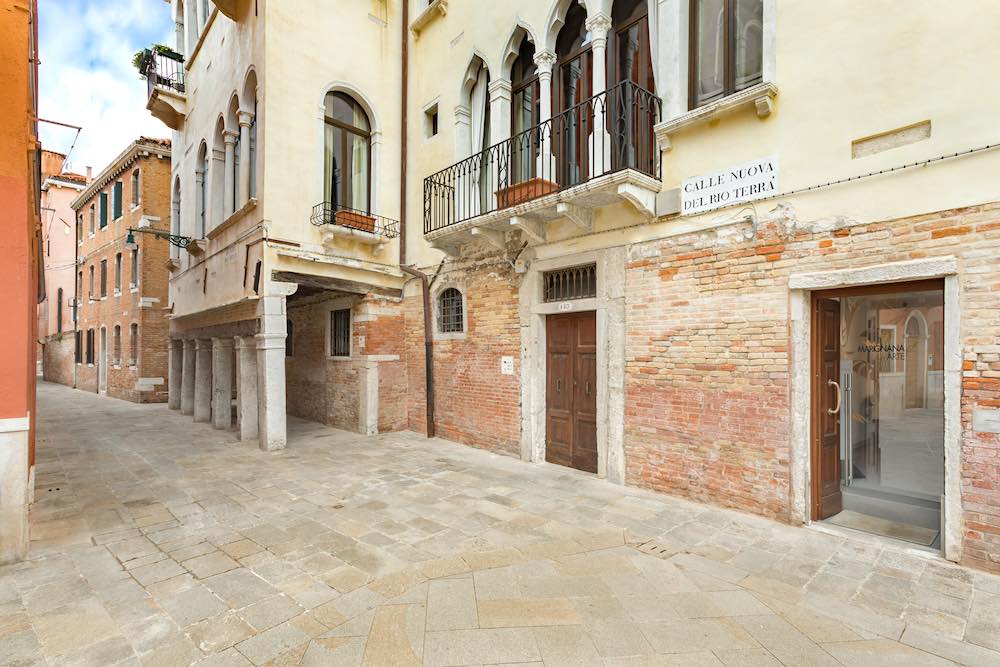
Berlendis Recidency
Venice, Italy
Production residency at Spazio Berlendis in Venice, culminating in an exhibition at Marignana Project; supports research, creation, and dialogue with Marignana Arte's curatorial team.
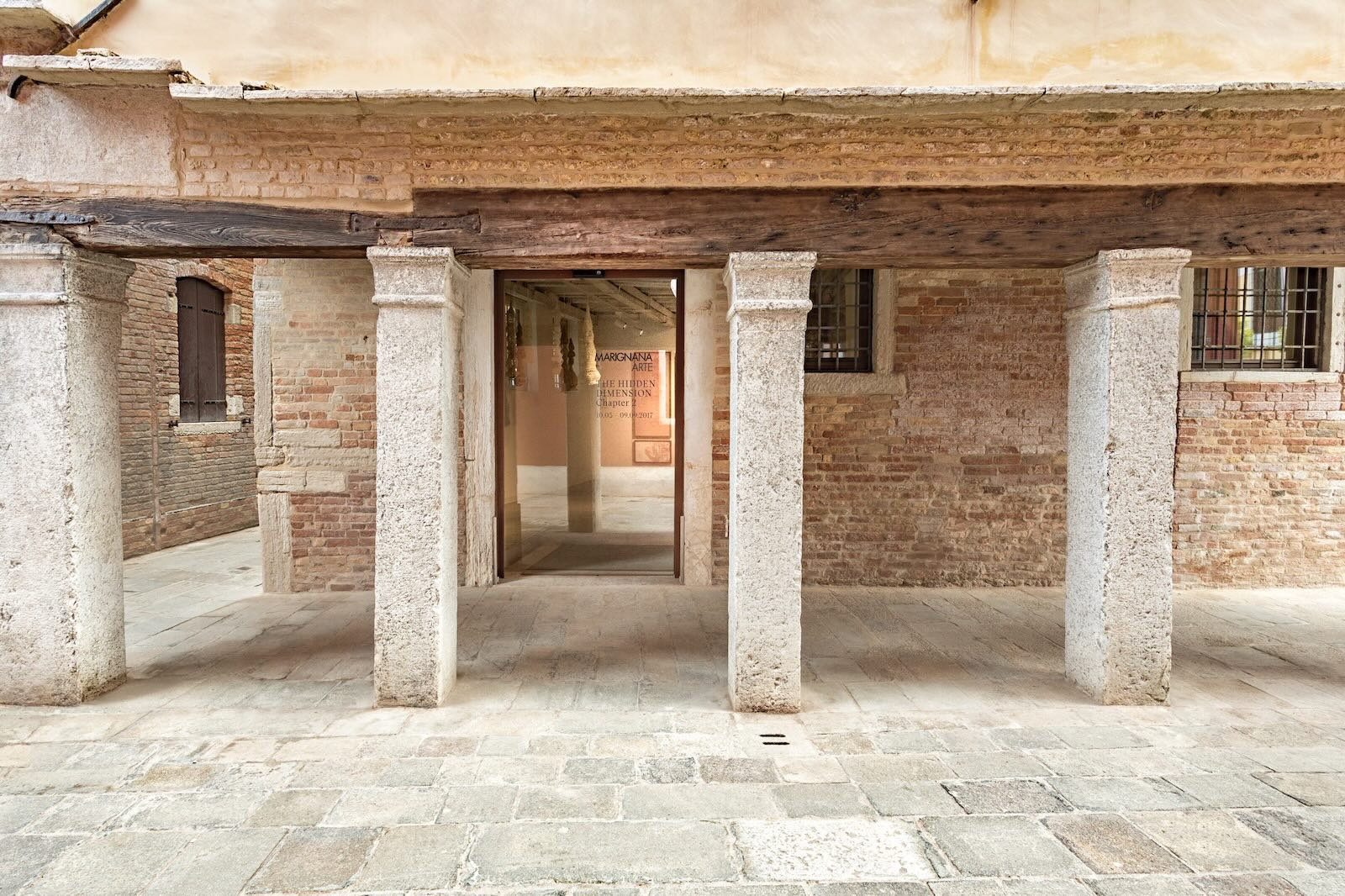
Marignana Arte Srl
Venice, Italy
Marignana Arte Srl, through its Spazio Berlendis space in Venice, offers a production artist residency for mid-career and emerging international artists, lasting 3-6 weeks between December 15, , and February 15, , focused on research and creation inspired by Venice's history and context. The residency culminates in an exhibition at Marignana Project and provides accommodation, studio space, and a €2,000 expense contribution. It is open to all artistic disciplines and languages, welcoming artists over 18.

Scuola Internazionale di Grafica
Venice, Italy
The Scuola Internazionale di Grafica in Venice, Italy, offers an artists residency program focused on printmaking and graphic arts. Participants must submit an application form detailing their skill level in printmaking if intending to work in that medium during the residency. It provides opportunities for artists to develop their practice in a specialized graphic arts environment.
Explore Italy
More city guides
Opportunity Intelligence
Ready to find your next residency?
Get a personalized shortlist — scored against your practice, discipline, and what you need right now.
See how Intelligence works →