
May 2026
How to Apply for an Artist Residency With No Prior Residency Experience
You don’t need a residency on your CV to land your first one — you need clarity, fit, and a focused application.
Why Residencies Matter (Even If You’ve Never Done One)
Applying for a residency with no prior residency experience is completely valid. Many programs are designed for first-time applicants or artists at an early or transitional stage in their work. Selection panels care far more about your practice, clarity, and fit than about a list of past residencies.
An artist residency is usually a temporary program that offers you time, space, and sometimes housing, funding, mentorship, community, or access to equipment so you can focus on your work away from your normal routine. That might mean a rural retreat, a city studio, or a research-focused residency inside an institution.
Residencies can give you:
- Focused time without day-to-day life pulling at you
- A change of environment that shakes up habits and opens new ideas
- Resources you don’t have at home (studio space, tools, archives)
- Professional validation and a concrete line on your CV
- Feedback and peer exchange through critiques, open studios, or casual conversations
- Room to experiment without the pressure of sales, grades, or client work
You can use that time to start a new project, deepen an existing series, experiment with unfamiliar materials, research a place or topic, or simply reconnect with your work in a more sustained way.
You Don’t Need Previous Residencies — You Need Fit and Clarity
There’s a persistent myth that residencies are only for artists who already have a long list of residencies, grants, and exhibitions. Many programs actually expect and welcome first-timers. What they look for is:
- A coherent practice (even if it’s still evolving)
- Strong work samples that show skill, curiosity, or risk-taking
- A clear project or direction for the residency period
- Good alignment between your goals and what the residency offers
- Evidence you’ll use the time well and be a positive presence
Many residencies explicitly focus on:
- Emerging or early-career artists
- Artists from specific regions or communities
- Artists changing direction (new medium, subject, or phase of work)
“Early career” is broader than many people think. It usually refers to someone with a developing body of work and limited institutional visibility, not necessarily a certain age or degree status. Self-taught artists and artists returning after a break often fit this category, too.
Think of the application as a clarity exercise: even if you don’t get in, you emerge with a sharper artist statement, a stronger portfolio, and a clearer project idea you can reuse elsewhere.
Get Grounded in Your Actual Practice First
Before you even look at application forms, spend a bit of time defining the work you already make. If the application sounds generic, jurors have a hard time trusting that you’ll know what to do with a residency.
Use these questions as a quick self-audit:
- What materials or forms do you actually work with right now?
- What ideas, themes, or questions keep returning in your work?
- What problems are you trying to solve or what are you curious about?
- What does your current body of work look like when you lay it all out?
- What do you want to learn, test, or shift in the next year?
Your answers don’t have to be perfect, but they should be concrete. Instead of “I’m interested in the human experience,” try “I use stitched photographs and text to explore how family stories change across generations.” Specificity makes your application believable.
Choosing Residencies That Actually Match Your Stage
One of the biggest mistakes first-time applicants make is applying to everything and hoping one will stick. You’ll have a better shot if you aim for programs that clearly align with your practice and experience level.
Look for residencies that:
- Explicitly welcome emerging or early-career artists
- Support your discipline (or are genuinely interdisciplinary)
- Offer resources you’ll actually use (print shops, woodshops, sound studios, darkrooms, etc.)
- Match your availability (length, time of year, intensity)
- Make sense for your life (family, work, or health constraints)
To research effectively:
- Browse residency databases like Rivet, TransArtists, or Res Artis.
- Look up artists whose work feels adjacent to yours and scan their CVs to see which residencies they did.
- Read alumni lists and resident profiles on residency websites to understand who they tend to select.
If a program only lists artists with long museum CVs and major awards, it might not be the most realistic first step. Look for places that show a mix of established and emerging artists or that name “early career” as part of their mission.
Designing a Project Idea That’s Structured but Flexible
Your residency proposal doesn’t need to be a full production plan, but it does need direction. Panels want to see that you know how you’ll use the time, even if the outcome is exploratory.
A solid project idea usually includes:
- A theme or question you’re investigating
- A medium or method (or a small set of them)
- What you hope to produce or research during the residency
- Why this specific residency is the right container for that work
Here are a few formats you can adapt:
- “I want to develop a series of sound drawings using field recordings from the surrounding landscape, focusing on how memory attaches to specific places.”
- “I plan to study local plant life and translate those observations into modular ceramic forms, experimenting with glazes inspired by regional geology.”
- “I will prototype a new body of video work combining archival footage with staged performances to examine how personal histories are recorded and edited.”
Each idea has enough structure to be concrete but enough openness for discovery.
Connecting Your Project to the Residency Context
Selection panels read hundreds of applications. The ones that stand out usually make the connection between the artist’s project and the residency environment feel obvious.
Pay attention to what the residency emphasizes. For example:
- Rural or nature-based programs might value engagement with landscape, ecology, or local communities.
- Urban or institution-based residencies might focus on research, archives, technology, or public engagement.
- Community-focused residencies might prioritize workshops, collaborations, or social practice.
In your application, briefly explain how you’ll use what they offer. You might mention:
- Access to specific studios or equipment
- Time for reading and research using their library or archive
- Opportunities to engage with local residents, students, or fellow artists
- The impact of quiet, uninterrupted time on your process
The goal is to show you’re applying to this residency intentionally, not just treating it as a free vacation in a nice place.
Writing a Clear, Honest Artist Statement
Your artist statement is your anchor. Almost every residency will ask for some version of it. Keep it simple, specific, and grounded in what you actually do.
A helpful structure:
- What you make: mediums, forms, typical scale
- How you make it: key methods, processes, or materials
- Why you make it: themes, questions, or contexts that drive the work
- Where you’re heading: what you’re exploring next
Try to avoid vague phrases like “I explore the human condition” or “My work investigates the boundaries of existence.” Instead, be concrete: “I make large-scale charcoal drawings based on CCTV stills, focusing on how surveillance reshapes how bodies move in public space.”
Once you have one solid statement, you can lightly adapt it for different residencies by tweaking a sentence or two to highlight the parts most relevant to that specific program.
Building a Portfolio That Works Hard for You
For most residencies, your work samples carry the most weight. If you have no prior residencies, this is especially true. The panel is asking: does this work show enough depth, craft, or curiosity that more time and resources will genuinely help?
Some practical tips:
- Lead with your strongest work. Many jurors make impressions within the first few images.
- Curate, don’t dump. 8–15 strong, coherent pieces are more persuasive than 30 mixed-quality images.
- Follow the specs exactly. Respect image sizes, file formats, naming conventions, and maximum number of files.
- Include basic info. Title, year, materials, dimensions, and, if relevant, a very short note (one sentence) about context.
- Tailor your selection. Emphasize projects closest to what you’re proposing for the residency.
If you host work online, keep it clean and easy to navigate. Simple categories by project or year are enough. You don’t need a complex site; you need a clear one.
Letters of Recommendation When You’re Early in Your Career
Many residencies ask for one to three recommendation letters or contact details for referees. This part can feel intimidating if you’re just starting, but panels don’t expect big-name endorsements. They want to hear from people who actually know your work.
Potential recommenders include:
- Teachers or mentors from courses or workshops
- Curators or organizers who have shown your work
- Collaborators from collective projects, theatre, music, or community arts
- Supervisors from art-related jobs or internships
When asking, give them:
- The residency description or a link to the program
- Your current artist statement and CV
- A short note on what you plan to do there
- A clear deadline and how to submit
Ask early so they have time to write something thoughtful. The more context you provide, the more specific their letter can be.
Tailoring Each Application Without Burning Out
Panels can spot a copy-paste application quickly. You don’t need to rewrite everything from scratch, but you do need to adapt your materials for each program.
A simple system:
- Create a master folder with your artist statement, CV, images, and a general project proposal.
- For each residency, duplicate your project proposal and motivation letter, then edit:
-
- Name specific aspects of their program that matter to you.
- Explain briefly how you’ll use their space, location, or community.
- Adjust your project description to highlight the overlap.
- Reorder your portfolio so the first works shown are most relevant to that particular residency.
Think of it as one core story about your practice, told with slightly different emphasis depending on where you’re applying.
Smart Research and Support While You Apply
You don’t have to do this completely alone. There are plenty of resources and people you can lean on while building your first applications.
Helpful resources and approaches include:
- Residency databases & directories to filter opportunities by discipline, location, funding, and length, such as Rivet, TransArtists, and Res Artis.
- Artist CVs on personal websites or portfolio platforms to see which residencies show up again and again for artists in your area of practice.
- Residency alumni pages to understand who they tend to support and whether the cohort seems emerging, established, or mixed.
- Application and writing guides from places like Format, ArtConnect Magazine, or Boynes Artist Award.
- Peer feedback from one or two trusted artists who can read your statement and proposal and tell you where things feel vague.
- Informal conversations with past residents, if you can find them, to learn what the program actually values and what life there is like.
Most artists are generous with advice if you approach with a short, specific question and respect their time.
Common Mistakes First-Time Applicants Can Avoid
You don’t need to be perfect; you just want to avoid the most avoidable errors. Some patterns show up again and again in weak applications.
- Applying to everything. This drains time and fees. Focus on residencies that clearly fit your practice and stage.
- Writing vague motivation letters. “I want time and space to create” is true but too general. Say what you want to work on and why there.
- Overcomplicating the project. Grand, multi-phase, multi-city plans can sound impressive but unrealistic for a short residency. Keep your scope honest.
- Ignoring eligibility criteria. If a program is only for certain regions, age ranges, or career stages, respect that; use your energy elsewhere.
- Using your portfolio as a dumping ground. Curate. Show coherence and progression rather than everything you’ve ever made.
- Sounding like you want a vacation. Even if the residency is in a beautiful place, emphasize your work more than your desire to rest or travel.
- Not following instructions. Many applications are weakened simply because people ignore word limits, file formats, or naming rules.
Treat the guidelines as part of the test: they show you can work within constraints and respect the program’s time.
A Reusable Framework for Your First Residency Applications
To make this process less overwhelming, you can build a basic application kit and then adapt it. Here’s a simple structure you can use across programs:
- Artist statement:
- What you make (mediums, forms)
- How you make it (process, methods)
- Why you make it (ideas, questions, context)
- Where you’re going (current direction or shift)
- Project proposal for the residency:
- What you want to explore or create
- Why it matters to your practice now
- Why this residency is the right place for it
- What you expect to do with the results afterward (exhibition, further research, new series)
- Motivation letter:
- Who you are and a short overview of your practice
- What you hope to gain from the residency
- What you hope to contribute to the community or program
- Specific reasons you’re drawn to this residency
- Portfolio:
- 8–15 strong works (or as the residency specifies)
- Clear information: title, year, materials, dimensions
- Documentation that actually shows the work clearly
- Order that tells a story or leads logically into your proposed project
Once you’ve assembled this, you can keep refining it as you go. Each application becomes a bit easier, and the materials get sharper over time.
Final Encouragement for Artists with No Residency Experience
Your job is not to prove that you’re already a residency veteran. Your job is to show that:
- You have a serious, active practice, even if your CV is short.
- You know what you want to investigate or build next.
- You understand what the residency offers and how you’ll use it.
- You’ll treat the opportunity with care, curiosity, and commitment.
Start with a handful of well-chosen programs instead of scattering applications everywhere. Give yourself enough time to write, revise, and ask for feedback. Rejections will happen, even with strong applications, but each round makes your materials clearer and your sense of direction stronger.
The most important step is simply this: start sending your work out. You don’t need a residency on your CV to apply. You need your practice, your honesty, and a few focused hours to shape them into an application that sounds like you.
Explore residencies
Kinhouse
Fort Wayne, United States
Kinhouse Artist Residency, located in Fort Wayne, Indiana, is a contemporary art gallery and residency program that welcomes both emerging and established artists, including families. Committed to inclusivity, the residency charges no application fee and bases residency fees on a household income sliding scale. Additional scholarships are available for single mothers, women of color, those with chronic illness or disability, and LGBTQIA+ individuals. The one-week residencies provide artists with the entire two-story, three-bedroom home, a detached art studio, WiFi, washer/dryer, kitchen, gardens, outdoor playset, fire pit, porch, and common areas. The residency does not cover travel, food, or art supplies.

Surel’s Place
Garden City, United States
Surel’s Place offers month-long residencies to professional visual, literary, and performance artists, providing a supportive environment to focus on their work. Located in Garden City, Idaho, the residency includes a well-equipped studio and comfortable living quarters. Residents receive free rent, utilities, Wi-Fi, a modest living stipend, and a travel stipend. The program encourages artists to engage with the community through workshops and public events, fostering a deep connection with local audiences. Surel’s Place values technically advanced and conceptually valuable artwork and supports artists who seek to connect with an audience. One of the five residencies each cycle includes outreach to local schools, enhancing community involvement. The facility includes amenities such as garden spaces, a library, and bicycles for transportation. Surel’s Place emphasizes a non-smoking environment and welcomes partners but cannot accommodate children or pets.
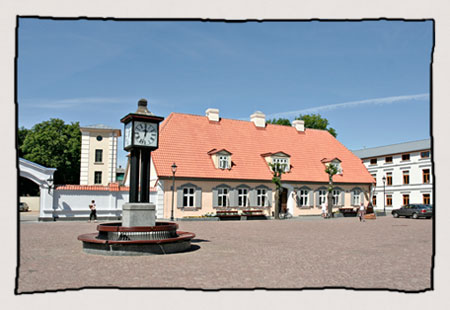
Ventspils House
Ventspils, Latvia
The International Writers’ and Translators’ House in Ventspils, Latvia, is a unique residency for professional authors, translators, and researchers connected to literature. The residency lasts for 4 weeks, providing a serene environment for creative work at a cost of €30 per week for accommodation. Each room in the house is equipped with private bathrooms, Wi-Fi, and essential amenities. Residents enjoy shared kitchen, library, laundry facilities, and bicycles. Applications are accepted anytime and reviewed every two months. Financial support includes a €320 grant post-taxes for selected residents.
More guides
Application Studio · Coming soon
Get your application reviewed before you hit send.
Artist statement and portfolio feedback from working artists who've been through the selection process — returned within 48 hours.
From $39 per review. Join the waitlist to get early access.
Opportunity Intelligence
Ready to find your next residency?
Get a personalized shortlist — scored against your practice, discipline, and what you need right now.
See how Intelligence works →