
May 2026
How to Make the Most of Your Artist Residency: A Practical Guide to Daily Routines, Studio Goals, and Final Outcomes
A residency gives you rare conditions for deep work, but you still need a plan to turn that time into real progress.
Artist residencies can give you something most studio lives don’t: time that is protected, attention that is less fragmented, and enough distance from your usual routines to see your work differently. That does not mean the residency will automatically do the work for you. The artists who get the most from it usually arrive with a clear goal, a simple rhythm, and a realistic sense of what can happen in the time available.
This guide is about using residency time well without turning it into a performance of productivity. You want momentum, yes, but you also want room to notice what the work is asking for.
Start by deciding what the residency is for
Before you pack a single brush or notebook, decide what kind of residency this is for you. That sounds obvious, but it makes a big difference once you’re there. A residency can be used to make finished work, gather research, test materials, build relationships, or shift the direction of a project. If you try to do all of those at once, the time can blur fast.
A simple way to frame it is to choose one primary purpose:
- Production-focused: you want to complete or advance a body of work.
- Research-focused: you want to read, observe, sketch, and gather source material.
- Context-focused: you want the place, community, or environment to shape the work directly.
Pick one main aim and let the others support it. If your residency is research-heavy, your “outcome” might be a notebook full of material, not a stack of polished pieces. If it is production-heavy, you may still need some research time to keep the work from flattening out.
Set goals that are specific enough to guide you
“Make the most of it” is not a goal. It is a feeling. You need something more concrete, or the residency will fill itself with whatever is easiest in the moment.
A strong residency goal is specific, achievable, and tied to your actual practice. You should be able to tell, by the end, whether you reached it.
Good examples look like this:
- Create six to ten small studies exploring a new material process.
- Develop a prototype for a larger installation.
- Research a place-based theme through drawing, notes, and photography.
- Finish the first full draft of a new body of work.
- Use the residency to determine the scale and direction of a longer project.
If the goal is too big, it becomes a pressure cooker. If it is too vague, it becomes a drift. A useful middle ground is one primary goal and two or three supporting goals. For example: develop a new series, document the process well, and leave with a clear next-step plan.
Build a daily routine that keeps you moving
Residency life can feel expansive at first, then suddenly slippery. Without the usual obligations of home, it is easy to lose the first hour of the day to indecision. A simple routine helps you get to work faster.
You do not need a rigid schedule. You do need a repeatable structure.
A practical daily rhythm
- Begin with a short check-in: what matters most today?
- Start making within the first 15 to 30 minutes.
- Protect one deep-work block before messages or social media.
- Take a break to walk, eat, or observe something specific.
- Return for a second focused block.
- End by noting what changed, what failed, and what comes next.
This kind of structure reduces decision fatigue. It also helps you stay in conversation with the work instead of constantly restarting it.
Keep your routine simple enough that you can follow it even when you are tired. A residency often includes a mix of energy: some days are intense, some are slow, and some are unexpectedly social. Your routine should survive all of that.
Use the residency as a research environment, not only a production period
Even if your main aim is to make work, research can deepen everything. A residency gives you a chance to observe differently, test ideas, and gather material without immediately forcing it into a finished form.
Useful research can be very ordinary. It might include sketching from life, walking the site, reading a few key texts, taking notes on local textures and materials, or talking with other residents. If the residency is tied to a region, archive, or community, pay attention early. Small observations made on day one can become important later.
Try to notice:
- light and weather
- sounds and pacing
- local materials and surfaces
- social rhythms
- what feels unfamiliar compared with home
That information can feed the work long after you leave. Research is not a detour from making. For many artists, it is part of the making itself.
Balance solitude with community on purpose
Many residencies are as much about people as they are about place. You may be around other artists, curators, writers, makers, or local hosts. That can be one of the richest parts of the experience, but it needs some structure.
Use the community intentionally. Ask thoughtful questions. Pay attention to how others work. Share in-progress material when it feels useful. Show up for meals, talks, critiques, or open studios when they genuinely support your process.
At the same time, guard your studio time. It is easy to let conversation take over a residency, especially if the community is exciting. The sweet spot is usually deliberate social time rather than constant availability.
If you tend toward isolation, make a point of connecting. If you tend toward over-socializing, set clear windows for the studio and protect them.
Handle logistics early so they do not eat the residency
Logistics are not the glamorous part, but they can make or break your time. Every minute you spend hunting for supplies, fixing transport problems, or improvising around missing materials is a minute not spent making.
Before arrival, think through the basics:
- what materials must travel with you
- what can be bought locally
- what is essential versus optional
- how finished work will be stored or shipped
- what tools or equipment are actually available on site
- whether you need offline references, files, or images
Pack the tools you rely on most, plus a few backups. Bring a notebook, chargers, adapters, storage folders, and any items that are hard to replace. Try not to overpack “just in case” materials. Too much stuff can create clutter and make it harder to start.
It also helps to think ahead about drying time, curing time, packing methods, and how you will photograph work before it leaves the studio. The end of a residency arrives faster than you expect.
Document the process from the beginning
Documentation is one of the best outcomes you can leave with, even if no one sees it during the residency itself. It gives you a record of what changed, what you tried, and what the work looked like before you forgot the details.
Document:
- in-progress work
- sketches and studies
- material tests
- the studio setup
- site observations
- short written reflections
- final work in good light
You do not need a perfect archive. A simple habit goes a long way: take one photo at the start of each day or work session, one photo when something meaningfully changes, and one short note about what you learned. By the end, you will have a record that can support applications, portfolios, talks, or future project development.
Documentation also helps you see your own progress more clearly. That matters when the work feels slow, which it often does before it starts to click.
Think about final outcomes in more than one way
Not every residency should end with a polished, exhibition-ready body of work. That can happen, but it is only one possible outcome. A successful residency might end with finished pieces, prototypes, sketches, a notebook full of ideas, a new technique, or a much clearer sense of direction.
Useful final outcomes can include:
- a completed work or series
- a set of studies or maquettes
- a new process or material approach
- a research archive
- a plan for a larger project
- documentation that strengthens future applications
- a talk, presentation, or open studio
Sometimes the biggest result is a decision: what to pursue, what to drop, what scale the work wants, or what the next body of work should be built around. That is real progress. If the residency changes how you think or work, it has done something valuable.
Avoid the traps that can flatten the experience
Most residency problems come from a small set of habits, and they are easy to miss in the moment.
- No clear goal: the time dissolves into pleasant but unfocused activity.
- Overambition: the project is too large for the time, materials, or energy available.
- Too much socializing: the day fills up before the studio begins.
- Waiting for inspiration: the work starts only when conditions feel perfect.
- Ignoring logistics: shipping, storage, and supplies become constant interruptions.
- No documentation: the residency becomes hard to use after it ends.
- Comparing yourself to others: different artists need different rhythms.
Most of these problems can be softened by returning to your main goal and daily rhythm. When in doubt, simplify.
Before you leave, turn the residency into next steps
The last days of a residency matter. This is when the experience becomes useful beyond the period itself. Take time to organize what you made, what you learned, and what still needs attention.
Before departure, try to:
- photograph the work and process clearly
- save and back up notes, images, and files
- label what is finished and what is still in progress
- write a short summary of what changed in the work
- list the next practical step for the project
This short wrap-up can be surprisingly powerful. It turns the residency from a temporary event into part of a longer practice. That is usually where the real value lives.
Carry the residency forward
The best residencies do not end when you pack up your studio. They keep working afterward, in the form of new habits, clearer ideas, and stronger material to build from. If you leave with a sharper question, a better process, or a piece of work that opened a new path, the residency has already done its job.
Keep the structure simple: define the purpose, set one clear goal, work in a steady rhythm, document as you go, and leave with next steps in hand. That is often enough to turn a short stretch of time into something that lasts.
Explore residencies
Kinhouse
Fort Wayne, United States
Kinhouse Artist Residency, located in Fort Wayne, Indiana, is a contemporary art gallery and residency program that welcomes both emerging and established artists, including families. Committed to inclusivity, the residency charges no application fee and bases residency fees on a household income sliding scale. Additional scholarships are available for single mothers, women of color, those with chronic illness or disability, and LGBTQIA+ individuals. The one-week residencies provide artists with the entire two-story, three-bedroom home, a detached art studio, WiFi, washer/dryer, kitchen, gardens, outdoor playset, fire pit, porch, and common areas. The residency does not cover travel, food, or art supplies.

Surel’s Place
Garden City, United States
Surel’s Place offers month-long residencies to professional visual, literary, and performance artists, providing a supportive environment to focus on their work. Located in Garden City, Idaho, the residency includes a well-equipped studio and comfortable living quarters. Residents receive free rent, utilities, Wi-Fi, a modest living stipend, and a travel stipend. The program encourages artists to engage with the community through workshops and public events, fostering a deep connection with local audiences. Surel’s Place values technically advanced and conceptually valuable artwork and supports artists who seek to connect with an audience. One of the five residencies each cycle includes outreach to local schools, enhancing community involvement. The facility includes amenities such as garden spaces, a library, and bicycles for transportation. Surel’s Place emphasizes a non-smoking environment and welcomes partners but cannot accommodate children or pets.
Ventspils House
Ventspils, Latvia
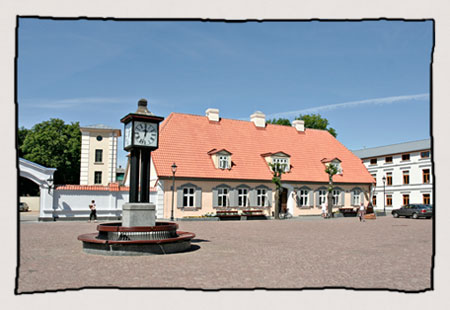
The International Writers’ and Translators’ House in Ventspils, Latvia, is a unique residency for professional authors, translators, and researchers connected to literature. The residency lasts for 4 weeks, providing a serene environment for creative work at a cost of €30 per week for accommodation. Each room in the house is equipped with private bathrooms, Wi-Fi, and essential amenities. Residents enjoy shared kitchen, library, laundry facilities, and bicycles. Applications are accepted anytime and reviewed every two months. Financial support includes a €320 grant post-taxes for selected residents.
More guides
Application Studio · Coming soon
Get your application reviewed before you hit send.
Artist statement and portfolio feedback from working artists who've been through the selection process — returned within 48 hours.
From $39 per review. Join the waitlist to get early access.
Opportunity Intelligence
Ready to find your next residency?
Get a personalized shortlist — scored against your practice, discipline, and what you need right now.
See how Intelligence works →